What does Millisecond-Level Response Mean? Why Must Dynamic Loads Pay Attention to the "Speed" of Compensation Devices?
In modern industrial power systems, the operation mode of modern industrial equipment (and new energy sources) has shifted from "smooth and continuous" to "fast, intermittent, and pulsed", resulting in significant and rapid changes in the rate and amplitude of the power (especially reactive power) extracted or fed back from the power grid. For instance, the initial impact of an electric welding machine, the instantaneous lifting of a crane, the pulse operation of a laser cutting machine, and even the power fluctuations in a new energy power station - all these load variations can cause significant fluctuations in the reactive power of the power grid. For traditional compensation equipment like power capacitor banks that use contactors as switching devices, their response time, which can be as long as several hundred milliseconds or even seconds, is insufficient to respond once in such dynamic load scenarios. Therefore, the value of the millisecond-level response of the compensation device is turning more and more evident in this context - it is no longer just a set of numerical parameters, but a crucial defense line related to the stability of power quality, equipment safety, and production continuity.
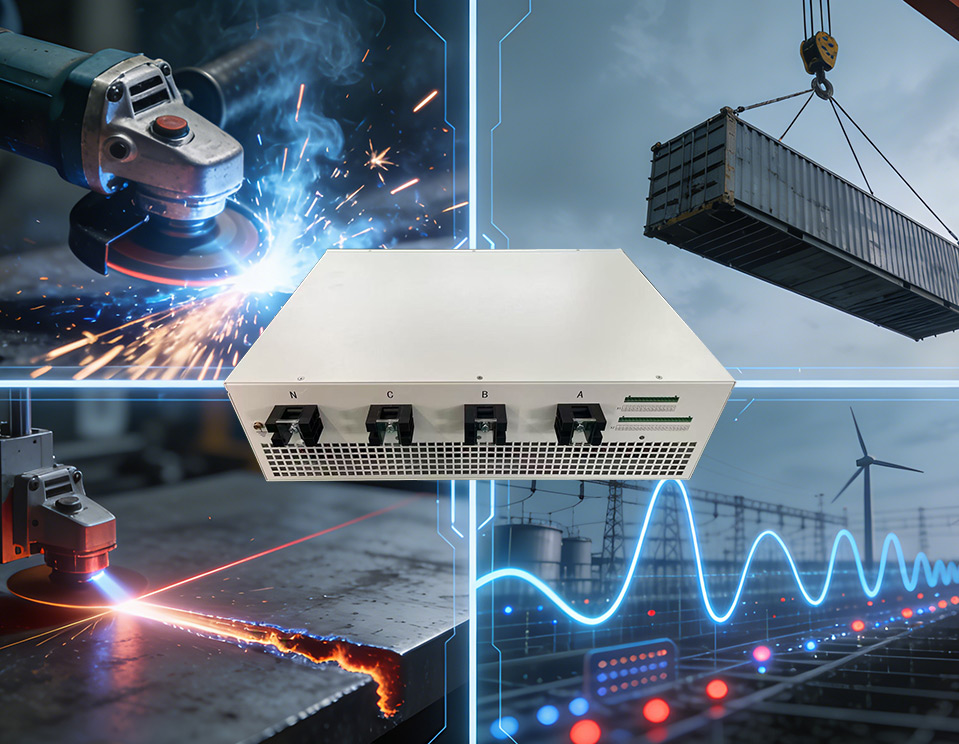
A Difference of Milliseconds: From "Detection" to "Counteraction"
The essence of response speed lies in the manifestation of the compensation equipment's ability to detect, calculate and execute reactive power deficits in the temporal dimension. When dynamic loads cause sudden changes in reactive power, the grid voltage will experience instantaneous fluctuations, and the power factor will rapidly deviate from the set range. If the compensation equipment responds slowly, within a few hundred milliseconds, the system will be in a state of "reactive power imbalance". This imbalance directly leads to voltage drops or surges, which may cause maloperations of sensitive equipment, product scrapping, or even production line shutdowns. Millisecond-level response means that the compensation equipment can almost simultaneously detect disturbances and output the required reactive power, achieving "real-time tracking and cancellation" of load transients, suppressing voltage fluctuations within the tolerance range of the equipment, and thus maintaining the "steady state" of power in the production process.
The Demanding Challenge of Dynamic Load: How Speed Affects System Reliability
The demand for the compensation speed of the compensation equipment by dynamic loads is rigid. Take the electric arc furnace as an example: During its working cycle, the reactive power demand during the short-circuit melting stage can increase several times within tens of milliseconds. If the compensation is delayed, it will not only cause a severe drop in the voltage of the power supply bus, affecting other surrounding equipment, but also may trigger the upper-level protection device due to an instantaneous low power factor, resulting in a large-scale power outage. Similarly, on an automated production line, the frequent start-stop of industrial robots and the rapid adjustment of frequency converters will generate high-frequency, small-amplitude reactive power pulsations. Only a compensation device with millisecond-level response can smooth these pulsations and avoid cumulative interference to precise processing and control loops. In a nutshell, in the dynamic load scenario, the compensation speed of the compensation equipment directly equates to the ability of the entire low-voltage reactive power compensation system to resist disturbances and ensure continuous production reliability.
Technical Core: From "Mechanical Switching" to "Real-Time Control of Power Electronics"
The key to achieving millisecond-level or even faster response rests with the innovation of the technical path. The switching of traditional capacitor cabinets relies on the mechanical engagement and disengagement of contactors, but the action time of contactors is limited by physical processes and is difficult to break through the 100-millisecond scale. However, power electronic compensation devices such as static var generators (SVGs) can achieve continuous, stepless, and instantaneous control of reactive current by performing high-frequency modulation on full-controlled devices (such as IGBTs). Their smooth response process can be refined down to a level of just 5 to 10 milliseconds, truly making it possible to synchronize with load changes.
Geyue Electric’s Practice: Systematic Guarantee Centered on Speed
The commitment to compensation speed requires a solid technical foundation and manufacturing system to support it. Geyue Electric has equipped our modern production base in Zhejiang with a dedicated low-voltage reactive power compensation equipment production line and a complete testing platform. Every high-speed compensation device that leaves the factory must undergo rigorous step response tests under complex working conditions simulating various dynamic loads to safeguard the reliability and consistency of its millisecond-level response. Our engineering team focuses on algorithm optimization and, through adaptive predictive control strategies, further improves the system's ability to predict and compensate for sudden load changes.
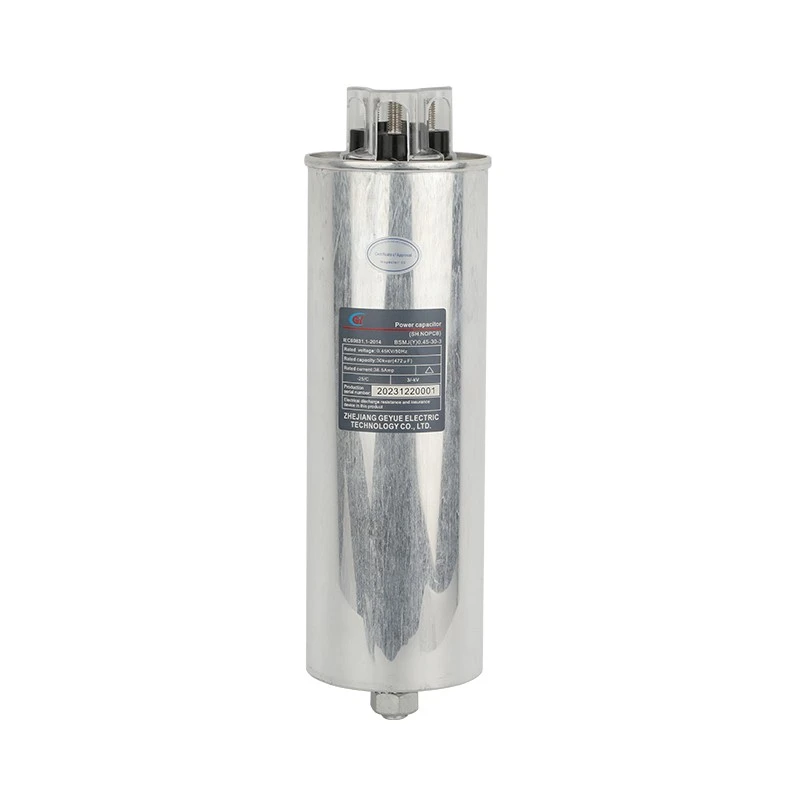
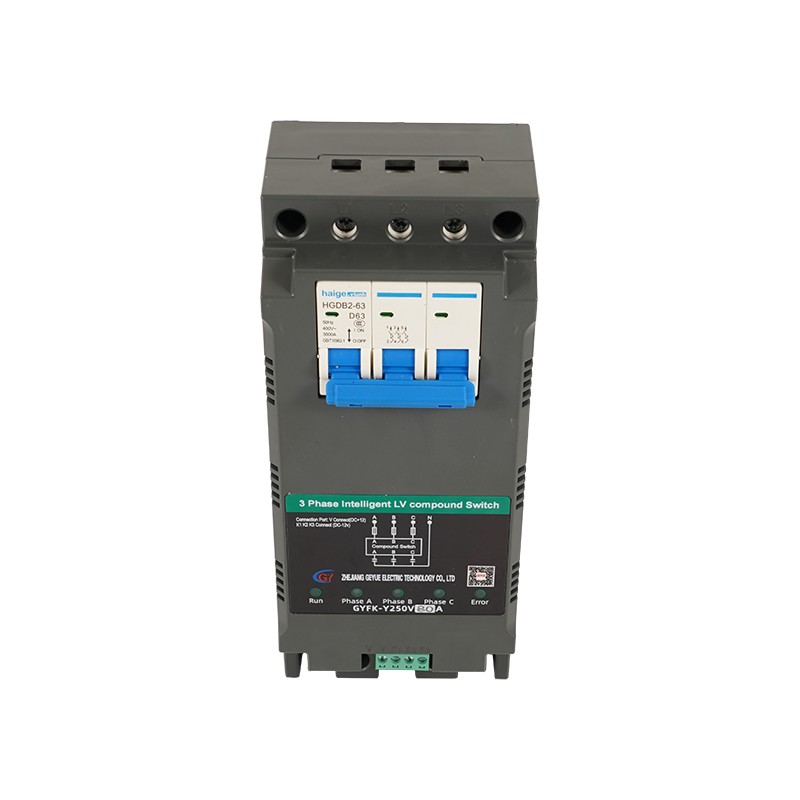
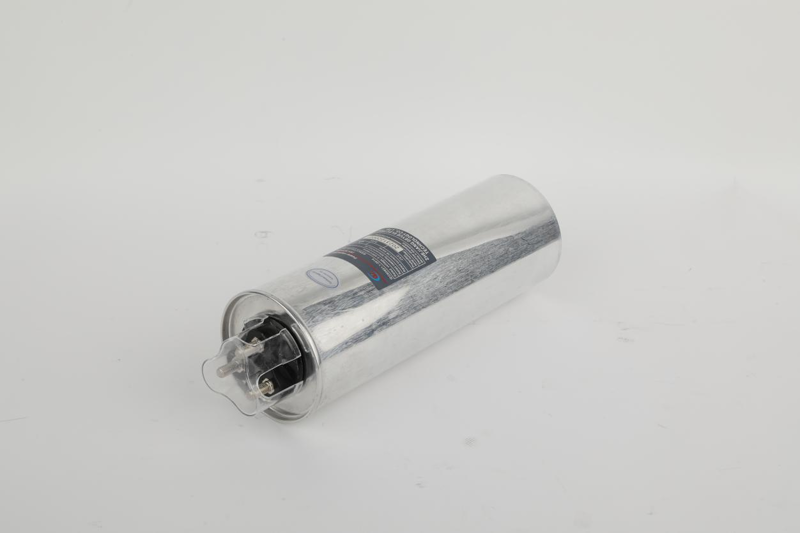
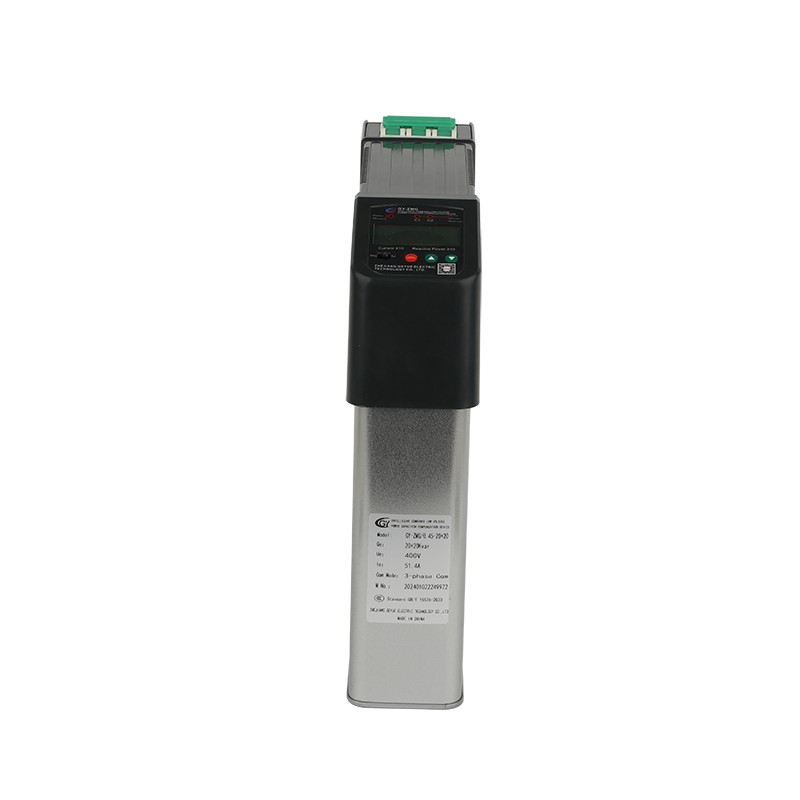
Geyue Electric is well aware that a single piece of equipment cannot constitute a complete solution. Therefore, Geyue Electric has always been committed to providing customers with a full-chain service covering precise diagnosis, scheme design, and rapid deployment of equipment. In the face of dynamic load challenges, we recommend using SVG as the core, or adopting a hybrid compensation architecture of "SVG + capacitors", to ensure economic efficiency while building a "dynamic reactive power defense line" with millisecond-level response for users. Please send your inquiry to info@gyele.com.cn to inject stability and reliability into your power production, and make a certain that every fluctuation of the load no longer poses a threat to the quality of electricity.
Related News
- What Is the Difference Between a Power Capacitor and an Intelligent Capacitor?
- Are Self-Healing Shunt Capacitors Suitable for Industrial Applications?
- Why Does a Factory Need an Automatic Power Factor Controller?
- Can a Power Capacitor Reduce Electricity Losses in a Factory?
- What Should Engineers Check Before Choosing a Low Voltage Power Capacitor?
- Why Are Self-Healing Shunt Capacitors Widely Used in Low-Voltage Power Systems?
Leave me a message