Why Must Low-Voltage Power Factor Controllers Used in Photovoltaic Scenarios Be Equipped with Four-Quadrant Operation Capability?
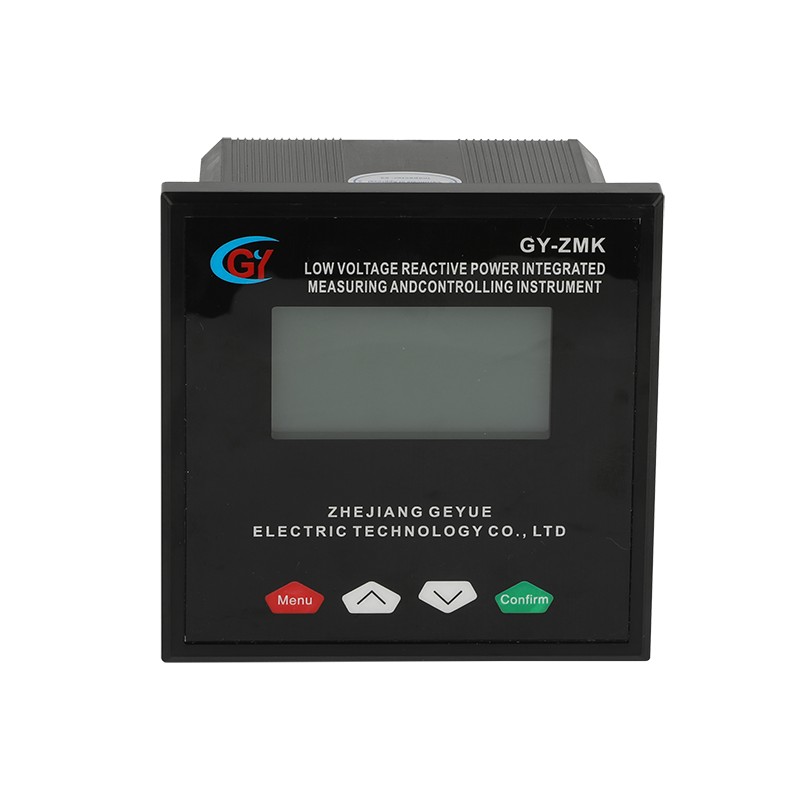
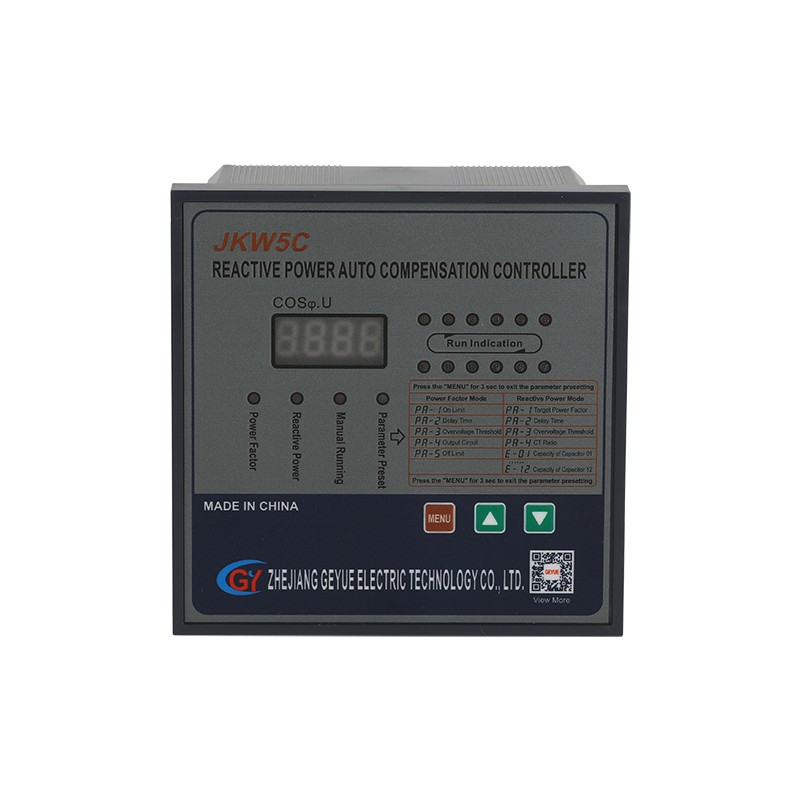
In the current era of the booming distributed photovoltaic sector, a widespread technical misconception is quietly affecting the stability and profitability of photovoltaic power stations. Many owners of distributed photovoltaic systems still adopt the traditional low-voltage reactive power compensation solutions used in industrial scenarios. Eventually, they will undoubtedly find that photovoltaic power stations frequently encounter issues such as power factor assessment fines, voltage over-limit, and even abnormal equipment tripping. As a leading manufacturer in the field of low-voltage reactive power compensation, Geyue Electric, with years of on-site reactive power compensation experience, can clearly point out that the root cause of these problems lies in the fact that ordinary power factor controllers cannot adapt to the unique operation logic of photovoltaic power generation. The key to eliminating this root cause is to equip photovoltaic power stations with dedicated low-voltage power factor controllers with four-quadrant operation capabilities.
A Photovoltaic System That Has Broken the Traditional Power Flow Pattern
In traditional factories, the flow of electricity is one-way and stable, with electrical energy flowing from the power grid to the loads. The goal of reactive power compensation in traditional factories is straightforward – to compensate for the reactive power consumed by a single type of inductive load. In this case, the traditional industrial power distribution system is like a one-way road, and the traditional power factor controller that controls the reactive power from one direction is like a traffic police officer who can only observe and direct vehicles coming from one direction. However, a photovoltaic power station is essentially an active power generation system. The direction of power flow at its connection point changes in real time with the intensity of sunlight, and it may frequently switch between "power consumption" and "power generation". This two-way and variable power flow makes the nature and direction of reactive power demand extremely complex. Therefore, a traditional power factor controller that is merely equivalent to an ordinary traffic police officer can only perform one-way compensation for reactive power, lacking the ability of a powerful traffic command center that can simultaneously observe and direct the "two-way three-dimensional traffic system" of the photovoltaic power station.
An In-Depth Analysis of the Core Value of the Four-Quadrant Operation Capability
The four-quadrant operation capability of the power factor controller is a key technology specifically designed to address the complex interweaving and dynamic flow of active and reactive power at the grid connection point in photovoltaic systems. The four-quadrant operation capability is based on the positive and negative directions of active power (P) and reactive power (Q), dividing the flow state of electrical energy into four working areas. For photovoltaic power stations, each of these four quadrants corresponds to the overall operating state of the entire grid connection point of the photovoltaic power station and the overall compensation requirements under that state.
When the photovoltaic system is not generating electricity during nighttime or on cloudy days, it behaves like an ordinary electricity user, consuming active power while possibly absorbing inductive reactive power from the grid. The power factor controller needs to direct the capacitor switching device to inject a reactive power load by switch on a group of low-voltage shunt capacitors. However, when the photovoltaic system is generating electricity under sufficient light conditions, the photovoltaic inverter supplies active power to the grid, and the situation is completely different. At this time, the capacitive charging effect generated by long-distance cables may cause the photovoltaic system to feed back capacitive reactive power to the grid, resulting in an increase in the voltage at the grid connection point. The power factor controller must be able to direct SVG or a hybrid compensation device with inductive reactive power output capability to absorb these excess capacitive reactive power. More importantly, modern grid regulations require that photovoltaic power stations not only do not feed back reactive power to interfere with the grid, but also must have the ability to dynamically provide inductive or capacitive reactive power according to dispatch instructions to support the voltage. This claims the power factor controller to be able to manage the reactive power flow in all four quadrants and achieve the transition from "passive compensation" to "active support".
Real Risks That the Absence of the Four-Quadrant Operation Capability Will Trigger
If a traditional power factor controller without the ability to operate in four quadrants is adopted, the low-voltage reactive power system will be unable to accurately identify the actual reactive power demand during power generation. The traditional power factor controller is prone to misjudgment and incorrect operation. The most typical problem is that during the power generation period of a photovoltaic power station, the reactive power compensation system within the station is unable to handle capacitive reactive power, resulting in overvoltage tripping and loss of power generation. At the same time, due to the inability of the low-voltage reactive power compensation system of the photovoltaic power station to precisely control the direction of reactive power output, the photovoltaic power station is likely to face economic penalties from the power grid company for not meeting the power factor standards. In the long run, using a traditional power factor controller without the ability to operate in four quadrants and the compensation equipment controlled by it to cope with the complex and dynamic reactive power demands of photovoltaic power generation will also exacerbate equipment wear and tear and affect the stable operation of the entire photovoltaic distribution system.
Geyue Electric JKFG Series: Smart Solutions Tailored for Photovoltaic Scenarios
A thorough understanding of the industry pain point that "photovoltaic power stations, due to the use of traditional unidirectional compensation controllers, cannot adapt to the switching between power generation and power consumption, resulting in inaccurate reactive power compensation, facing fines, equipment tripping, and system instability" has enabled Geyue Electric to leverage our powerful R&D platform and automated manufacturing base to introduce the JKFG series of low-voltage power factor controllers specifically designed for photovoltaic scenarios. This series of power factor controllers strictly adheres to international and national standards, and its core function lies in achieving precise four-quadrant operation capabilities. This series of power factor controllers can accurately sense the changes in photovoltaic power generation, accurately determine the actual reactive power demand direction and magnitude of the load, and thereby command the capacitor bank or mixed compensation device to make precise responses in milliseconds. Our company particularly emphasizes that in order to ensure the accuracy of four-quadrant analysis, the polarity of the current transformers at the photovoltaic site must be correctly connected according to the current direction (or power measurement direction) specified by the JKFG series of low-voltage power factor controllers, which is the cornerstone for fully exerting the full efficacy of the JKFG series of low-voltage power factor controllers.
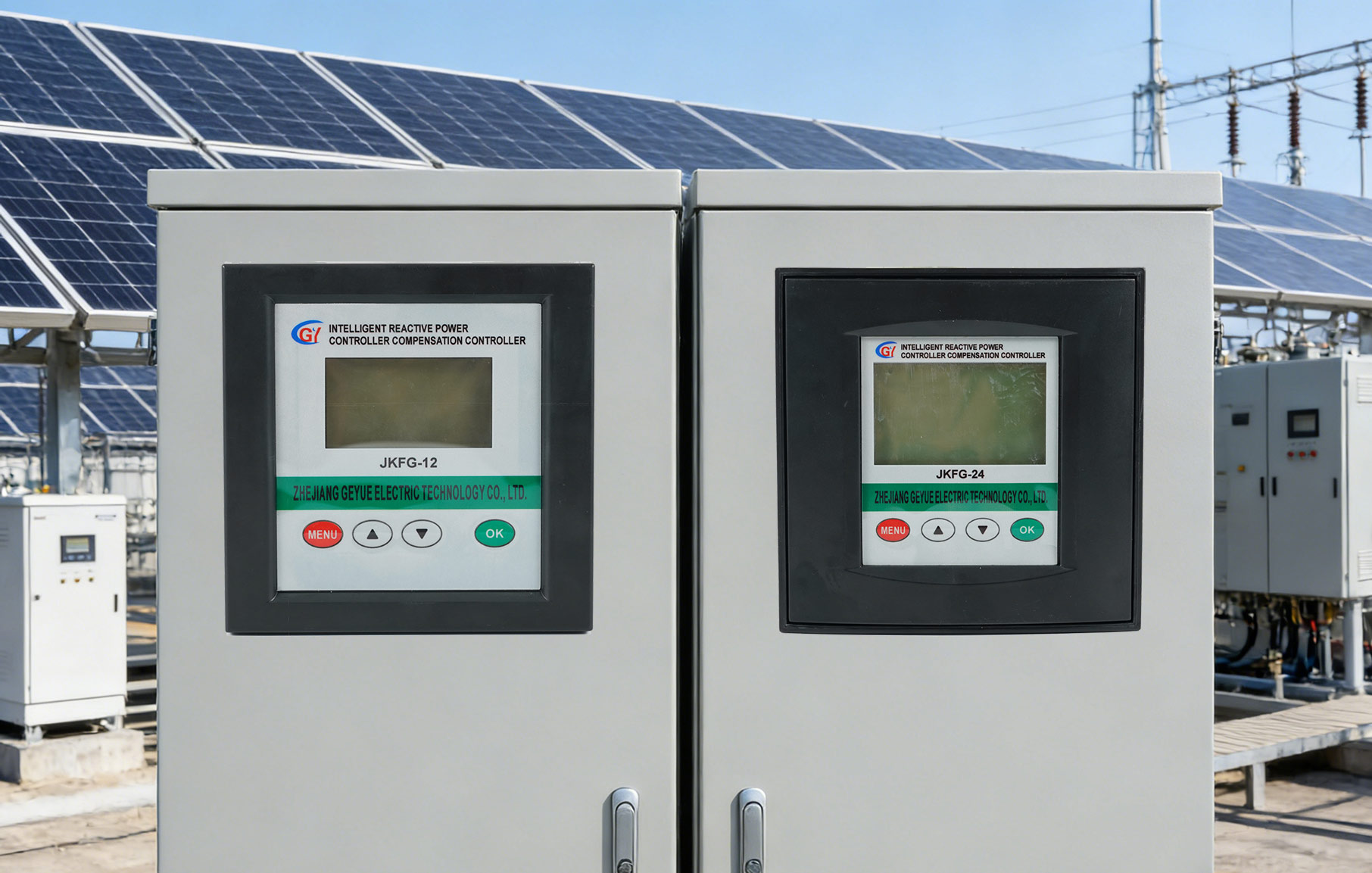
Our JKFG-12 photovoltaic-specific power factor controllers and JKFG-24 photovoltaic-specific power factor controllers are the intelligent guardians that safeguard the friendly grid connection, stable operation, and enhanced overall revenue of photovoltaic power stations. From a single power factor controller to a complete low-voltage reactive power compensation solution, Geyue Electric has always been committed to providing customers with high-reliability value. Please freely send your low-voltage reactive power compensation requirements for your photovoltaic power station to info@gyele.com.cn. We look forward to providing a customized compensation solution for your project. Choosing Geyue Electric is choosing to calmly meet the challenges of energy transformation with leading technology.
Related News
- What Is the Difference Between a Power Capacitor and an Intelligent Capacitor?
- Are Self-Healing Shunt Capacitors Suitable for Industrial Applications?
- Why Does a Factory Need an Automatic Power Factor Controller?
- Can a Power Capacitor Reduce Electricity Losses in a Factory?
- What Should Engineers Check Before Choosing a Low Voltage Power Capacitor?
- Why Are Self-Healing Shunt Capacitors Widely Used in Low-Voltage Power Systems?
Leave me a message