Can AC contactors become key actuators in industrial automation control?
Introduction
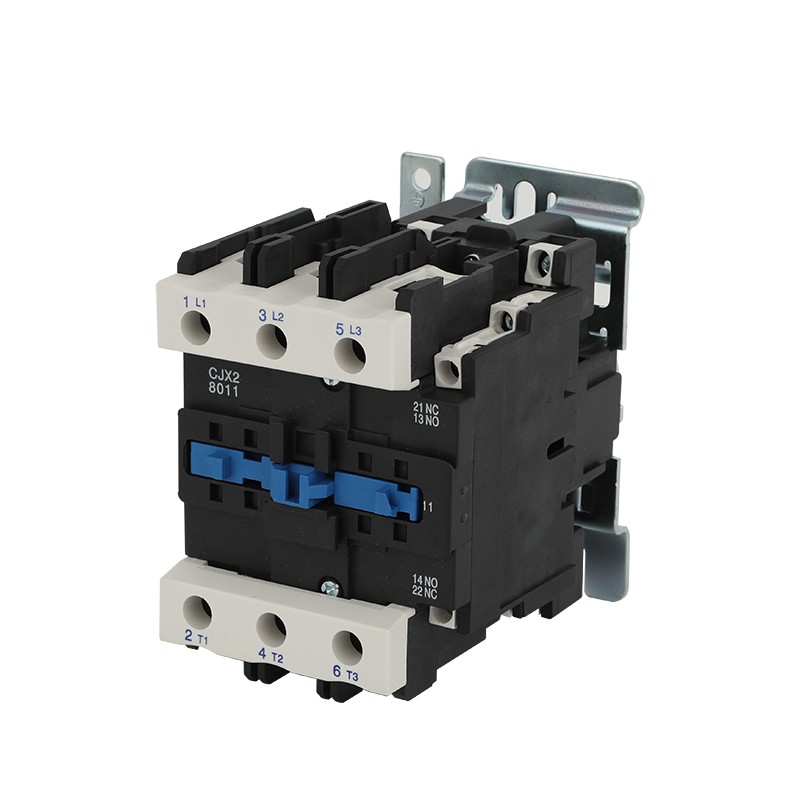
Currently, the industrial sector places higher demands on AC contactors. In terms of reliability, electrical and mechanical lifespans need to reach the million-cycle level; in terms of functionality, they need to integrate intelligent functions such as status feedback and fault diagnosis; in terms of adaptability, they must withstand the challenges of vibration, dust, and high temperatures in harsh industrial environments.
Technical Characteristics and Development Status
In terms of structural design, modularization has become a interface designs, allowing for the easy addition of auxiliary contacts, time-delay modules, and other accessories. Improved online testing technology ensures that each AC contactor undergoes rigorous performance testing before leaving the factory, guaranteeing compliance with design standards.
Application Area Analysis
Special applications such as marine and rail transportation place even stricter requirements on AC contactors. AC contactors used in these applications need to pass additional environmental tests, including vibration, shock, and salt spray testing. Dedicated series AC contactors employ special protective treatments and reinforced structures to meet the requirements of use in these harsh environments.
Technological Development Trends
AC contactor technology is developing towards intelligence, modularity, and high reliability. In terms of product intelligence, next-generation AC contactors will integrate richer condition monitoring functions, including contact wear monitoring and coil health status assessment. These intelligent functions will exchange data with the upper-level control system via standard industrial communication protocols (such as PROFINET and EtherCAT), supporting predictive maintenance. Manufacturing technology will also undergo a revolution. The application of Industry 4.0 concepts on production lines will achieve more efficient and precise manufacturing processes. Digital twin technology will be used for product design and process optimization, using virtual simulation to identify and resolve potential problems in advance. These advancements in manufacturing technologies will further improve product quality and production efficiency. Standardization and interoperability are becoming important trends. This will provide users with greater choice and promote the healthy development of the industry.
Innovative Application Case
In the stamping workshop of an automobile manufacturing plant, the application of intelligent AC contactors has upgraded equipment management. The workshop uses AC contactors with condition monitoring functions to control large presses. After project implementation, the safety and convenience of system maintenance have been significantly improved. In the port crane control system, significant progress has been made in upgrading the reliability of AC contactors. Traditional systems suffered from a high contactor failure rate due to frequent start-stop cycles. A lightweight AC contactor was adopted in the vehicle control system of a rail transit project. This is of great significance for the lightweighting and energy conservation of rail transit vehicles.
Industry Development Challenges
Manufacturers need to invest significant resources in product certification, which increases the difficulty and cost of market entry. Establishing a sound quality management system and obtaining internationally recognized certifications have become necessary conditions for entering the global market. Future Outlook The development of the new energy industry will bring new growth opportunities. Emerging fields such as photovoltaics, wind power, and energy storage are placing new technical demands on AC contactors, while also creating new market opportunities. Manufacturers need to develop specialized products for these applications, such as product lines with higher voltage levels and stronger breaking capacities. Smart manufacturing transformation will drive product upgrades. From material selection to production processes, from product use to end-of-life recycling, environmental protection requirements throughout the entire lifecycle will become increasingly stringent. Developing environmentally friendly products and implementing green manufacturing will become a core competitive advantage for enterprises. Globalization will optimize the industrial ecosystem. With the deepening of international production capacity cooperation, the AC contactor industry chain will achieve globally optimized allocation.
Conclusion
As a fundamental component in industrial automation, the technological development and application innovation of AC contactors directly affect the overall development level of the industry. Currently, AC contactors are at a critical stage of transformation and upgrading towards intelligence, high reliability, energy conservation, and environmental protection. Manufacturers need to grasp technological trends, increase investment in innovation, and promote product upgrades to meet ever-changing market demands. In the future, with the deepening of Industry 4.0 and intelligent manufacturing, AC contactors will play an important role in a wider range of fields.
Related News
- Why Does a Factory Need an Automatic Power Factor Controller?
- Can a Power Capacitor Reduce Electricity Losses in a Factory?
- What Should Engineers Check Before Choosing a Low Voltage Power Capacitor?
- Why Are Self-Healing Shunt Capacitors Widely Used in Low-Voltage Power Systems?
- What Makes a Good AC Contactor Supplier?
- Why do your plant's shunt capacitors fail prematurely? Can they self-heal?
Leave me a message