How Can Multifunctional Meter Lead a New Revolution in Energy Management?
Industry Background and Market Demand
Currently, with the continuous improvement of industrial automation levels and energy management requirements, the power meter industry is ushering in a new round of development opportunities. According to the latest industry data analysis, the global smart power meter market size is expected to reach US$15 billion by 2025, with a compound annual growth rate of around 8.5%. This growth is mainly driven by two demands: firstly, the need for upgrading and transforming traditional power systems; and secondly, the new demand brought about by the rapid development of the new energy sector.
In the industrial sector, smart power meters have become core equipment for enterprise energy management. Modern manufacturing enterprises not only need basic current and voltage monitoring functions, but also hope to achieve advanced functions such as energy consumption analysis and fault early warning through power meters. Taking the automotive manufacturing industry as an example, a modern production line needs to install hundreds of smart power meters to monitor the power consumption of each link in real time, providing data support for lean production.
Technological Development Trends and Innovation Directions
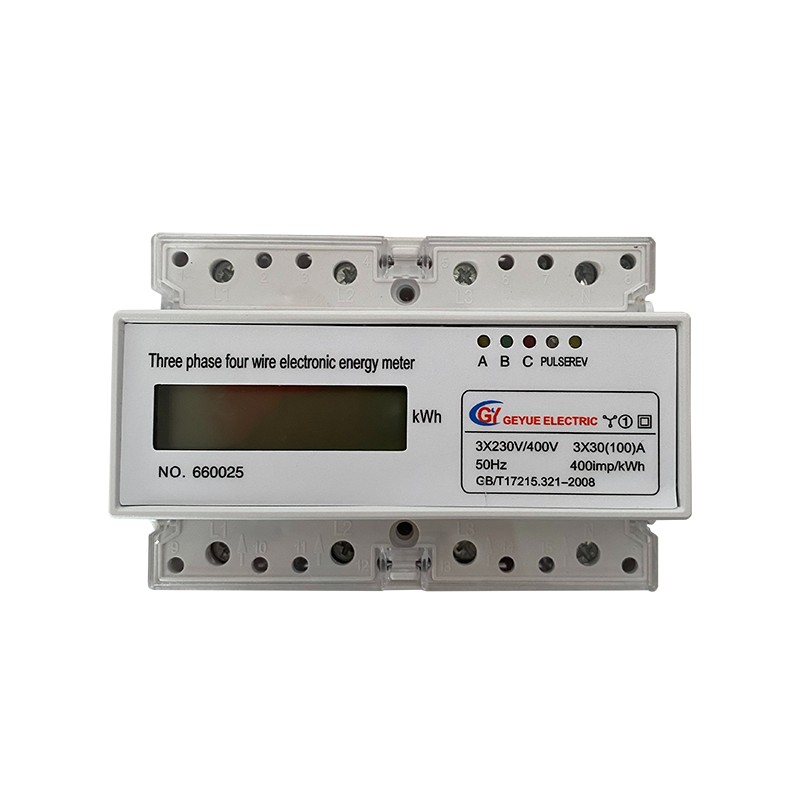
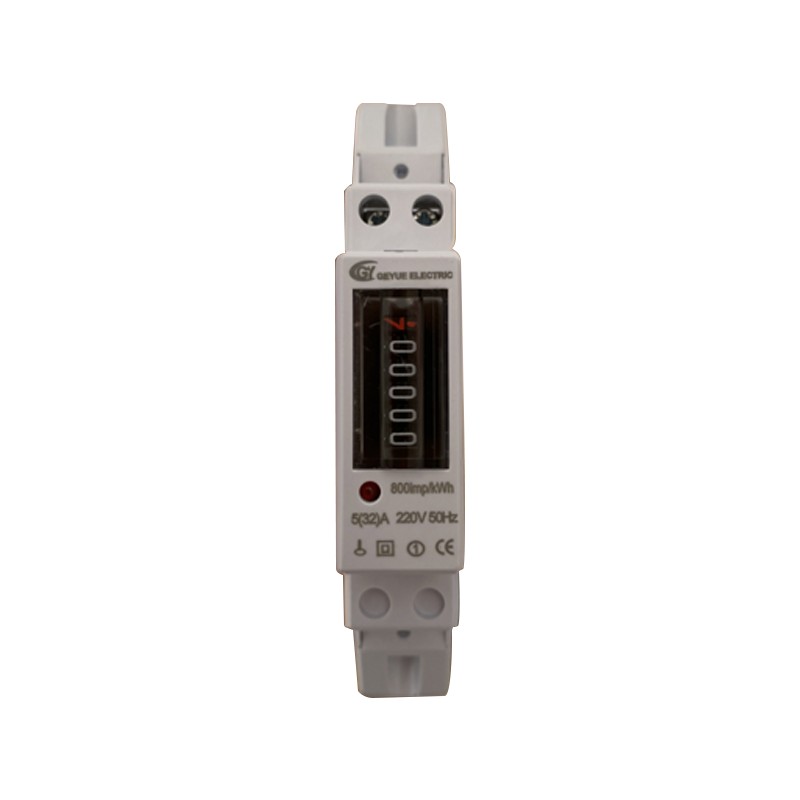
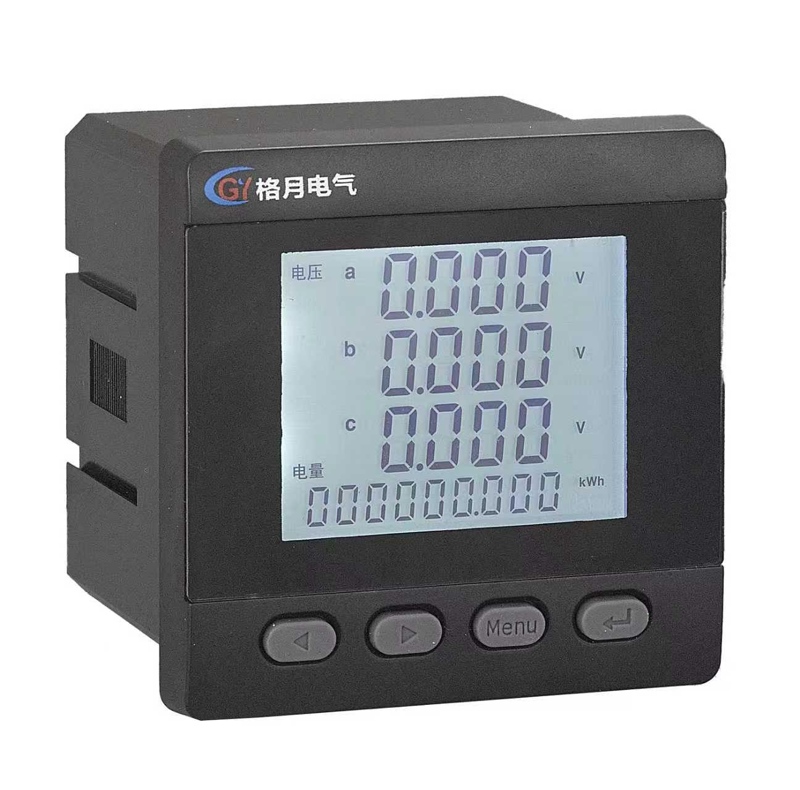
Modern smart power meters have evolved from simple current and voltage measurement devices into comprehensive monitoring devices integrating power quality analysis, demand statistics, event recording, and other functions. Taking our newly developed iME series multi-functional meter as an example, a single device can simultaneously monitor more than 50 power parameters and supports advanced functions such as harmonic analysis and waveform capture.
The convergence of communication technologies has greatly expanded the application boundaries of power meters. From the initial RS485 Modbus protocol to today's Ethernet and 4G/5G wireless communication, smart power meters are becoming important nodes in the Industrial Internet of Things (IIoT). Our latest generation of products supports the MQTT protocol and can directly connect to the cloud platform to achieve remote data access and analysis.
In terms of intelligence, the application of artificial intelligence technology is changing the functional positioning of traditional power meters.
Product Features and Performance Advantages
Modern smart power meters have significant performance advantages. Firstly, in terms of measurement accuracy, they employ a 24-bit high-precision ADC and professional signal conditioning circuitry, with a basic error controlled within 0.5%. Taking current measurement as an example, measurement accuracy is guaranteed across a wide range from 1% to 120% of the rated current. In terms of functionality, Multifunctional Meter achieve a high degree of integration. Our flagship PM800 series supports up to the 50th harmonic analysis, with a sampling rate of up to 6.4kHz.
Application Case Studies
In the infrastructure sector, smart power meters also demonstrate significant value. A subway line in a certain city has established a power monitoring system by installing Multifunctional Meter. The system can monitor the operating status of traction substations in real time, quickly locate the problem point in the event of a fault, and reduce the average fault handling time from 2 hours to 30 minutes.
Our Technical Practices at Geyue Electric
Our R&D team currently has over 5 engineers, and our annual R&D investment accounts for more than 8% of our sales revenue. In recent years, we have developed more than 20 intelligent power meter products in three series to meet the needs of different customers.
In manufacturing, we have established a complete quality assurance system. Our production lines use automated placement equipment and online testing systems, achieving a first-pass yield rate of over 99.5%.
Future Outlook and Development Trends
With the advancement of the energy internet construction, smart power meters will usher in broader development prospects. We believe that future smart power meters will develop in the following directions.
Accuracy will be further improved. This will meet the needs of more demanding application scenarios, such as precision manufacturing and laboratories.
Communication technology will be more advanced. The application of new technologies such as Time-Sensitive Networking (TSN) will improve the real-time performance and reliability of data transmission.
Standardization will be further enhanced. The improvement of industry standards will promote interoperability between equipment from different manufacturers. This will facilitate the construction of a more open energy management system.
Conclusion
As a core device in energy management, Multifunctional Meter are playing an increasingly important role in various fields. With technological advancements and increasing application demands, the functions and performance of smart power meters will continue to improve.
Related News
- What Is the Difference Between a Power Capacitor and an Intelligent Capacitor?
- Are Self-Healing Shunt Capacitors Suitable for Industrial Applications?
- Why Does a Factory Need an Automatic Power Factor Controller?
- Can a Power Capacitor Reduce Electricity Losses in a Factory?
- What Should Engineers Check Before Choosing a Low Voltage Power Capacitor?
- Why Are Self-Healing Shunt Capacitors Widely Used in Low-Voltage Power Systems?
Leave me a message