Can Active Power Filters Become the Key to Solving Power Quality Problems?
Introduction
Modern power systems face increasingly complex power quality problems. With the widespread application of nonlinear loads such as frequency converters and rectifiers in industrial production, harmonic pollution of the power grid is becoming increasingly serious. Active power filters, as an effective mitigation solution, are gaining increasing attention.
Active power filters achieve harmonic mitigation by tracking the harmonic components in the load current in real time and generating an opposite compensating current. This active compensation method is more flexible and efficient than traditional passive filtering. Especially in industrial applications with complex harmonic sources, active power filters demonstrate significant technological advantages.
Technical Features and Advantages
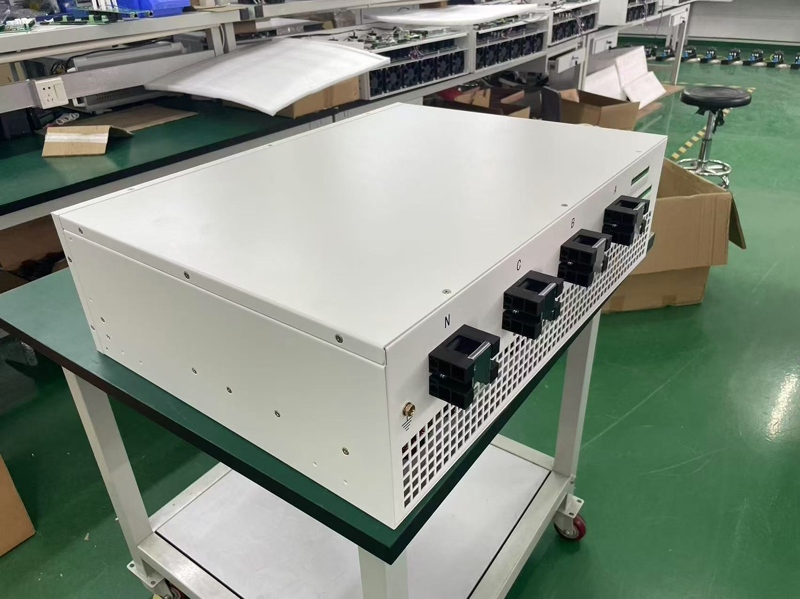
In harmonic compensation, active power filters offer high flexibility. They can simultaneously compensate for characteristic harmonics from the 2nd to the 50th order and effectively suppress interharmonics. Compared to traditional passive filters, active power filters do not resonate with grid impedance, ensuring greater safety. The equipment uses an adaptive control algorithm that automatically tracks load changes and adjusts the compensation strategy in real time. With an IP54 protection rating, they can adapt to complex industrial environments. Actual operation data shows that system losses can be reduced by 15%~25% after using an active power filter.
Application Area Analysis
Active power filters have significant application value in the industrial manufacturing sector. Semiconductor factories are a typical application scenario, with production lines having extremely high power quality requirements. Precision instruments such as wafer fabrication equipment and etching machines are highly sensitive to voltage fluctuations.
New energy power generation is an emerging application area for active power filters. Inverters in photovoltaic power plants generate harmonics when converting DC to AC.
Subway traction power supply systems generate a large amount of harmonics. Active power filters can effectively improve power quality and ensure the safe operation of trains.
The petrochemical industry is an important application area for active power filters. Variable frequency drive equipment in refining plants generates harmonic pollution.Chemical production has high requirements for continuity, and active power filters can reduce power outages.Technological innovation will continue to expand the application boundaries of active power filters.
Our Technical Practice at Geyue Electric
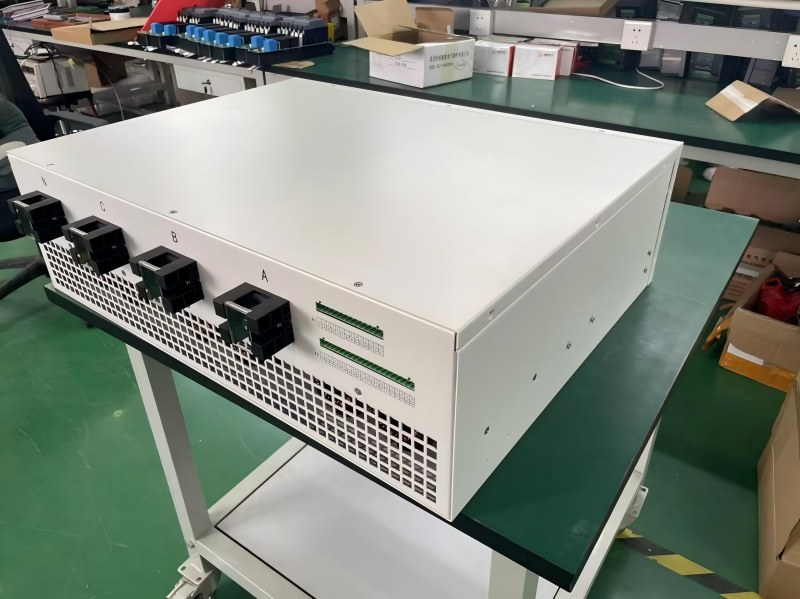
Our R&D team continuously innovates. Our recently developed next-generation active power filters have significantly improved in performance and functionality. The addition of an intelligent monitoring system allows for real-time monitoring of equipment operation. These innovations keep our products competitive.
Market Outlook
The market prospects for active power filters are broad. With economic development, power quality issues are receiving increasing attention. The country's requirements for power quality are constantly increasing, driving the growth in demand for power quality control equipment. Industrial upgrading and transformation bring new market opportunities for active power filters.
The rapid development of new energy sources also brings new demands. Photovoltaic, wind power, and other new energy projects all require power quality control equipment. It is expected that the active power filter market will maintain stable growth over the next five years.
Technological innovation will drive market development. New products are continuously improving in performance, decreasing in cost, and expanding in application areas. Intelligentization and networking are the future development directions. We will closely follow technological development trends and continuously launch new products.
Summary
Active power filters are increasingly important as an effective means of addressing power quality issues. These devices employ active compensation to quickly and accurately suppress harmonics and improve power quality. Compared to traditional passive filters, they offer significant technological advantages. Active power filters have already achieved good results in practical applications.
With technological advancements, the performance of active power filters continues to improve, and costs are continuously optimized. Their applications in industry, commerce, and new energy sectors are becoming increasingly widespread. The construction of smart grids brings new development opportunities for active power filters. In the future, active power filters will play an even more important role in the power grid.
Related News
- What Is the Difference Between a Power Capacitor and an Intelligent Capacitor?
- Are Self-Healing Shunt Capacitors Suitable for Industrial Applications?
- Why Does a Factory Need an Automatic Power Factor Controller?
- Can a Power Capacitor Reduce Electricity Losses in a Factory?
- What Should Engineers Check Before Choosing a Low Voltage Power Capacitor?
- Why Are Self-Healing Shunt Capacitors Widely Used in Low-Voltage Power Systems?
Leave me a message