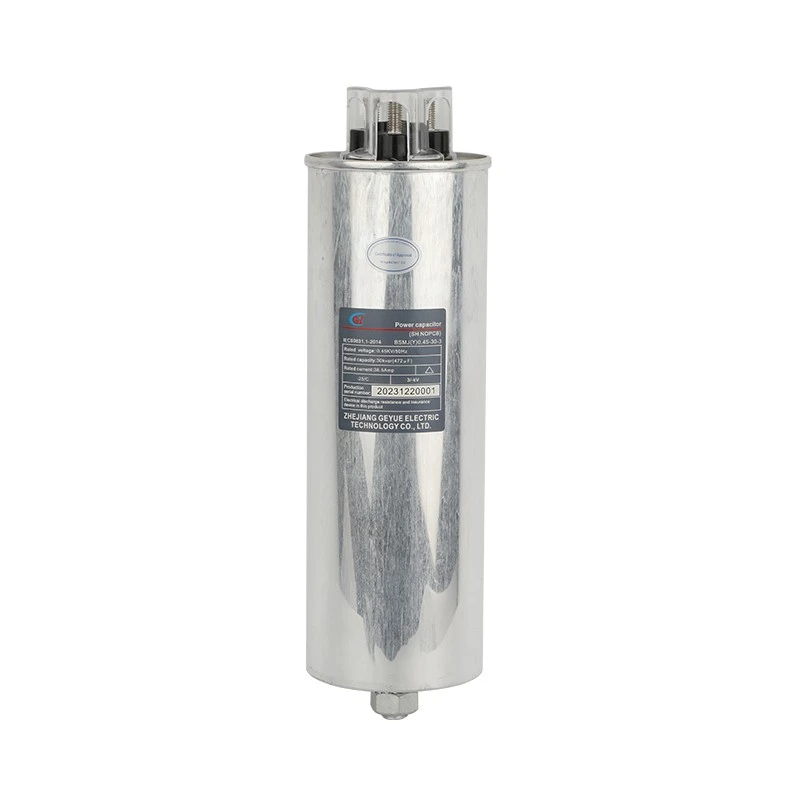
Can Cylinder Self-healing Shunt Capacitor Become the Ideal Choice for the Smart Grid Era?
Technical Features and Working Principle
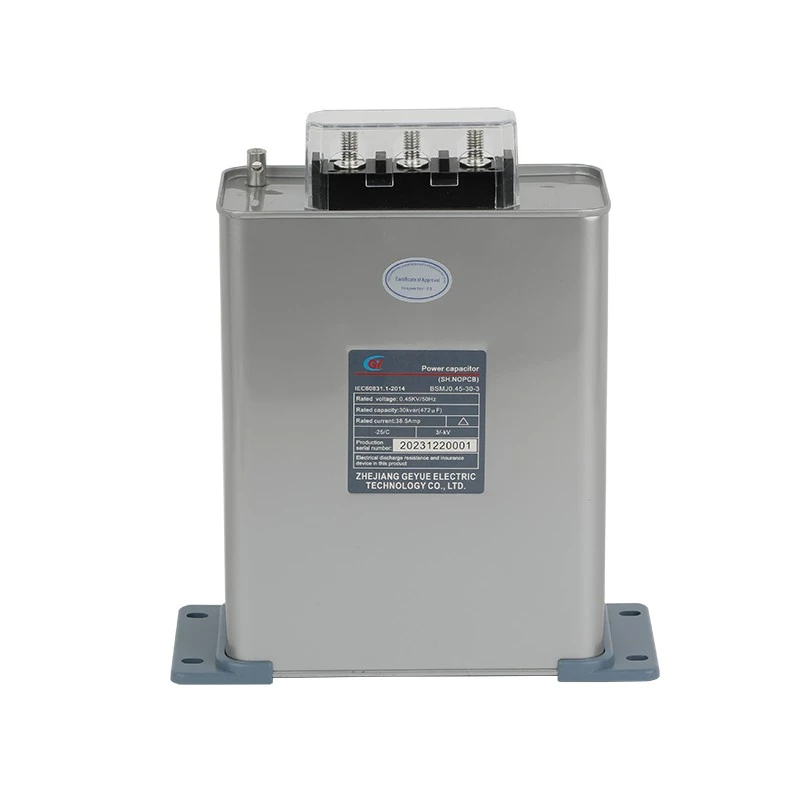
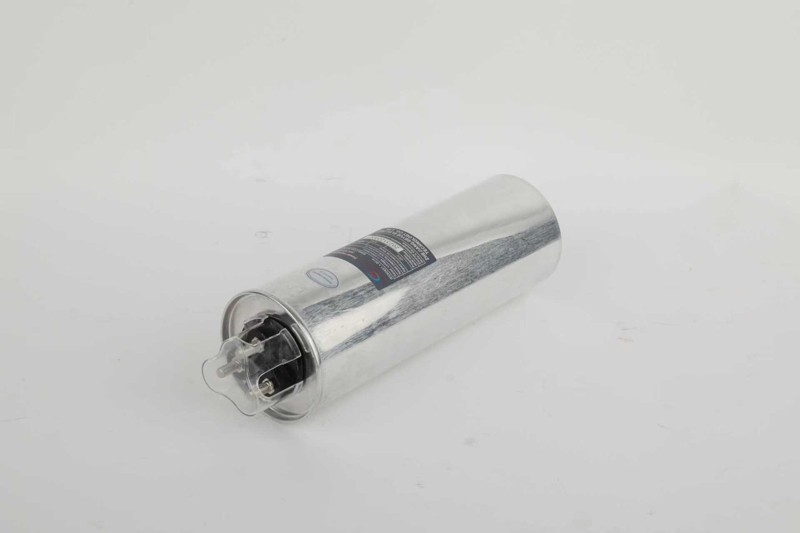
This Cylinder Self-healing Shunt Capacitor uses a special metallized polypropylene film material as its core component, with a uniform zinc-aluminum composite layer deposited on the film surface. Compared to traditional box-type capacitors, the cylindrical structure has a more reasonable heat dissipation path, quickly conducting internal heat to the outer casing for dissipation. Due to its perfectly symmetrical structure, the electric field distribution is more uniform, avoiding excessively high local field strength, thus significantly extending the product's lifespan.
Selection Considerations and Installation Specifications
When selecting this type of Cylinder Self-healing Shunt Capacitor, multiple technical parameters and actual operating conditions need to be considered comprehensively. First, special attention must be paid to the matching of the rated voltage. It is generally recommended to choose a model with a voltage 10% to 20% higher than the system's highest operating voltage, such as 440V or 480V products, to allow sufficient safety margin. When multiple capacitor banks are used in parallel, special attention should be paid to the capacitance matching and impedance characteristics of each bank to prevent circulating current. The correct installation method is vertical installation, which facilitates air convection heat dissipation and makes daily observation and maintenance easier.
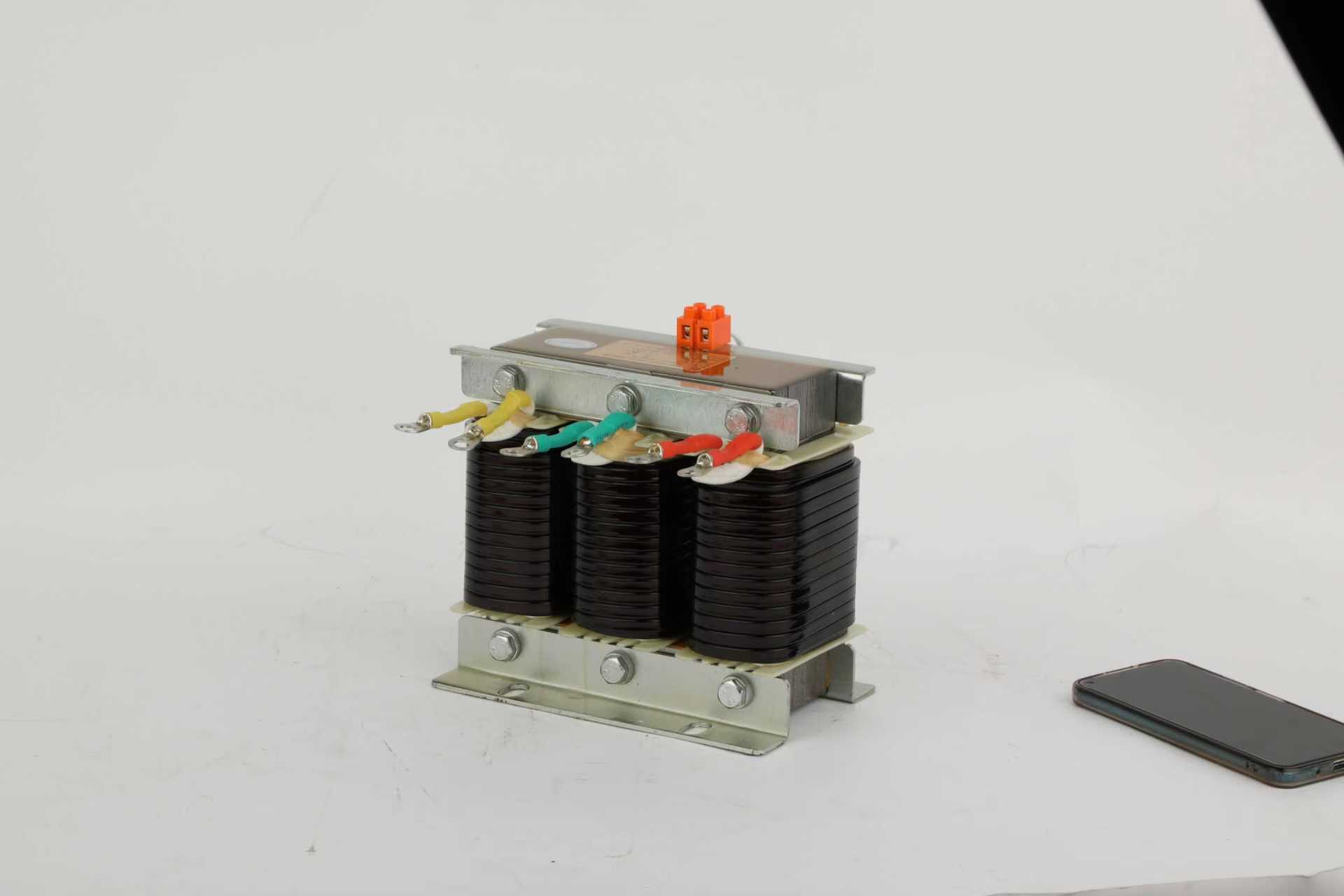
For specific selection, the rated voltage should be 1.1 times the system voltage; for example, a 400V system should use a 440V product. Capacity calculations must consider load characteristics, generally configuring it at 20-40% of the transformer capacity. Reactor selection: Select a 14% reactance rate for severe 5th harmonics, and a 7% reactance rate for general harmonics. Environmental requirements: Installation height should not exceed 2000 meters above sea level; ambient temperature should be -25℃ to +55℃; relative humidity ≤85%. When used in parallel, the capacitance difference between banks should be controlled within 5%, and the impedance difference within 3%. The installation direction must be vertical, with an inclination not exceeding 5 degrees.
How to operate and maintain a capacitor
For equipment with frequent switching, check the terminals weekly for looseness and tighten the connecting bolts quarterly. If bulging or oil leakage is found in the capacitor, stop using it immediately and have it inspected and handled by a professional. Common faults mainly include capacitance changes and increased losses, which can be diagnosed using specialized testing instruments. A preventative test is recommended every six months. Equipment older than three years should have increased inspection frequency; a comprehensive inspection, including insulation resistance testing and capacitance measurement, is recommended quarterly. Before performing any maintenance, always disconnect the power and fully discharge the circuit. Use a discharge rod with a resistor to discharge multiple times to ensure operational safety. Establish a complete operation record, detailing the number of switching operations, operating time, abnormal situations, and other data. This provides a basis for preventative maintenance, enabling a shift from reactive to proactive repair.
Specific maintenance standards
Routine inspection once a week, with the temperature measurement point selected at the upper 1/3 of the casing. A green pressure indicator indicates normal operation, yellow indicates caution, and red requires immediate replacement. Wiring inspection: Monthly for equipment with frequent switching, quarterly for general equipment. Preventative tests include: insulation resistance test (≥1000MΩ), capacitance measurement (deviation ≤±5%), and loss angle test (≤0.002). For older equipment, add inspection items including infrared thermal imaging and ultrasonic partial discharge detection. Discharge requirements: Discharge for at least 5 minutes, with residual voltage ≤50V. The operation record must record: number of switching operations, operating temperature, abnormal alarms, and other data. These measures can control the failure rate to below 0.5%.
Technological Development Trends and Innovation Directions
Currently, Cylinder Self-healing Shunt Capacitor are developing towards intelligence and environmental friendliness. New generation products are generally equipped with condition monitoring modules, using high-precision sensors to collect operating temperature, current, voltage, and other parameters in real time, and achieving remote data transmission through wireless communication technology. New materials use high-temperature resistant polypropylene film, with a long-term operating temperature of 105℃ and short-term resistance to 125℃. Solid-state switches have a response time of <1ms and a lifespan of up to 10 million cycles. Energy efficiency standards require a loss angle ≤0.0005, four times higher than current standards. A new generation of products integrating edge computing capabilities is expected to emerge in 2025, achieving true intelligent early warning.
Specific market data
The global market size reached $5 billion in 2023, with an annual growth rate of 5.2%. The annual demand growth rate for smart grid transformation projects exceeds 15%. It is projected that by 2025, the market share of domestic companies will increase from 35% to 50%.
Related News
- What Is the Difference Between a Power Capacitor and an Intelligent Capacitor?
- Are Self-Healing Shunt Capacitors Suitable for Industrial Applications?
- Why Does a Factory Need an Automatic Power Factor Controller?
- Can a Power Capacitor Reduce Electricity Losses in a Factory?
- What Should Engineers Check Before Choosing a Low Voltage Power Capacitor?
- Why Are Self-Healing Shunt Capacitors Widely Used in Low-Voltage Power Systems?
Leave me a message