Are You Still Using AC Contactors and SSRs for Capacitor Switching? Here‘s Why Engineers Are Switching to Compound Switches
If you‘ve ever seen a capacitor switching device blow up—and I mean literally blow up—you know exactly what I’m talking about. The loud pop. The smell of burnt plastic. The angry look from your boss when he realizes that‘s the third contactor this month.
Here‘s the thing. Switching capacitors isn’t like switching a light bulb. Capacitors don‘t play nice with conventional switches. When you close a contactor across a discharged capacitor, the inrush current can hit 100 times the normal current. That’s not a click. That's a small explosion happening inside your panel. And if you‘re using solid state relays, sure, they switch fast. But they also run hot—really hot—and they don’t last forever when you‘re cycling them every few minutes.
So what‘s the solution? Let me introduce you to something that’s been quietly taking over low-voltage reactive power compensation systems around the world. It‘s called a compound switch. And once you understand how it works, you might wonder why you haven’t switched earlier.
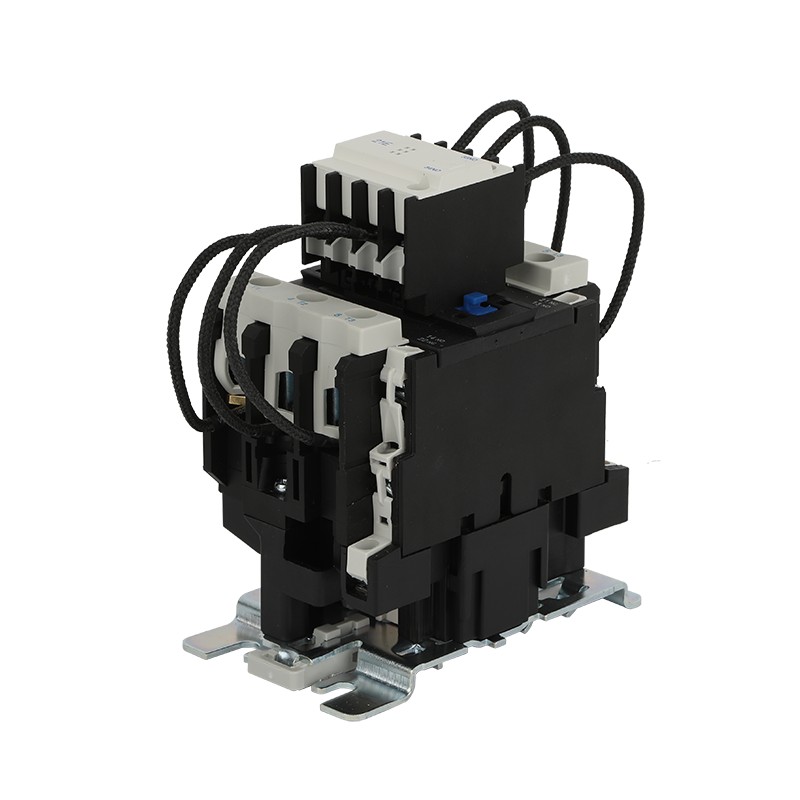
What Exactly Is a Compound Switch?
Most engineers I talk to give me a blank look when I first mention compound switches. Then I show them one, and they say, “Wait, so it‘s like a contactor and a thyristor had a baby?”
That’s actually not far off.
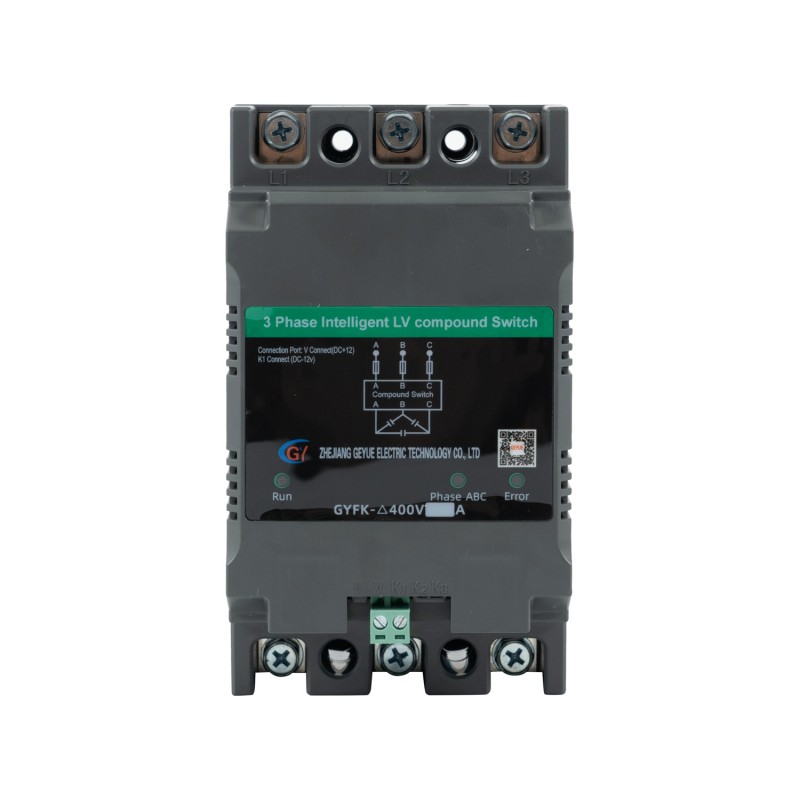
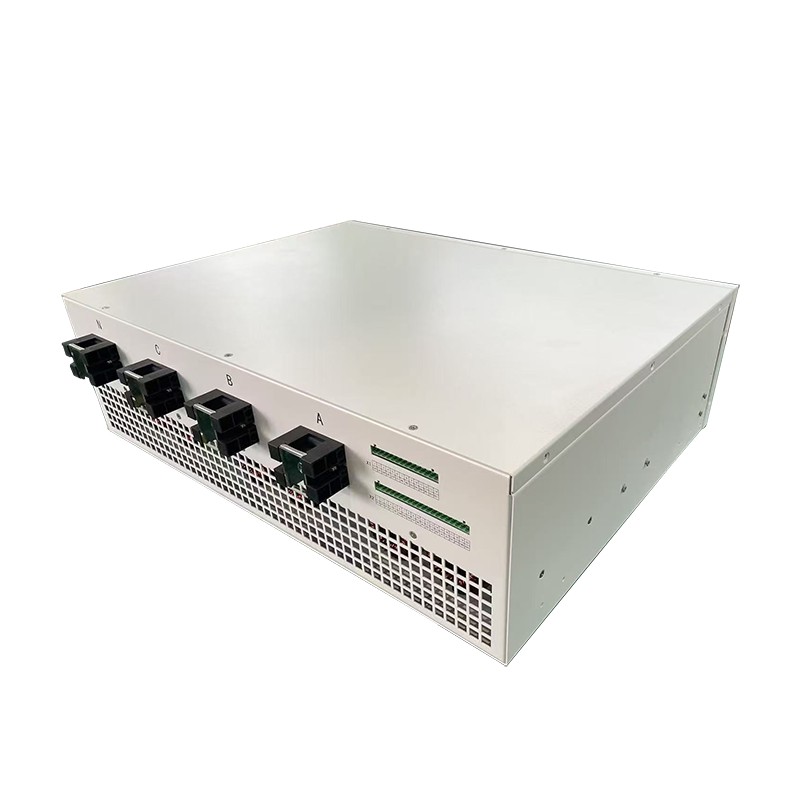
A compound switch—also called a composite switch or intelligent compound switch—puts a high-voltage, high-current thyristor (silicon-controlled rectifier) in parallel with a magnetic latching relay-15. A microcontroller sits in the middle, watching the AC waveform and deciding exactly when to fire each device.
Here‘s the beauty of it. When the switch gets a command to turn on, the thyristor fires first at the exact moment the voltage crosses zero. No surge. No bang. Just a clean, silent connection. Then, a few milliseconds later, the relay closes and takes over the current flow. The thyristor stops conducting. That means no more heat generation, no bulky heatsinks, no cooling fans humming away inside your cabinet-32.
When it’s time to disconnect, the opposite happens. The relay opens first, then the thyristor handles the cutoff at the current zero crossing. Again, smooth and arc-free.
Why This Matters for Your Power System?
Let me put it in numbers.
A typical AC contactor switching a capacitor bank can generate inrush currents that stress the entire system. Those surges don‘t just wear out the contactor—they degrade your capacitors, mess with your power quality, and eventually take down other components. Some field reports show that facilities using conventional contactors replace switching devices every six to twelve months, depending on how often they cycle.
Compound switches fix that entirely. Because the thyristor handles the switching moment and the relay handles the steady-state current, you get zero inrush and zero harmonics. No arcs, no sparks, no contact welding-15. The result? Switching devices that last millions of operations instead of thousands.
Then there’s the heat problem. Solid state relays (SSRs) are great for some applications, but in capacitor switching, they suffer from one fatal flaw: conduction losses. An SSR is essentially always in a semi-conducting state when it‘s on, which means it’s always generating heat. Try stacking a few of them in a tightly packed panel, and you‘ll quickly run into cooling problems. One engineering manager told me his team had to redesign an entire control cabinet just to fit the airflow ducts for their SSR-based compensator.
Compound switches don‘t have that issue. Once the relay takes over, the thyristor shuts off completely. Power consumption during steady-state operation? Nearly zero. We’re talking about 1.5 VA or less per switch-7. That‘s not a typo.
Where You’ll Find These in the Real World?
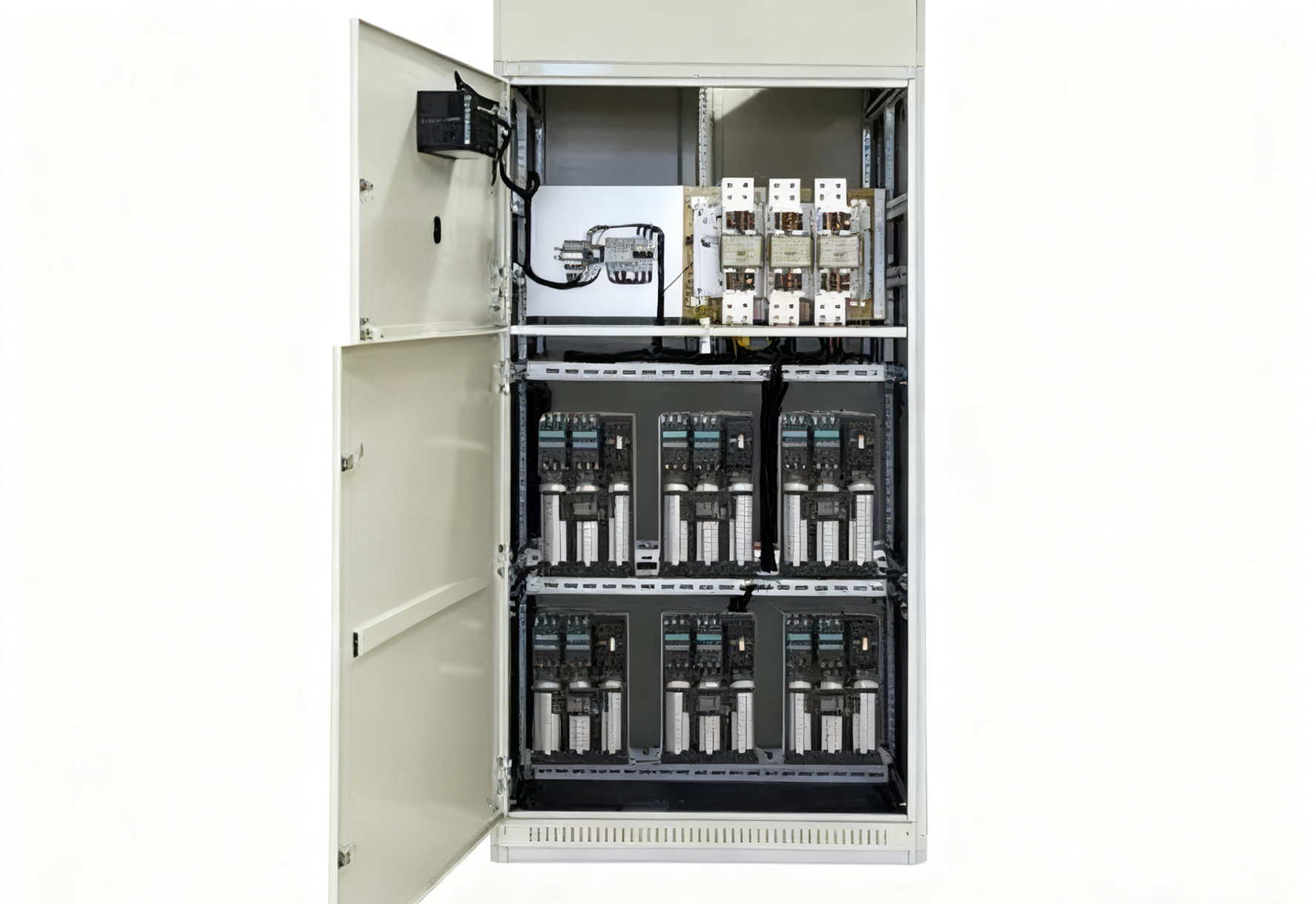
The most common place you‘ll see compound switches is in low-voltage reactive power compensation systems—the kind you find in factories, shopping malls, office buildings, and data centers. Any facility with motors, transformers, or inductive loads needs capacitors to correct the power factor, and those capacitors need switching devices that won’t fall apart after a few thousand cycles.
Take a real-world example. A large shopping mall‘s central air conditioning system was cycling its capacitor banks dozens of times per day. Their AC contactors were failing every eight months. After switching to intelligent compound switches, the system cut energy consumption by 18 percent just from improved compensation efficiency and eliminated the replacement costs entirely-. The switches have been running for three years now. No failures. No maintenance calls. The maintenance supervisor still talks about it like I’m some kind of wizard.
Compound switches also handle both three-phase and single-phase compensation. For three-phase systems with delta-connected capacitor banks, you can use a common-compensation type switch. For split-phase Y-connected setups, there are dedicated models that switch each phase independently-7. Most manufacturers offer models rated from 220V up to 690V, with control capacities ranging from 10 kvar all the way up to 50 kvar-.
The Intelligent Features You Didn‘t Know You Needed
Here’s where compound switches get really interesting. Because they have a microcontroller onboard, they‘re not just dumb switches. They’re smart.
The better ones come with built-in protections that you won‘t find in a standard contactor or SSR. Voltage phase loss protection—if the system loses a phase, the switch refuses to close. Undervoltage protection—if the supply dips below about 80 percent, the switch stays open. Self-diagnostic fault protection—if a component fails internally, the switch won’t try to operate. Some even have temperature sensors and communication ports (RS232 or RS485) so you can monitor them remotely and get fault alerts without walking out to the panel-15-16.
Think about what that means for your maintenance routine. Instead of sending someone out every month to poke around inside a live panel, you can sit at a computer and see exactly which switches are working and which ones need attention. For facility managers running multiple buildings, that‘s a game-changer.
Let’s Be Honest About the Downsides
No product is perfect, and compound switches have their limitations.
The main one is complexity. A compound switch has more components than a simple contactor—thyristors, relays, control circuits, zero-crossing detectors. More parts means more things that can fail. In practice, most failures happen when manufacturers cut corners and use under-spec‘d thyristors. A properly designed compound switch uses thyristors rated above 2500V and sized for the peak currents the system might see. Cheap versions don’t. And those cheap versions fail-30.
The other downside is initial cost. A compound switch costs more upfront than an AC contactor. If you‘re just looking at line items on a purchase order, the contactor looks cheaper. But once you factor in replacement costs, downtime, and the labor to swap out failed units every year, the math changes fast.
For most engineers I’ve worked with, the payback period on switching to compounds is somewhere between six and eighteen months. After that, it‘s pure savings.
How to Choose the Right Compound Switch?
If you’re ready to make the switch—pun intended—here‘s what to look for.
First, check the rated voltage and control capacity. Most systems run on 220V (single-phase) or 380V (three-phase). Your switch needs to match your system voltage and handle the kvar rating of your capacitor banks. Common ratings go up to 50 kvar for three-phase systems and 15 kvar for single-phase setups-.
Second, look for mechanical life ratings. A good compound switch should be rated for at least a million mechanical operations-7. That’s orders of magnitude better than a typical contactor.
Third, don‘t skip the intelligent features. If you’re paying for a compound switch anyway, get the one with phase loss protection, undervoltage lockout, and communication capability. Those extra features cost almost nothing to add but can save you thousands in troubleshooting time down the road.
Fourth, check the ambient temperature rating. The better switches are rated from -25°C to +70°C. If you‘re installing outdoors or in an unconditioned electrical room, that range matters.
And here’s a tip most catalogues won‘t tell you: compound switches won’t operate without a capacitor or dummy load connected. That‘s not a bug—it’s a safety feature. Don‘t try to bench test one with just a multimeter and wonder why nothing happens-.
The Bottom Line
AC contactors are cheap to buy and expensive to own. Solid state relays are fast but hot and power-hungry. Compound switches sit right in the middle—they switch like a thyristor and run like a relay. They give you zero inrush, zero harmonics, near-zero power consumption, and ten times the lifespan.
If you’re still switching capacitors with old-school contactors or struggling with overheated SSR panels, it‘s time to ask yourself a question: How many more blown contactors are you going to replace before you try something better?
The product pages below have full specifications and application guides. Check them out, and if you have questions about integrating compound switches into your existing system, drop me a line. I’ve
Related News
- Are Self-Healing Shunt Capacitors Suitable for Industrial Applications?
- Why Does a Factory Need an Automatic Power Factor Controller?
- Can a Power Capacitor Reduce Electricity Losses in a Factory?
- What Should Engineers Check Before Choosing a Low Voltage Power Capacitor?
- Why Are Self-Healing Shunt Capacitors Widely Used in Low-Voltage Power Systems?
- What Makes a Good AC Contactor Supplier?
Leave me a message