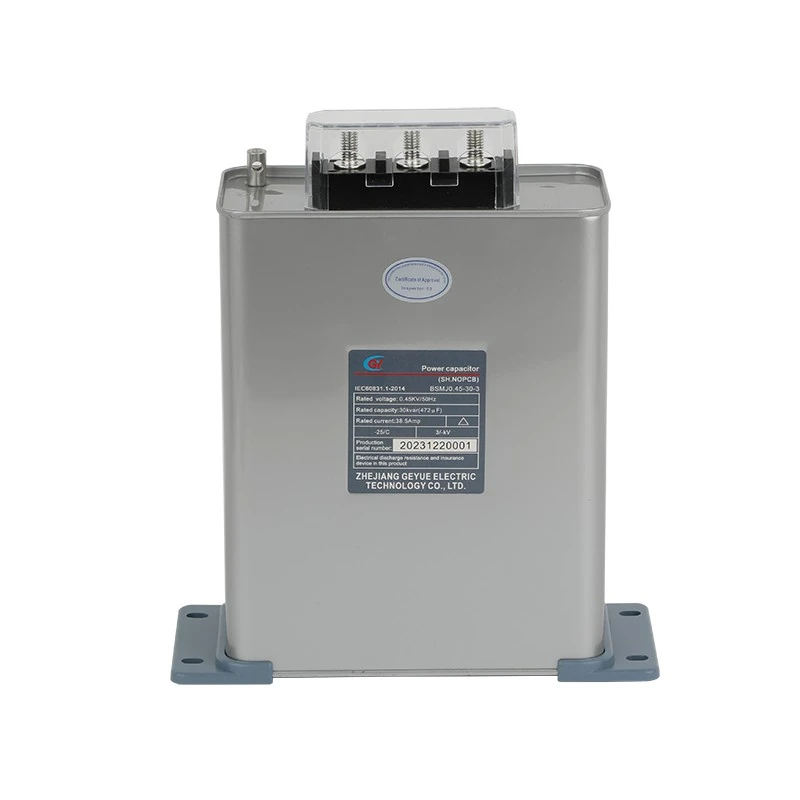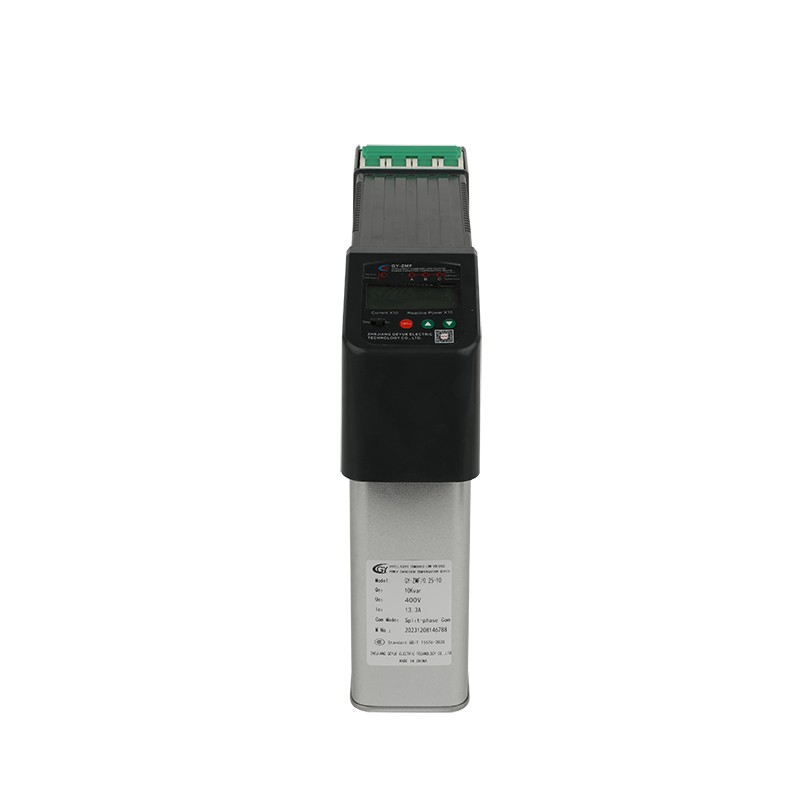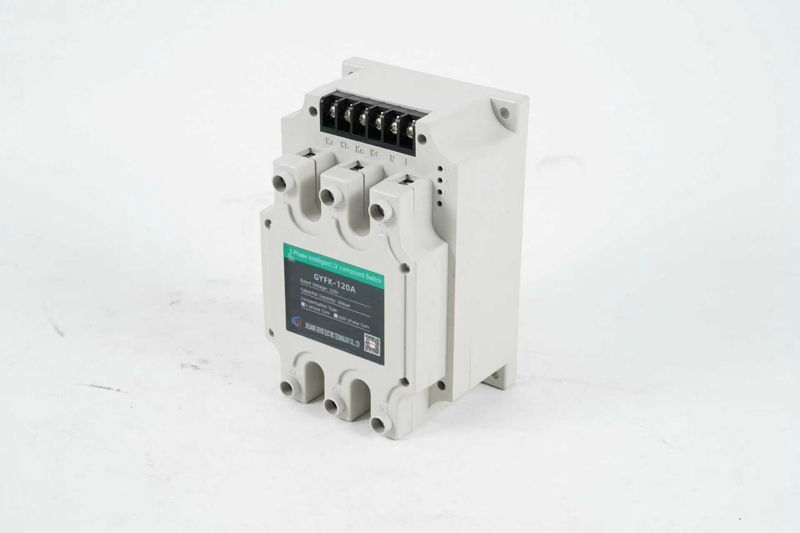
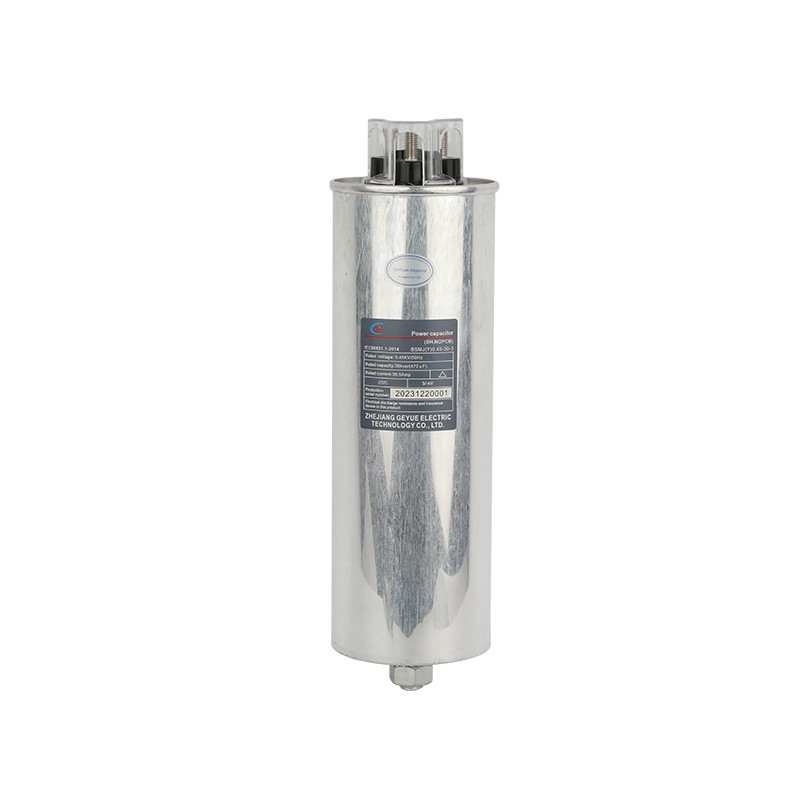
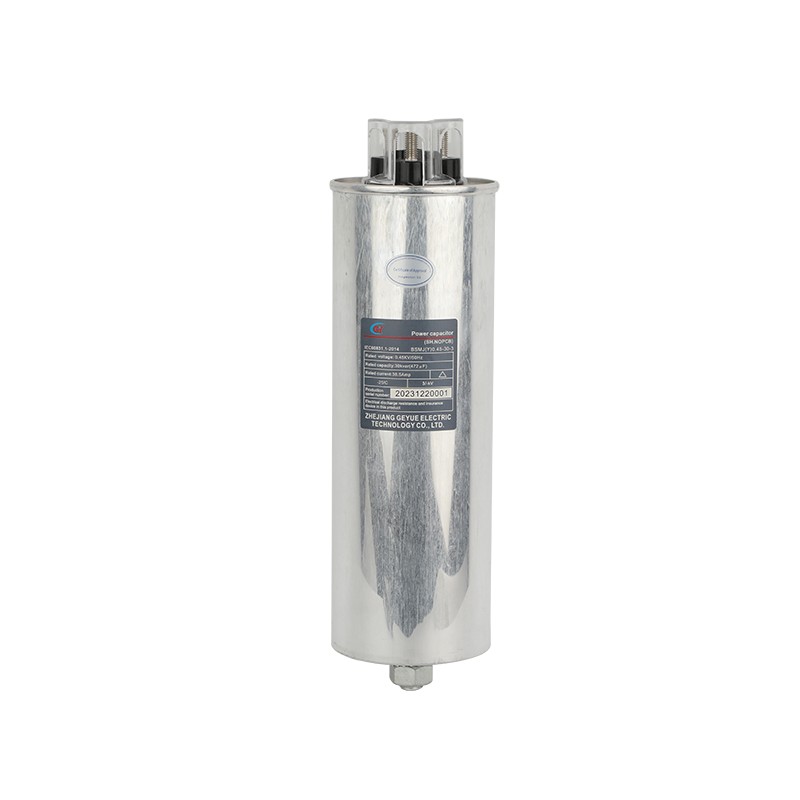
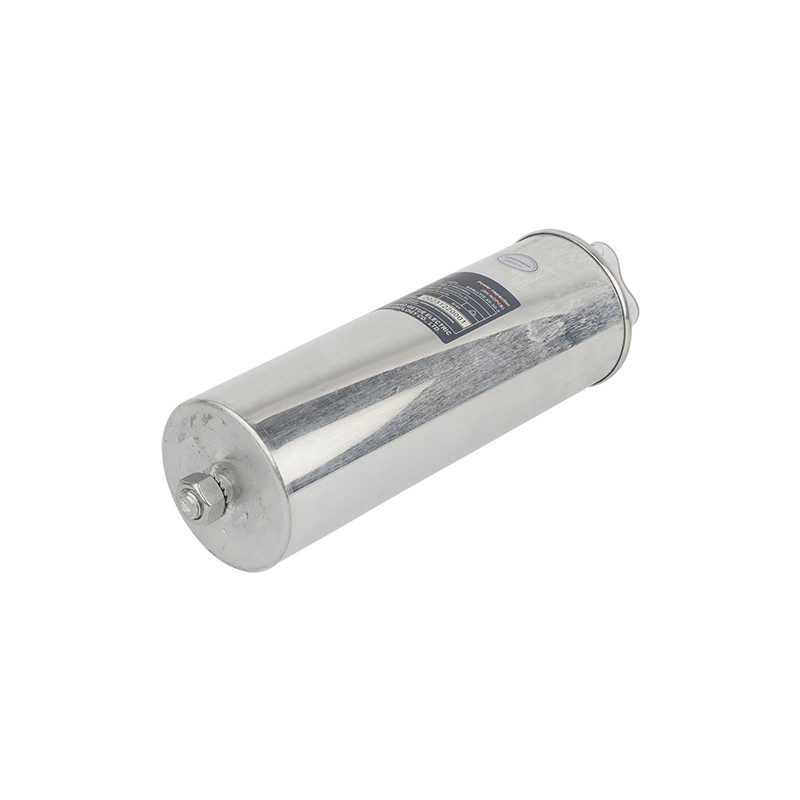
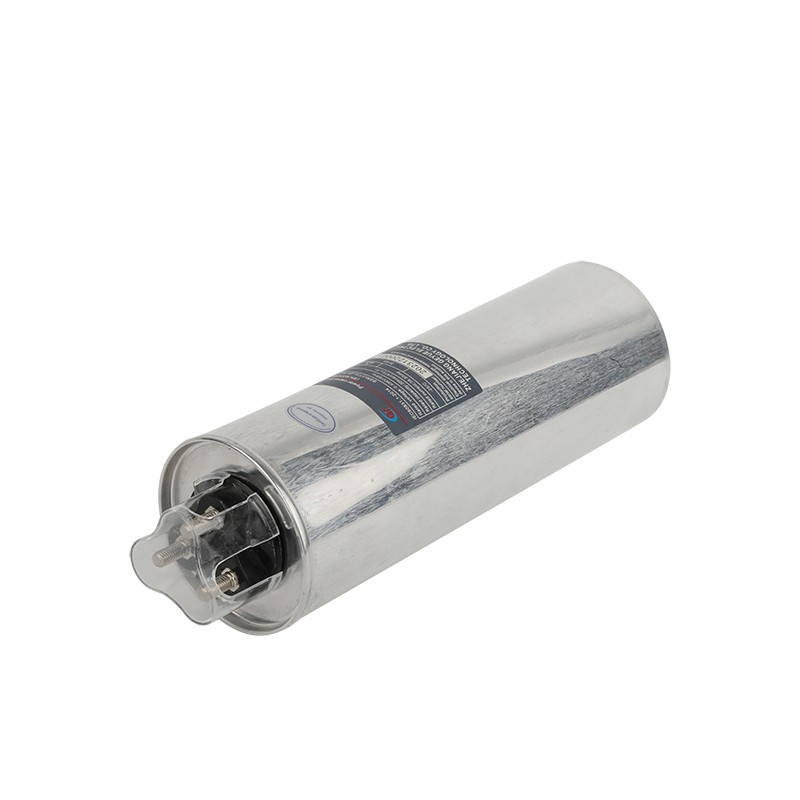
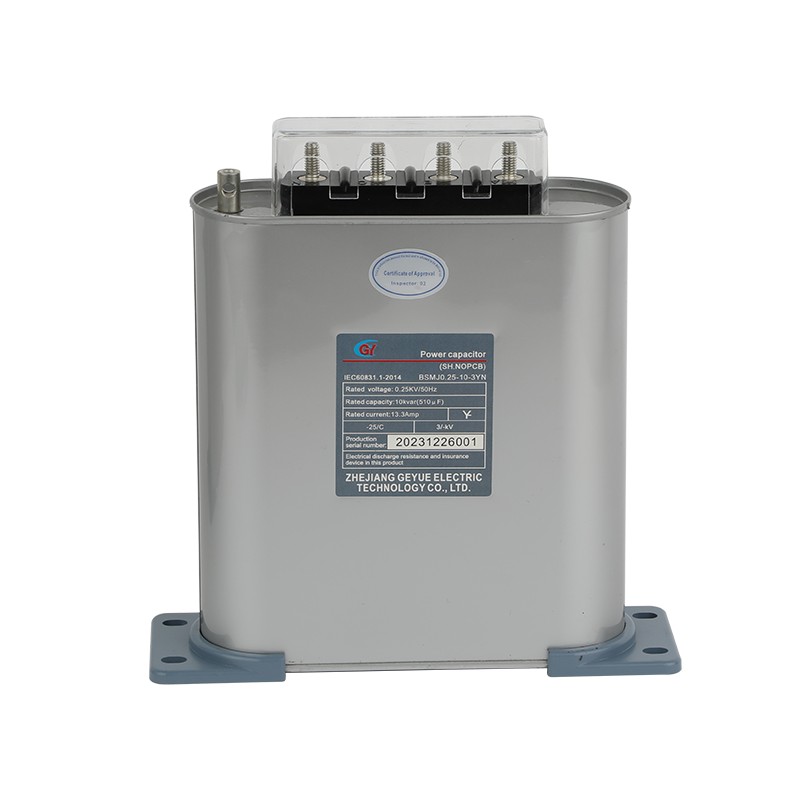
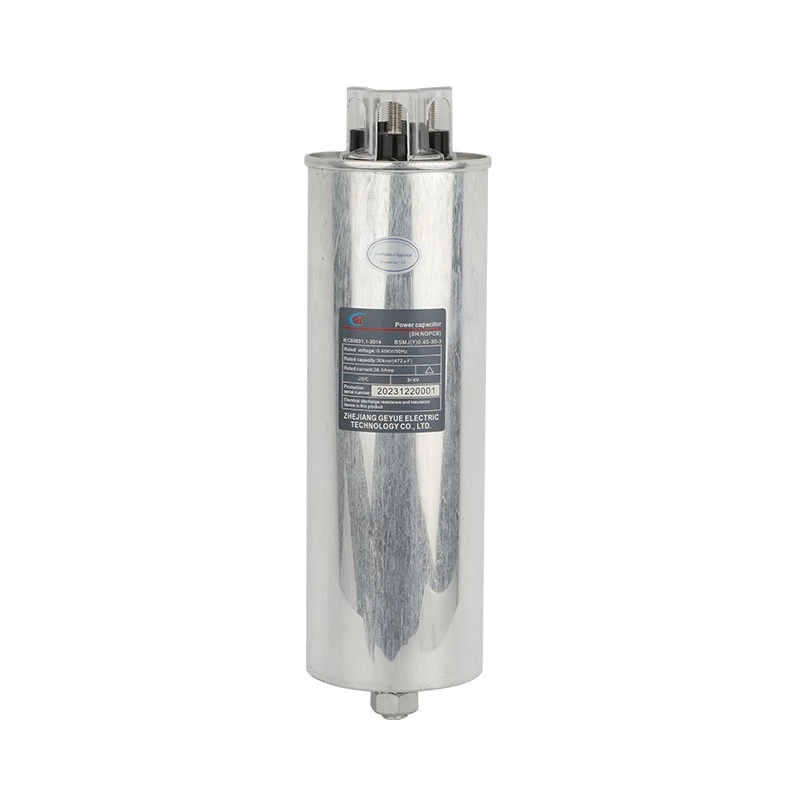
Low Voltage Self-Healing Shunt Capacitor
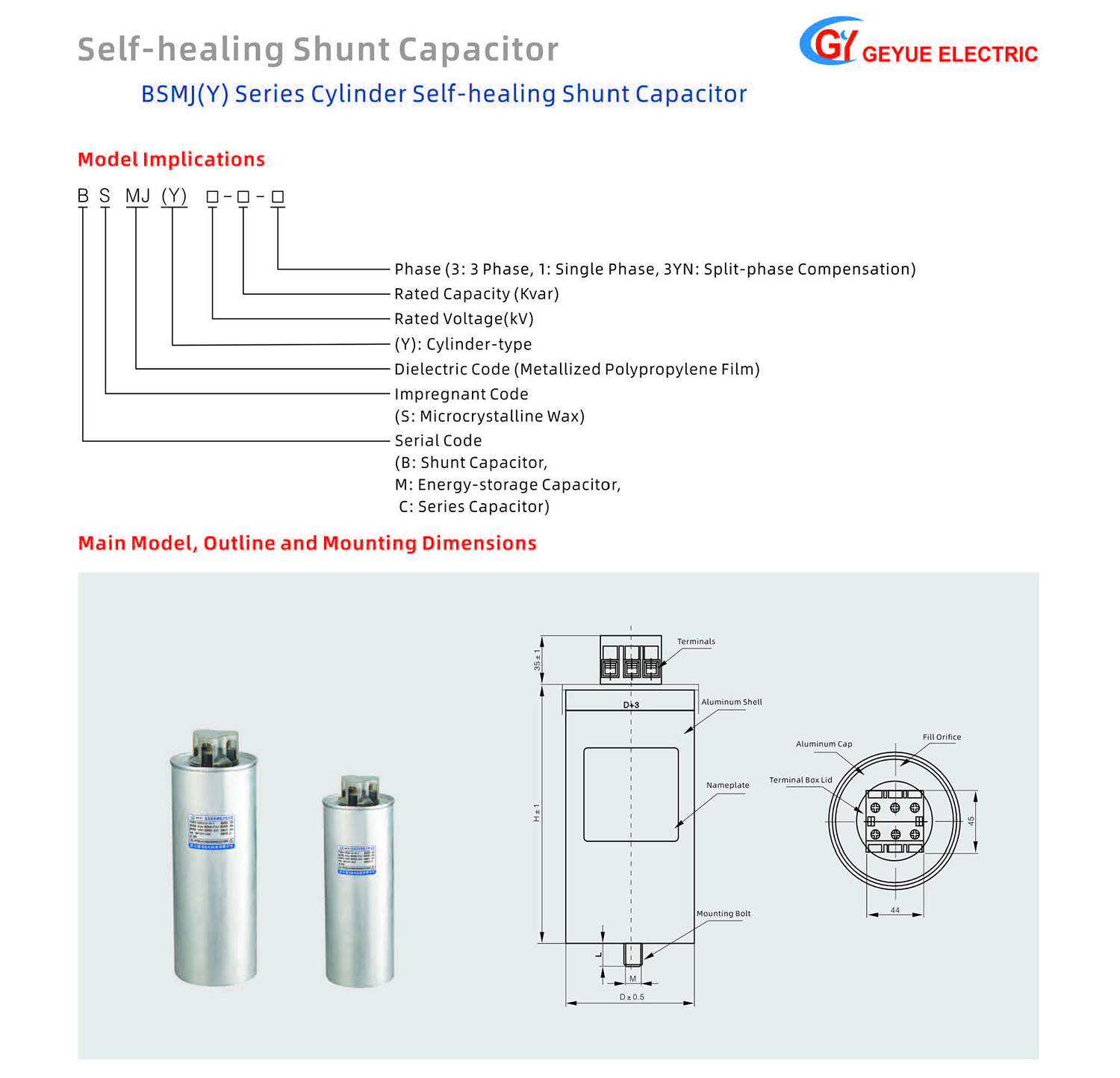
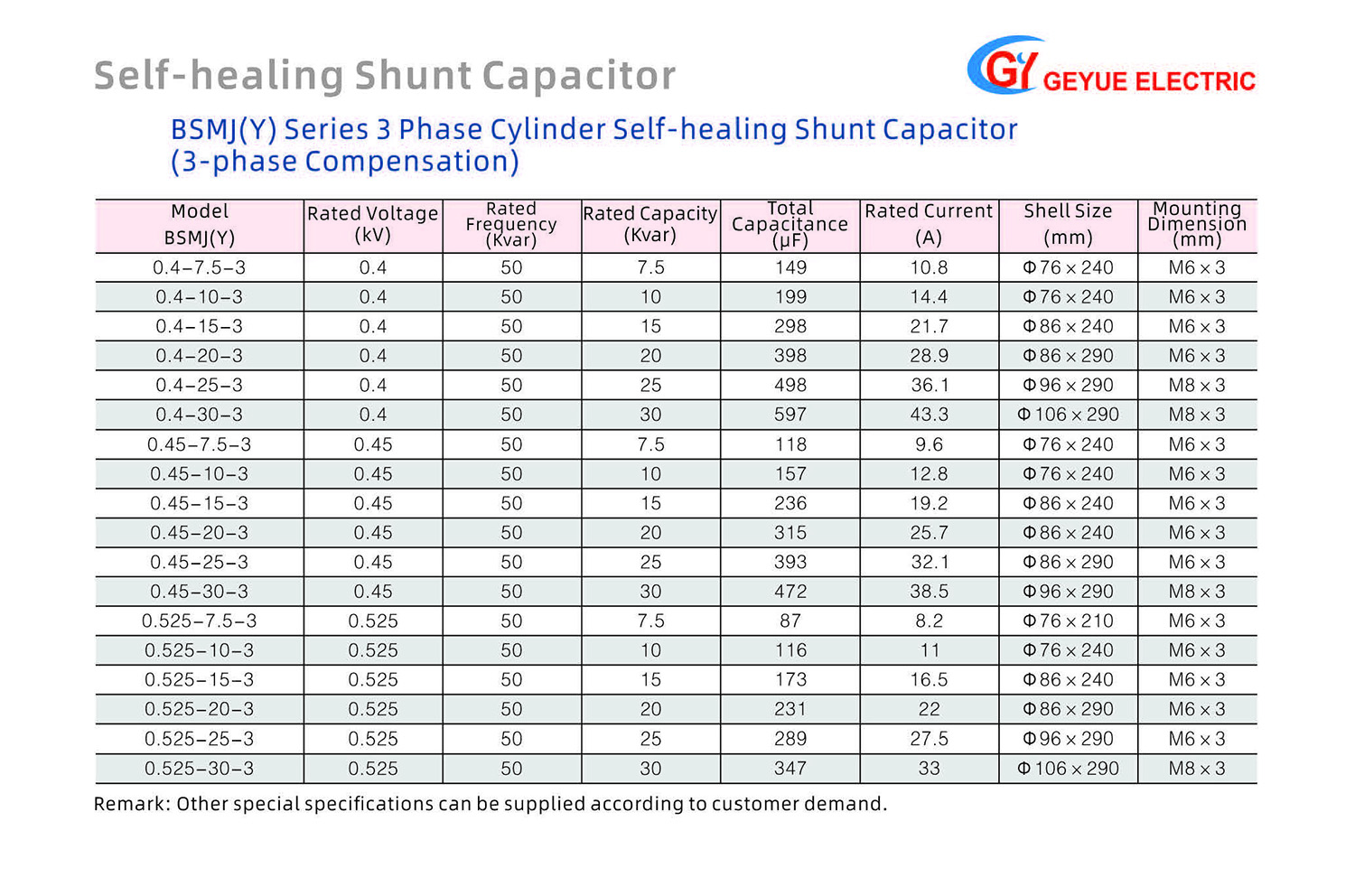
Model:BSMJ(Y) Series
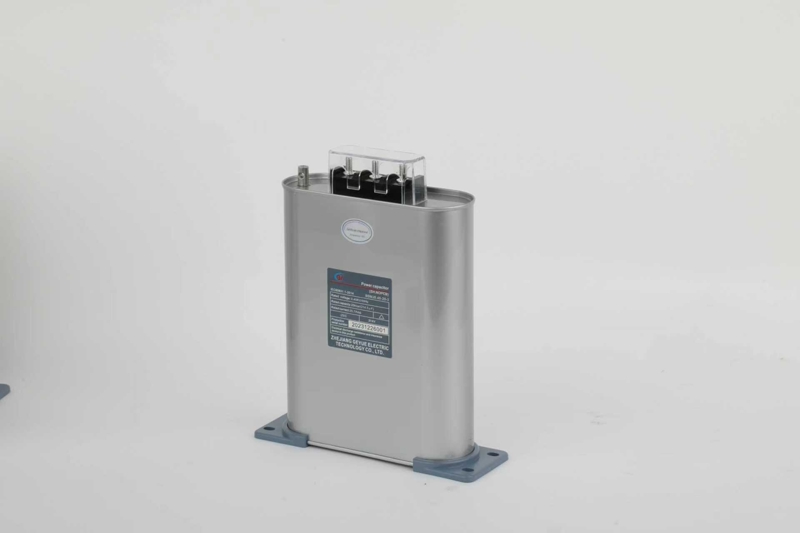
The Low Voltage Self-Healing Shunt Capacitor engineered by Geyue Electric is a type of power capacitor with self-healing function. When the internal dielectric undergoes partial breakdown, the capacitor can quickly restore insulation and continue to operate normally. It is mainly used for reactive power compensation in low-voltage power grids to improve the power factor and power quality of the power system.
All aspects of this product satisfy these standard requirements: GB/T 12747.1-2004 and IEC 60831-1:2014.
All aspects of this product satisfy these standard requirements: GB/T 12747.1-2004 and IEC 60831-1:2014.
In modern industrial production, voltage sags have become a prominent challenge affecting the quality of continuous power supply and the stability of production. Many sensitive loads, such as precision machine tools, automated control systems, and frequency converters, may trip and stop due to short-term voltage drops, causing significant economic losses to the users. As the fundamental core equipment for low-voltage reactive power compensation, Low Voltage Self-Healing Shunt Capacitors are playing an increasingly important role in alleviating voltage sags. However, how to scientifically evaluate the effectiveness of Low Voltage Self-Healing Shunt Capacitors in improving voltage sags is the key basis for users to make decisions on how to select and configure solutions.
The Causes of Voltage Sag and the Support Principle of Capacitors
Voltage sag mainly refers to the sudden drop in the effective value of the grid voltage within a short period of time. Its root cause often lies in short-circuit faults occurring in the power grid or the startup of large-capacity motors, which draw a large amount of reactive power in an instant, causing a sudden increase in the voltage drop across the line impedance, resulting in a drop in the voltage at the remote common connection point. At this moment, the Low Voltage Self-Healing Shunt Capacitors becomes an "on-site reactive power source". When a voltage sag occurs, the Low Voltage Self-Healing Shunt Capacitors can instantly release the reactive power they have stored, providing local support for the reactive current required by the load, which reduces the reactive power transmitted through the line impedance, thereby raising the voltage level on the load side. This rapid response to voltage sag is based on the physical characteristics of the capacitors, with their speed being much faster than the operation of mechanical switches, and they can offer local support within a few milliseconds.
The Core Indicator System for Quantitatively Evaluating the Improvement Effect
To scientifically evaluate the effectiveness of Low Voltage Self-Healing Shunt Capacitors in improving voltage sags, users must establish a quantifiable index system. The primary quantifiable assessment indicator is the depth of voltage sag improvement, which is determined by comparing the lowest voltage points caused by the same fault event before and after the installation of capacitors. The difference between the two lowest points is the improvement amplitude. For example, raising the voltage from 0.7 pu to 0.8 pu means that the capacitors have improved the voltage sag by 20% in depth. The second indicator that needs to be quantified for assessment is the change in the duration of the sag, as effective reactive power support can shorten the time required for the voltage to return to the normal threshold. The third key indicator that needs to be quantified for assessment is the reduction in the area of voltage sag. This is a two-dimensional indicator that combines depth and duration, and can be obtained by calculating the area between the voltage deviation curve and the rated voltage line. The reduction in area directly reflects the overall severity of the power quality event being alleviated. Finally, but not the least important, the key indicator that needs to be quantified for assessment is the transient stability time of the system after the compensation device is put into operation, that is, the time required for the voltage to oscillate from the lowest point of the sag to the stable value.
The Precise Compensation Solution of Geyue Electric
Geyue Electric is well aware that precise quantitative assessment cannot be achieved without high-performance and fast-response compensation equipment as the foundation. Our low-voltage reactive power compensation solution is specifically designed to address the complex challenges of modern power grids. The core of our solution employs Low Voltage Self-Healing Shunt Capacitors with extremely low self-discharge rate and excellent transient response characteristics, ensuring rapid and sufficient reactive power support in the event of voltage disturbances. At the same time, our intelligent control system is equipped with high-speed sampling and advanced algorithms, capable of real-time capturing grid fluctuations and optimizing the switching strategy of the capacitors. Choosing Geyue Electric's solution means you not only receive reliable hardware equipment, but also a complete system that can continuously monitor, actively intervene, and evaluate the voltage quality. We at Geyue Electric are committed to helping every customer elevate the management of power quality from qualitative description to the new level of precise quantification, ensuring the protection of your critical production processes and minimizing operational risks caused by voltage sags.
Related Category
Send Inquiry

Contact Info
-
Address
Zhangwan Industrial Zone, Beibaixiang Town, Yueqing City, Wenzhou City, Zhejiang Province, China
-
Tel
-
Email
COMPANY
Zhejiang Geyue Electric Technology Co., Ltd.
ADDRESS
Zhangwan Industrial Zone, Beibaixiang Town, Yueqing City, Wenzhou City, Zhejiang Province, China
FAQ
Q1-What is the meaning of APFC in electrical system?
APFC is an Automatic Power Factor Control panel which is used to improve the power factor, whenever required, by switching ON and OFF the required capacitor bank units automatically.The components of an Automatic Power Factor Correction (APFC) panel include:power capacitors, capacitor duty contactors, MCBs, APFC relays, APFC controllers, wires, an encloser and protection devices.
Q2-How does APFC panels help?
APFC panels are used to correct power factor and are considered a crucial device in managing power factor requirements. They can help to:
1)Optimize the electricity environment and power consumption
2)Reduce operational cost and energy losses
1)Optimize the electricity environment and power consumption
2)Reduce operational cost and energy losses
Q3-Could you please tell me what are your advantages?
1) Since 2011, we have 13 years of manufacturing experience in the field of power capacitors and power factor correction components (PFC components).
2) We are an OBM manufacturer, we also provide ODM and OEM services at the same time.
3) We produce high-quality products in conformity with the JB/T, GB/T, and IEC standards.
4) We have professional technical experts and one-stop services to support EPC projects and tenders.
4) As a senior foreign trader and sophisticated electrical industry practitioner, we also provide customers with agent procurement services for other electrical products.
2) We are an OBM manufacturer, we also provide ODM and OEM services at the same time.
3) We produce high-quality products in conformity with the JB/T, GB/T, and IEC standards.
4) We have professional technical experts and one-stop services to support EPC projects and tenders.
4) As a senior foreign trader and sophisticated electrical industry practitioner, we also provide customers with agent procurement services for other electrical products.
Q4-In which countries are your products popular?
Our products are very popular in the Asia Pacific, especially in the Southeast Asia, Central Asia, Eastern Europe, Middle East and South America.
Q5-Could you please tell me how long is the lead time?
It depends on the complexity of the order:
1) Within 2 weeks after payment for a standard order
2) Within 1 week after payment for a standard sample order. (The sample is not free)
1) Within 2 weeks after payment for a standard order
2) Within 1 week after payment for a standard sample order. (The sample is not free)
Q6-Could I know the remittance route please?
All the payments must be made before production. The transfer charge shall be borne by the buyer.
1) Standard order could be paid by T/T.
2) Small order payment could be supported by PayPal and Made-in-China Global Pay.
1) Standard order could be paid by T/T.
2) Small order payment could be supported by PayPal and Made-in-China Global Pay.
Q7-Any suggestion for the delivery please?
We normally do EXW, FCA and FOB, (MOSTLY, EXW).
In some special cases, we can also go DDU and DDP.
1) Express delivery, door to door service.
2) By air freight, to the designated airport of the destination country.
3) By sea, FCL , LCL, etc...to the POD.
In some special cases, we can also go DDU and DDP.
1) Express delivery, door to door service.
2) By air freight, to the designated airport of the destination country.
3) By sea, FCL , LCL, etc...to the POD.
Q8-Any support or service after sales please?
1) Standard quality guarantee is 12 months.
2) 24 hours online manual service for assistance and emergency.
2) 24 hours online manual service for assistance and emergency.
Q9-Which certificate do you have for your equipment?
We have ISO and CCC certificates.If the potential client has requirements for other international certificates, we will consider certification according to the client's expected annual purchase volume.
Q10-In case we should visit you, how far is your factory from the airport and how far is your factory from the hotel?
Our factory is located in Beibaixiang Town, Yueqing City, Wenzhou, less than 40 minutes' drive from Wenzhou Longwan Airport. Within three kilometers of our factory, in Beibaixiang Town, we can find you comfortable hotels at all price points.
Q11-If we want to do ODM or OEM services at your company, what should we offer?
If you want to purchase our OEM service, you need to provide the product design drawing, the design authorization and the authorization of your company's brand. In addition, your company needs to sign an OEM contract with us; If you want to purchase our ODM service, you only need to provide the authorization of your brand, in addition, your company also needs to sign an ODM contract with us.
Q12-Will you attend the fair to show your products?
Yes, we absolutely will. Every year, we choose to participate in some international fairs to show our company's strength and products. Last year, we attended ELEKTRO 2024 in Moscow, Russia, where we introduced ourselves to the Russian market. Before each fair, once attendance is confirmed, we will publish our attendance on the official website. So please stay tuned for our plans for 2025.
Related Products
News Recommendations