Global Capacitor Industry to Achieve 8.10% CAGR Through 2034
Global — According to a report by Fortune Business Insights, the global shunt capacitor market is entering a phase of accelerated growth. Data-driven forecasts indicate that the industry’s market size is set to expand from $1.26 billion in 2026 to $2.35 billion in 2034, achieving a Compound Annual Growth Rate (CAGR) of 8.10% over the forecast period. The market was valued at $1.17 billion in 2025; meanwhile, Research Nester reported a slightly lower 2025 baseline ($1.11 billion), projecting a growth rate of 7.2% CAGR to surpass the $2.22 billion mark by 2035; conversely, Market.us forecasts the market will grow at a CAGR of 7.8%, reaching a size of approximately $3 billion by 2034.
This upward trajectory is not based on speculation. Multiple independent research firms have reached a consensus regarding the market's continued growth prospects: as of 2024, the Asia-Pacific region currently holds a dominant position, commanding a market share of over 39.7% and generating $500 million in revenue. Looking ahead, driven jointly by accelerating urbanization and the expansion of industrial and transportation infrastructure projects, North America is projected to capture the largest share of revenue by 2035.
I. Demand Drivers: Electrification, Renewable Energy, and Regulation
The convergence of three major structural forces is propelling the shunt capacitor market forward: unprecedented growth in electricity demand, the rapid grid integration of renewable energy sources, and increasingly stringent regulatory frameworks worldwide.
The International Energy Agency (IEA) reports that global electricity demand grew by 4.3% in 2024—a figure reflecting the world's accelerating transition into the "Electric Era," driven collectively by electrification, rising demand for cooling, and the expansion of digital infrastructure. Looking ahead, the IEA projects that electricity demand will continue to exhibit robust growth—rising by approximately 3.3% in 2025 and 3.7% in 2026—a trend that will further underscore the value of low-cost grid efficiency tools, such as "edge-side" reactive power compensation.
Among various sectors, the demand signals emanating from data centers are particularly pronounced and representative. In 2020, global data transmission networks consumed approximately 260 to 340 terawatt-hours (TWh) of electricity, accounting for 1.1% to 1.4% of total global electricity consumption. In that same year, global data centers consumed between 200 and 250 TWh of energy—representing roughly 1% of final electricity demand—a figure that excludes the 100 TWh consumed by cryptocurrency mining operations in 2020. As data center density continues to rise, the volatility of reactive power demand within distribution networks—along with their sensitivity to voltage fluctuations—increases commensurately; here, shunt capacitors are uniquely positioned to leverage their distinct advantages to effectively bridge this technical gap.
In the renewable energy sector, the prevalence of inverter-based power integration has fundamentally altered the geographical distribution and temporal characteristics of reactive power demand, thereby significantly enhancing the practical value of switched capacitor banks and "Volt/VAR control" technologies. This is by no means a purely theoretical exercise. A directive issued by India’s Central Electricity Regulatory Commission (CERC), for instance, explicitly stipulates that if a renewable energy power plant possesses an installed capacity "exceeding 340 MW without being equipped with additional reactive power compensation devices," its operation constitutes a breach of regulatory compliance. Consequently, developers in the sector have committed to installing capacitor banks with a capacity of 100 MVAr to satisfy the technical standards required for grid interconnection. As the global penetration rate of renewable energy continues its upward trajectory, such mandatory requirements for reactive power compensation are expected to multiply exponentially.
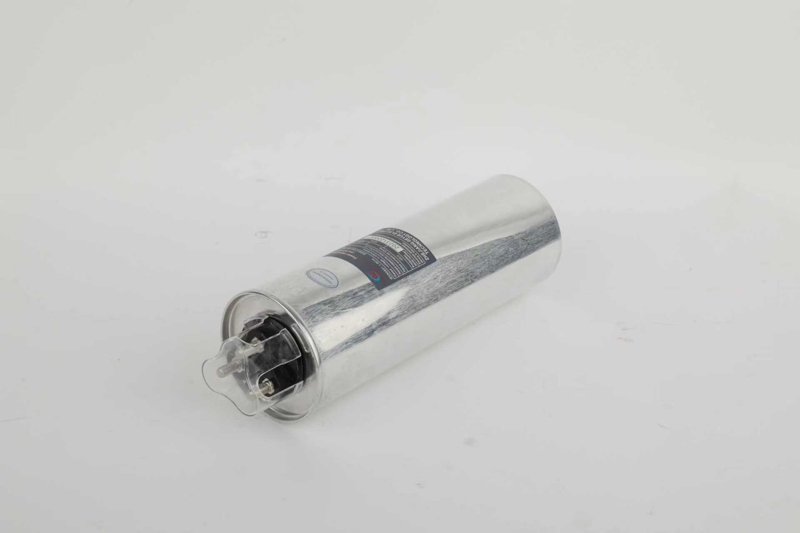
Regulatory pressures, too, are a factor that cannot be overlooked. To effectively enhance energy efficiency and reduce carbon emissions, the EU’s *Ecodesign Directive* (2019/1781) mandates that the power factor for various types of industrial equipment must reach 0.9 or higher. The introduction of this policy has directly spurred market demand for the upgrading and replacement of self-healing shunt capacitors. In the United States, the Department of Energy’s Grid Deployment Office has officially announced that, through the Grid Resilience and Innovation Partnerships (GRIP) program, it will provide up to $7.6 billion in funding to support 105 selected key projects across the nation. This initiative clearly demonstrates the U.S. government's sustained commitment of public resources toward bolstering grid resilience and advancing grid modernization; within these grid upgrade and retrofit projects, reactive power management frequently constitutes an indispensable and critical component.
II. Empirical Validation of Technical and Economic Benefits: An Analysis of Real-World Data on Loss Reduction and Cost Savings
Beyond macro-level market dynamics, a series of peer-reviewed engineering studies are quantifying—with ever-increasing precision—the economic and operational benefits derived from the deployment of shunt capacitors.
A study published in June 2024 in the academic journal *Franklin Open* utilized the "Contraction Factor Particle Swarm Optimization" (Cf-PSO) algorithm to simulate and validate optimal shunt capacitor placement strategies for IEEE-standard 33-node and 69-node radial distribution network models. The results indicated that, compared to the baseline scenario, strategically placing four shunt capacitors at optimal locations reduced power losses by 35.15% in the IEEE 33-node network and by 35.85% in the IEEE 69-node network. Crucially, the study established a key conclusion: while increasing the number of capacitors does indeed yield improvements, the rate of improvement diminishes significantly once the number of shunt capacitors (SCs) exceeds two—eventually reaching a critical threshold beyond which adding further capacitors ceases to be economically viable. This finding offers direct practical guidance for equipment procurement: achieving the optimal configuration of capacitors is far more critical than simply pursuing a higher quantity. The same study also confirmed that configuring shunt capacitors at optimal penetration levels is "one of the most economically viable means of enhancing the operational efficiency of radial distribution networks (RDNs)—including reducing power losses and optimizing operations."
Related News
- What Is the Difference Between a Power Capacitor and an Intelligent Capacitor?
- Are Self-Healing Shunt Capacitors Suitable for Industrial Applications?
- Why Does a Factory Need an Automatic Power Factor Controller?
- Can a Power Capacitor Reduce Electricity Losses in a Factory?
- What Should Engineers Check Before Choosing a Low Voltage Power Capacitor?
- Why Are Self-Healing Shunt Capacitors Widely Used in Low-Voltage Power Systems?
Leave me a message