Selection Pitfalls: BSMJ, BZMJ, BKMJ – They Look Alike, But What's the Real Difference Between These Low Voltage Self-Healing Shunt Capacitor Series?
In selecting low-voltage self-healing shunt capacitors, many engineers and purchasing personnel often encounter the following confusion: BSMJ, BZMJ, and BKMJ capacitor series look so similar, even their nameplate parameters are almost identical, so what are the essential differences between them? Choosing one of the three simply because they appear identical can lead to frequent malfunctions of the reactive power compensation system, or even serious safety accidents in the circuit. Today, Geyue Electric, as a professional manufacturer in the low-voltage reactive power compensation field for decades, will guide you through an in-depth analysis of the true differences between these three series, helping you avoid pitfalls when selecting the most suitable low-voltage self-healing shunt capacitors for your needs.
Impregnation Medium: The Defining Factor
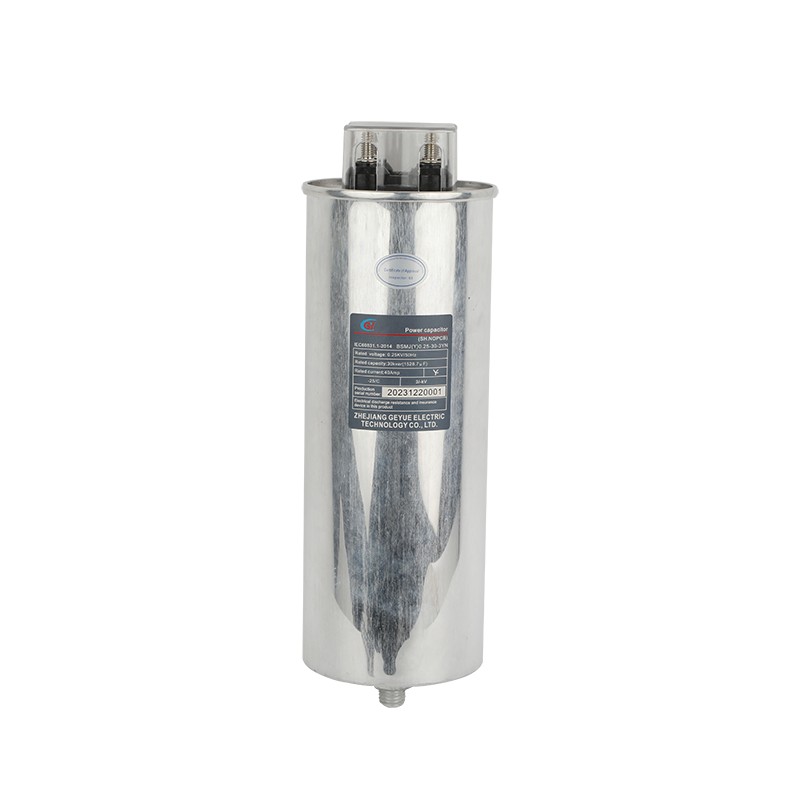
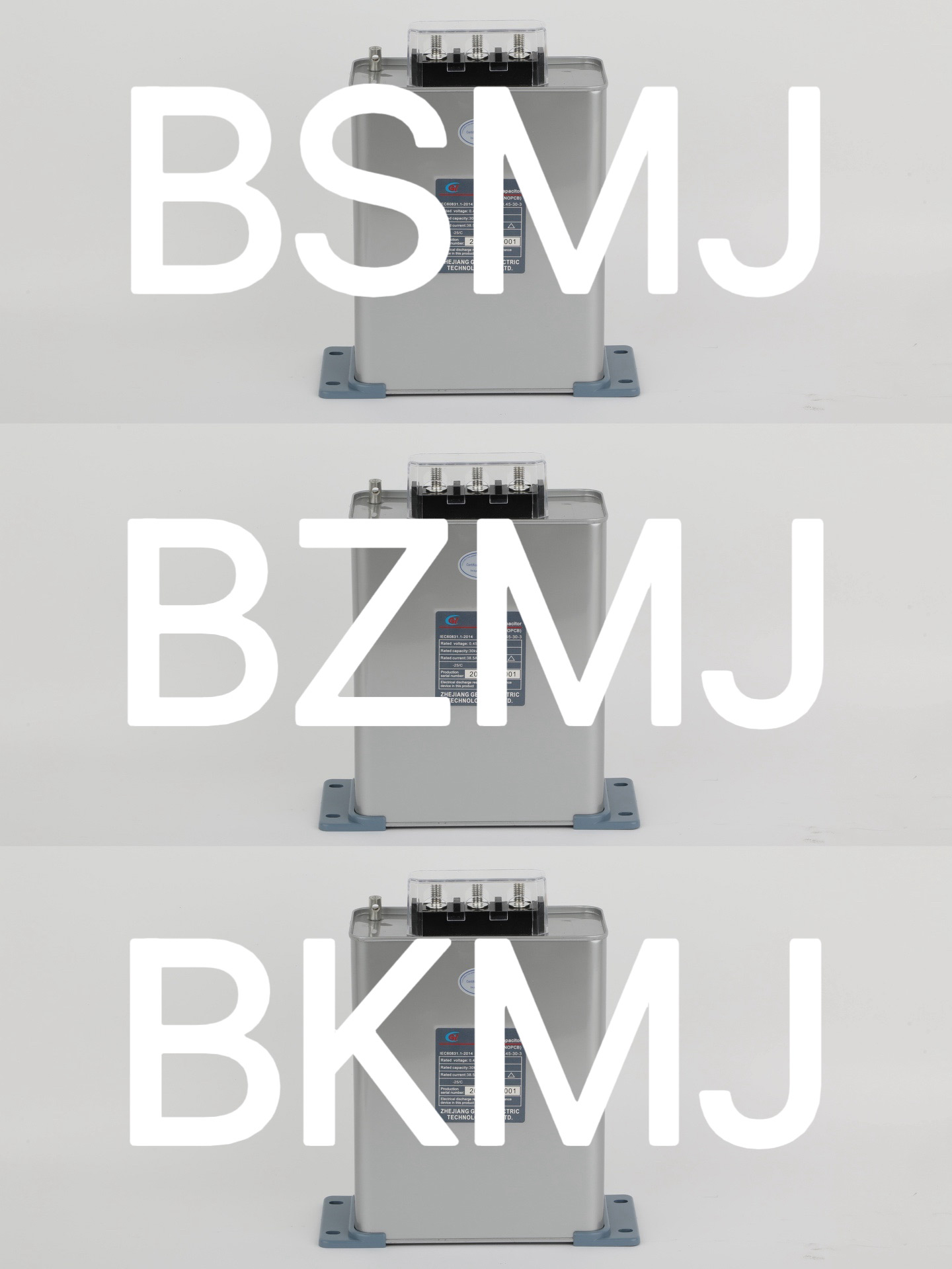
To understand the differences between the BSMJ, BZMJ, and BKMJ series of low-voltage self-healing shunt capacitors, it's essential to first understand their "blood," technically called the impregnating medium. This is the fundamental factor determining the performance and safety of low-voltage self-healing shunt capacitors.
The BZMJ series typically represents traditional oil-filled capacitors, whose internal impregnating medium is often a liquid insulating oil such as rapeseed oil, castor oil, or mineral oil. The fatal weakness of this type of capacitor is that the heat generated during long-term operation causes repeated thermal expansion and contraction of the casing, easily leading to oil leakage at the seals. This not only pollutes the environment but also directly reduces the capacitor's insulation strength, potentially causing short circuits or fires in severe cases.
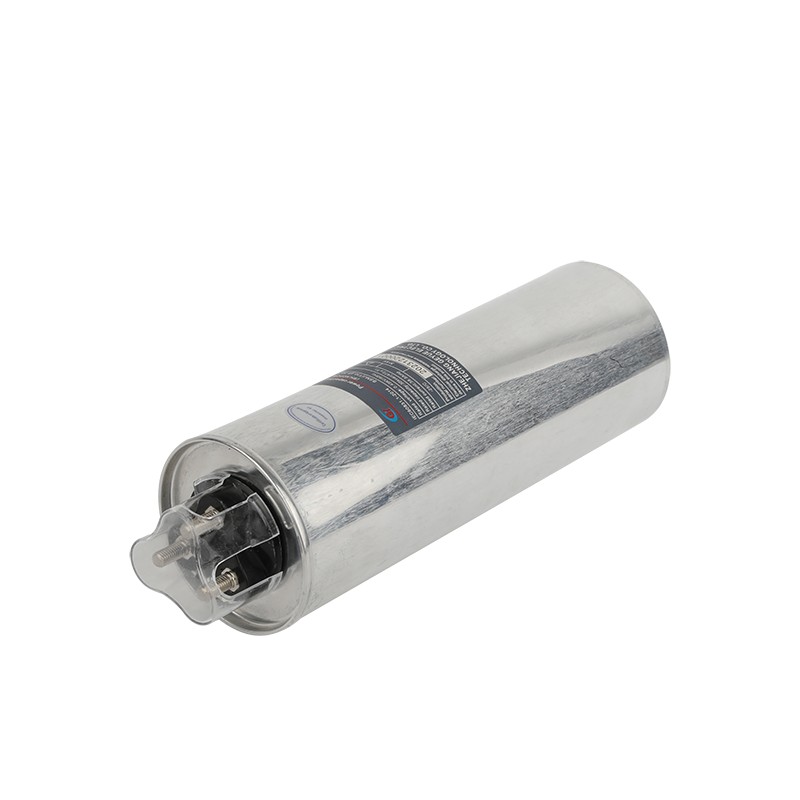
The BKMJ series is known as dry-type capacitors. Their impregnating medium is often silicone oil or epoxy resin, cured into a solid state through a special process. Its advantage is the elimination of oil leakage risk, better environmental performance, and suitability for general applications. However, some low-end dry-type products, due to poor heat dissipation design, experience a significant decrease in self-healing performance and a greatly reduced lifespan in environments with high harmonics or high temperatures.
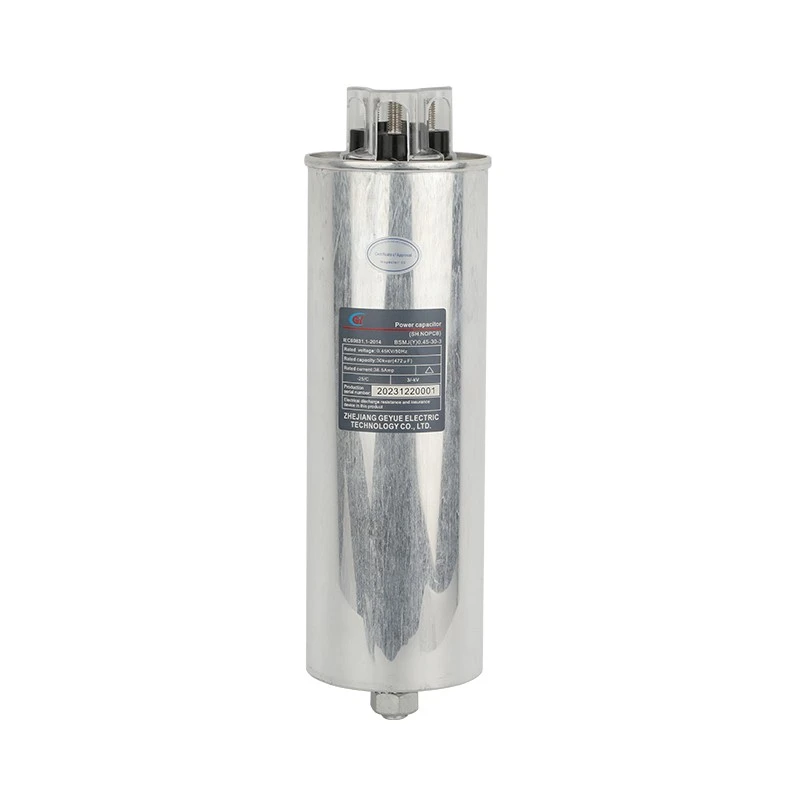
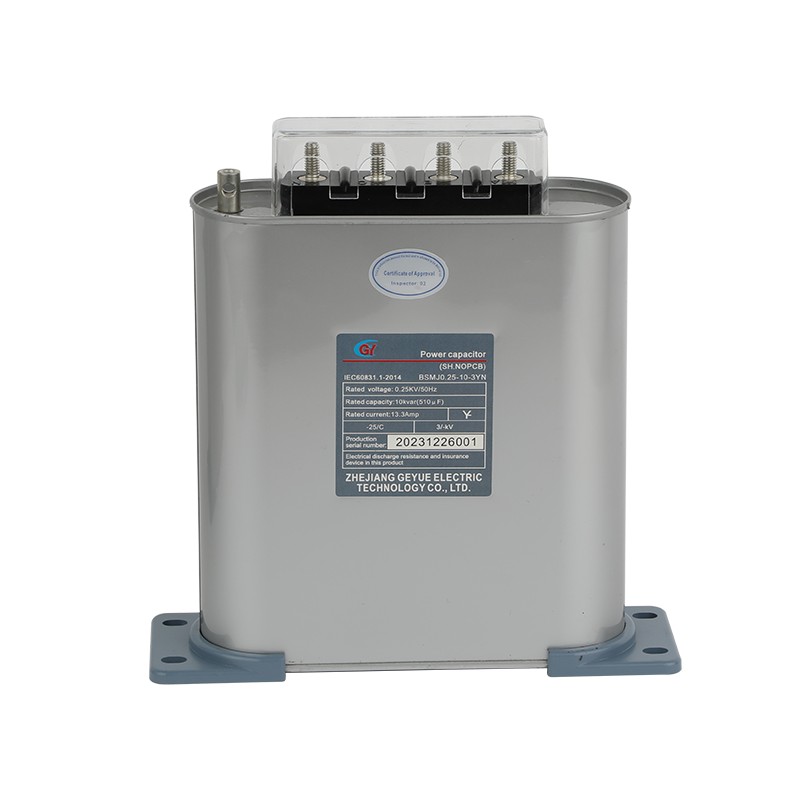
The BSMJ series is an improved "semi-dry" self-healing capacitor. Its impregnating medium is typically microcrystalline wax or polyurethane, which is solid at room temperature but slightly softens upon heating. This unique physical property of microcrystalline wax or polyurethane allows the BSMJ series "semi-dry" self-healing capacitors to completely avoid the oil leakage problem of the BZMJ series oil-type capacitors, while also offering a more uniform temperature distribution and more reliable self-healing capability than the BKMJ series pure dry-type capacitors. Therefore, we can say that the design philosophy of the BSMJ series low-voltage self-healing shunt capacitors is precisely to achieve the best balance between safety and electrical performance.
Self-healing Performance and Craftsmanship: The Core Distinction
Besides the difference in impregnating medium, the core difference between the BSMJ series and the other two series (BKMJ and BZMJ series) of low-voltage self-healing shunt capacitors lies in their self-healing process. Self-healing means that when a local breakdown occurs in the capacitor's internal dielectric film, the metal plating around the breakdown point evaporates instantly, restoring insulation and allowing the capacitor to continue operating without immediate failure.
The BSMJ series generally uses metallized polypropylene film as the dielectric, achieving excellent self-healing characteristics through zinc-aluminum composite plating technology. When a tiny breakdown point appears on the film, the surrounding metal layer evaporates within microseconds, forming an insulating zone, with the capacitor's capacitance almost unaffected. This technology requires extremely high uniformity and thickness control of the plating, making it a key indicator of the technological level of low-voltage reactive power compensation equipment manufacturers.
Meanwhile, the BSMJ series typically integrates an overpressure explosion-proof device in its design. When the internal pressure abnormally increases due to a fault, the explosion-proof plate will act first, cutting off the internal leads to prevent the outer casing from shattering and causing injury. Looking at some BKMJ or BZMJ series products, we find that they may have many hidden dangers that are not easily visible on the outside but are actually not to be underestimated. If the manufacturer lacks strict process control when producing BKMJ or BZMJ series capacitors, then when these capacitors fail, the only signal that can be observed with the naked eye is often a bulging of the outer casing, which cannot accurately reflect the serious damage that has already occurred inside or even lost its explosion-proof protection function. This greatly increases the probability of circuit accidents and even personal injury.
Application Scenarios: How to Make the Right Choice
Having fully understood the fundamental differences between the BSMJ series and the BZMJ and BKMJ series, engineers and purchasing personnel can make informed choices when selecting low-voltage self-healing shunt capacitors. For general power distribution systems, especially in locations with high environmental and safety requirements, the BSMJ series low-voltage self-healing shunt capacitors are currently recognized as the optimal solution in the market. They possess the excellent heat dissipation performance of oil-filled capacitors and the oil-leakage-free environmental characteristics of dry-type capacitors, while their superior self-healing capability significantly extends their effective service life.
If the application scenario has high harmonic content, large ambient temperature fluctuations, or strict requirements on equipment maintenance cycles, then the BSMJ series, with its stable dielectric and reliable self-healing properties, can significantly reduce the failure rate and ensure the long-term stable operation of the reactive power compensation device. Traditional BZMJ series oil-filled capacitors, due to the risk of oil leakage, have been gradually phased out in new projects; and for BKMJ series dry-type capacitors, it is necessary to carefully examine their manufacturer's manufacturing process to avoid selecting low-end products of inconsistent quality.
Geyue Electric & BSMJ Series Square-Box Type Self-Healing Shunt Capacitors: Our Commitment to Good Quality
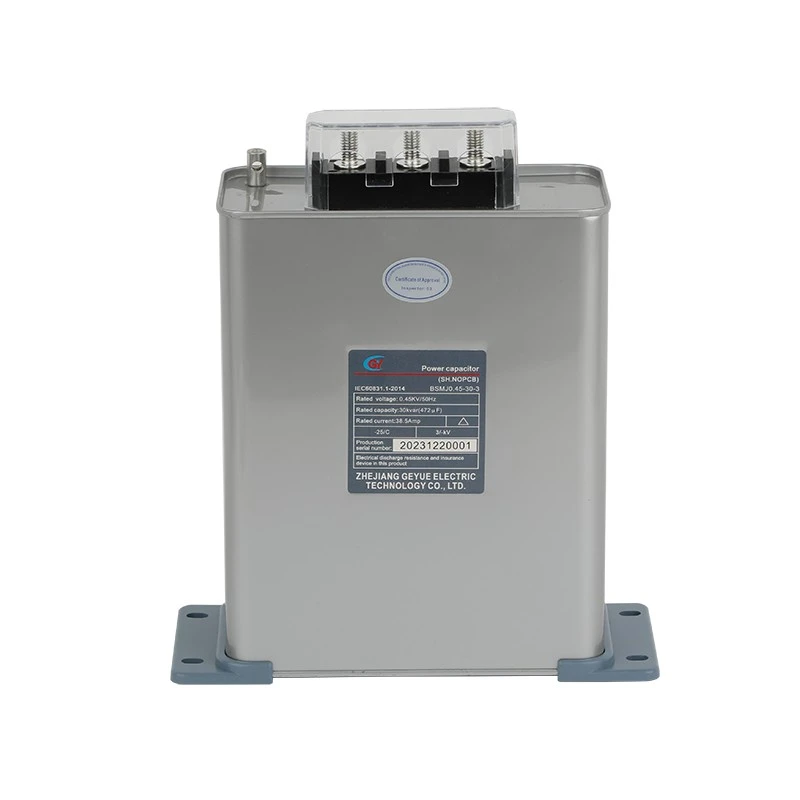
As a manufacturer specializing in low-voltage reactive power compensation for many years, Geyue Electric has always adhered to winning the market with excellent quality. In the production of our BSMJ square-type low-voltage self-healing shunt capacitors, we have introduced the industry's most advanced fully automated winding machines and vacuum impregnation tanks, ensuring that the capacitance accuracy and dielectric loss of each product exceed national standards.
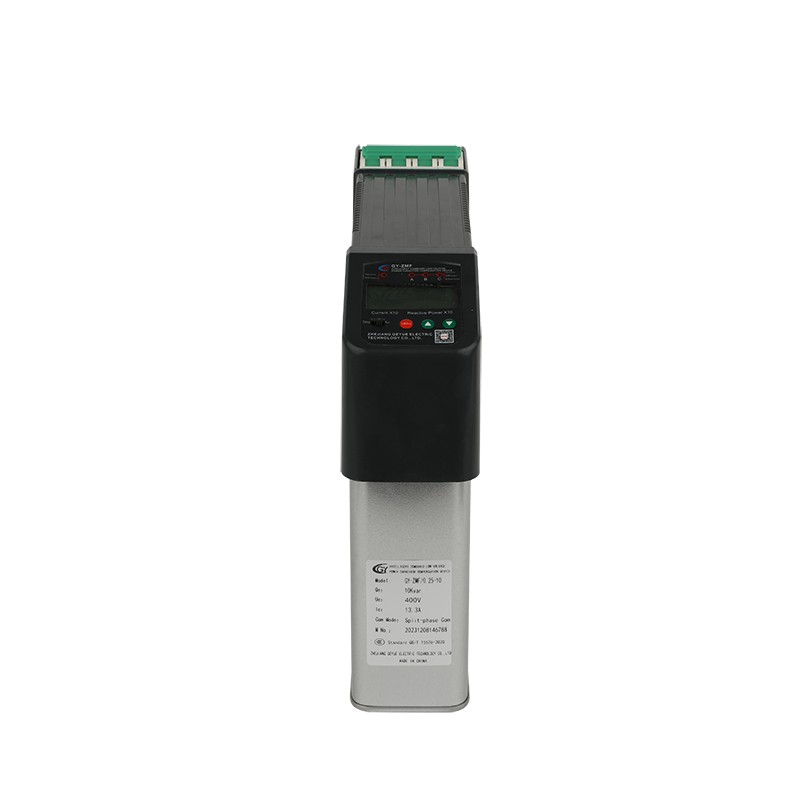
Our recommended BSMJ square-type product features a high-quality cold-rolled steel shell with multiple rust-proof treatments, resulting in a robust structure and excellent heat dissipation. The internally filled microcrystalline wax undergoes rigorous vacuum degassing treatment, ensuring an extremely low dielectric loss tangent. Simultaneously, our overpressure explosion-proof device has undergone repeated testing, demonstrating sensitive and reliable operation, providing a solid guarantee for your electrical safety.
Geyue Electric possesses a complete production line and a strict quality inspection system. From film slitting to finished product aging testing, every process is meticulously executed. We believe that only through meticulous attention to detail can we create trustworthy products. Please send your needs to info@gyele.com.cn, and let's work together to improve your power quality and reduce operating costs.
Related News
- What Is the Difference Between a Power Capacitor and an Intelligent Capacitor?
- Are Self-Healing Shunt Capacitors Suitable for Industrial Applications?
- Why Does a Factory Need an Automatic Power Factor Controller?
- Can a Power Capacitor Reduce Electricity Losses in a Factory?
- What Should Engineers Check Before Choosing a Low Voltage Power Capacitor?
- Why Are Self-Healing Shunt Capacitors Widely Used in Low-Voltage Power Systems?
Leave me a message