Why Are Self-Healing Shunt Capacitors Widely Used in Low-Voltage Power Systems?
Self-healing technology has become an important feature in modern low-voltage shunt capacitors. But what does "self-healing" actually mean, and why does it matter to users?
What Does Self-Healing Mean?
A self-healing capacitor normally uses metallized polypropylene film as its dielectric system.
If a small localized dielectric breakdown occurs during operation, the metalized layer around the fault point can evaporate rapidly. This isolates the damaged area and restores insulation between the electrodes.
The capacitor does not literally repair the damaged film. Instead, the electrical fault is isolated before it develops into a larger failure.
Why Is This Useful?
Electrical capacitors operate continuously under voltage stress. Small imperfections or localized dielectric stress can occur during long-term operation.
A self-healing design helps reduce the consequences of these localized events.
This is particularly useful for power factor correction systems that operate for long periods in industrial environments.
Where Are They Used?
Self-healing shunt capacitors are commonly considered for:
- Factory distribution systems
- Commercial buildings
- Motor-heavy facilities
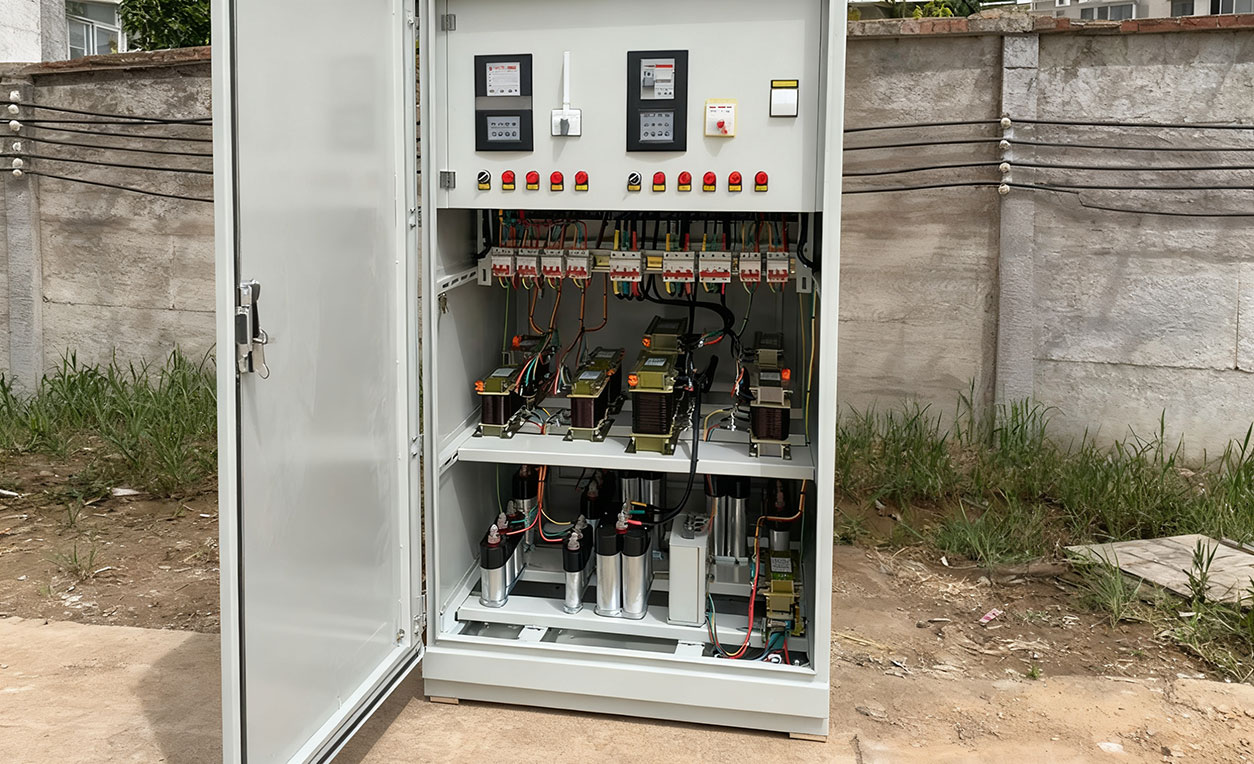
- Power factor correction cabinets
- Industrial automation systems
- Renewable energy installations
- Infrastructure projects
The exact capacitor construction should still be selected according to system voltage, frequency, reactive power requirement, temperature and harmonic conditions.
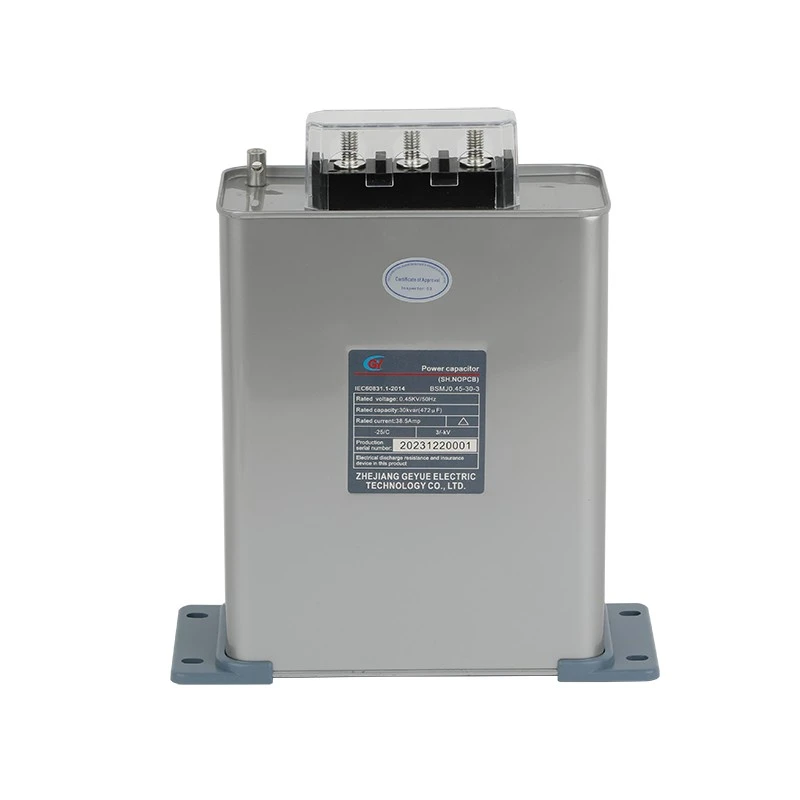
Geyue BSMJ Series
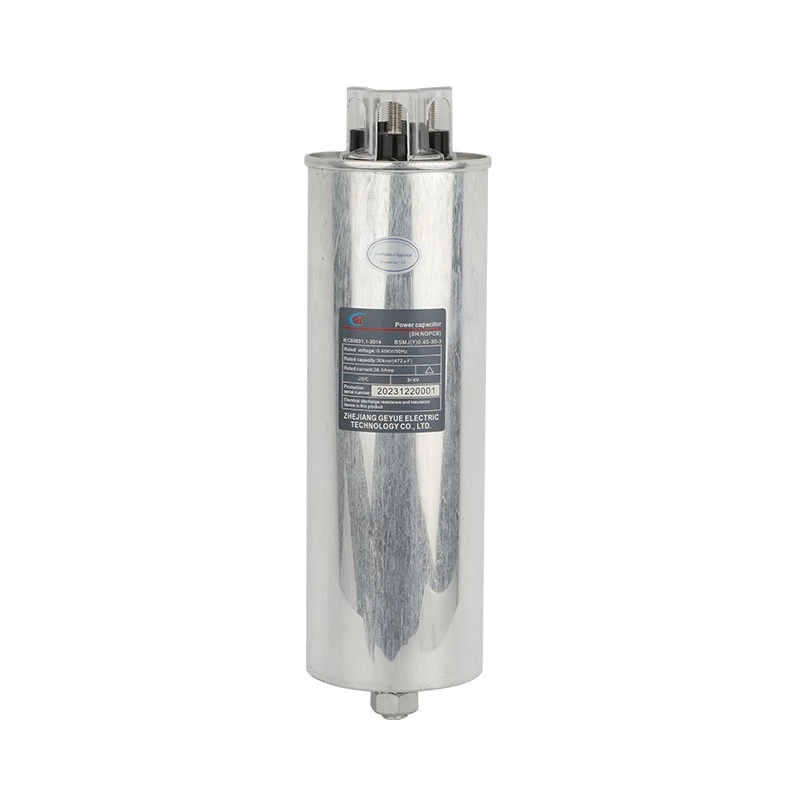
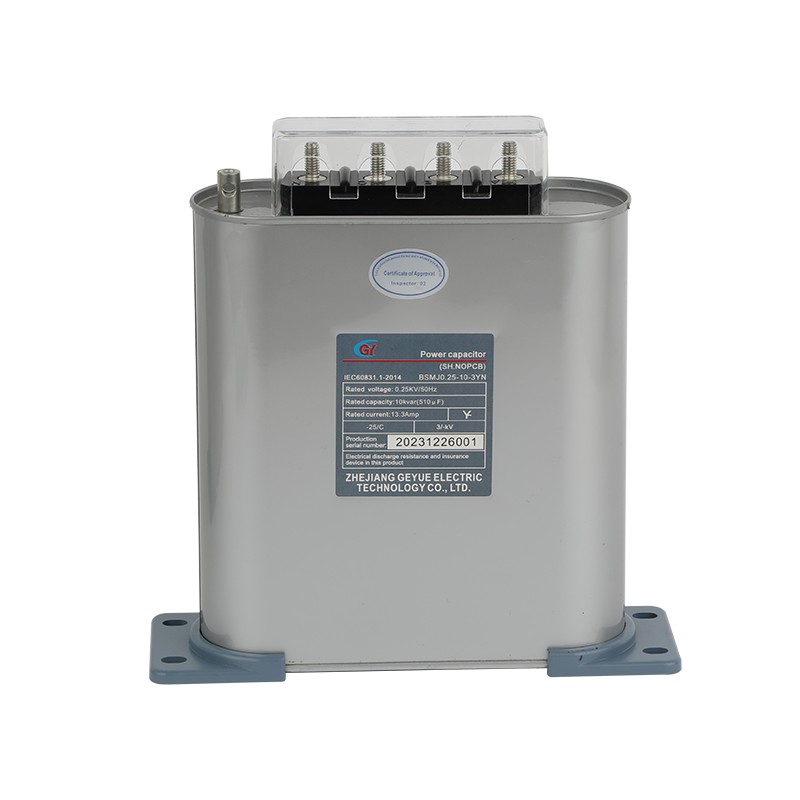
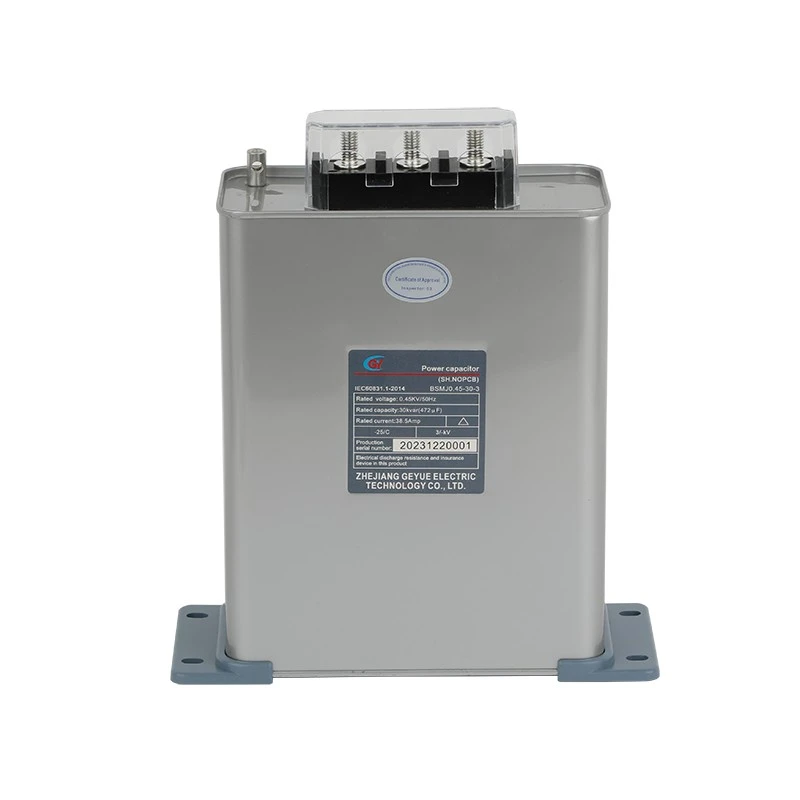
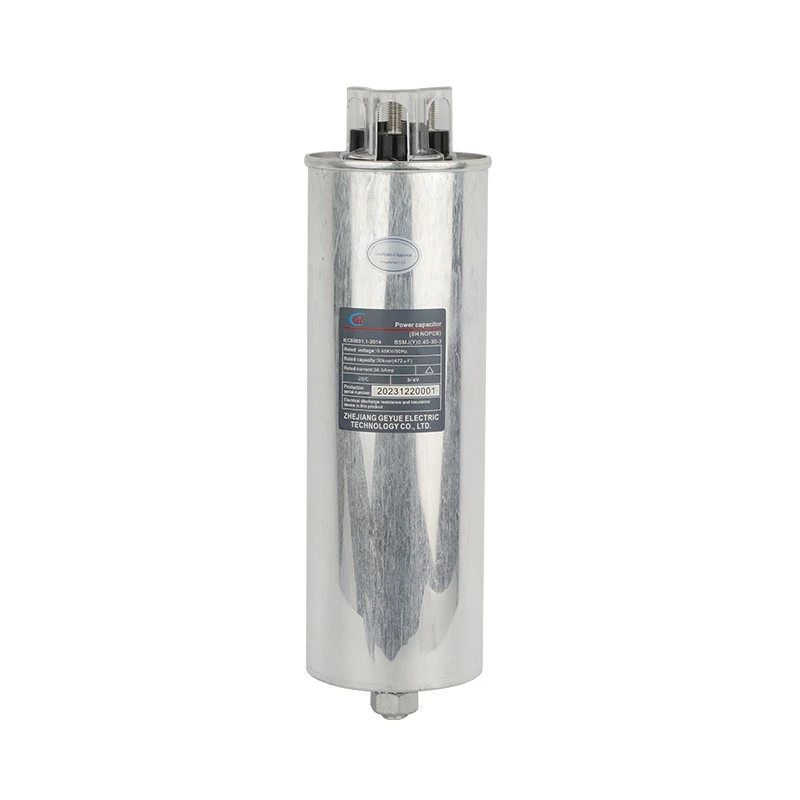
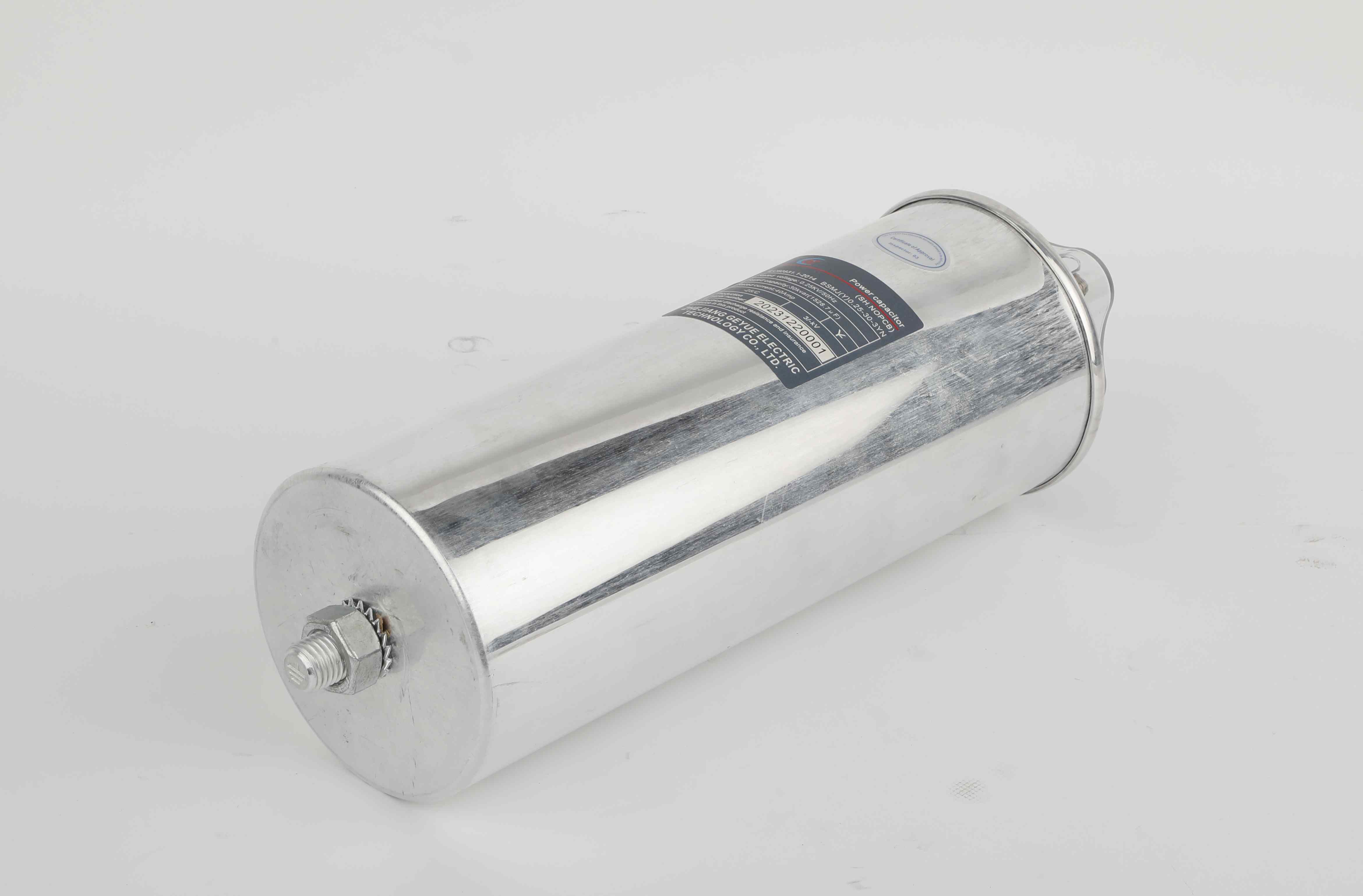
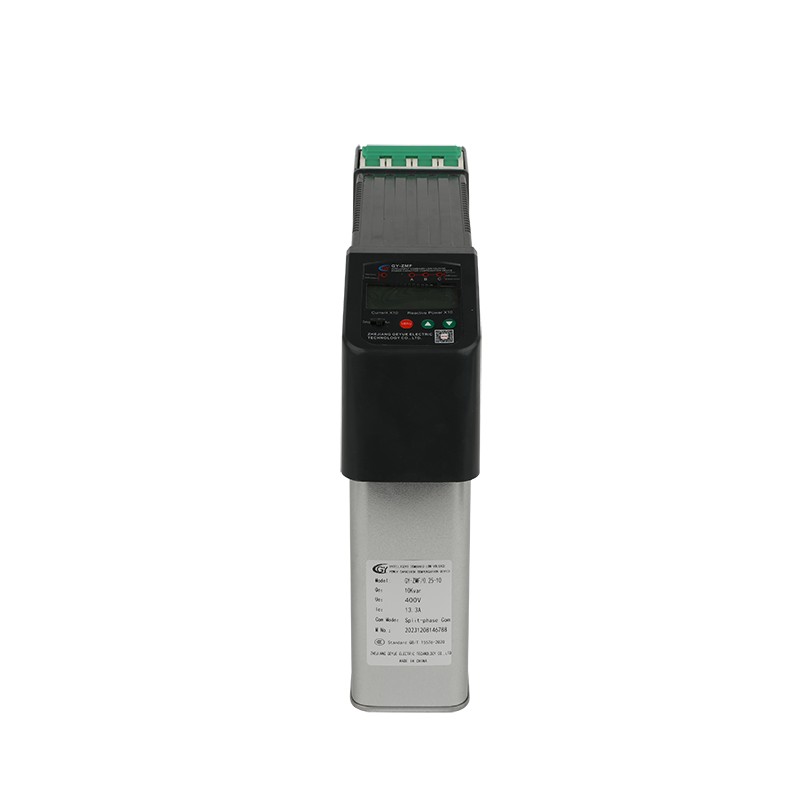
Geyue Electric offers BSMJ and BSMJ(Y) series self-healing shunt capacitors. The product range includes single-phase, three-phase, split-phase compensation and cylindrical configurations.
For projects with unbalanced three-phase loads, the split-phase compensation configuration can be particularly useful because capacitor switching can be arranged independently between phases.
Final Consideration
Self-healing technology is only one part of capacitor reliability. Film quality, winding technology, impregnation, thermal design, safety protection and manufacturing control all influence service performance.
That is why buyers should evaluate the complete capacitor construction rather than choosing purely by the word "self-healing."
Related News
- What Is the Difference Between a Power Capacitor and an Intelligent Capacitor?
- Are Self-Healing Shunt Capacitors Suitable for Industrial Applications?
- Why Does a Factory Need an Automatic Power Factor Controller?
- Can a Power Capacitor Reduce Electricity Losses in a Factory?
- What Should Engineers Check Before Choosing a Low Voltage Power Capacitor?
- What Makes a Good AC Contactor Supplier?
Leave me a message