What Makes a Good AC Contactor Supplier?
For international buyers, selecting the supplier is often as important as selecting the product.
A reliable AC contactor supplier should be able to provide:
● Detailed product specifications
● Rated current and voltage information
● Coil voltage options
● Utilization category information
● Product drawings
● Technical datasheets
● Installation information
● Sample availability
● Stable production capacity
● Quality inspection procedures
● Export packaging
● OEM/ODM support where required
More importantly, the supplier should understand the application behind the order.
For example, an OEM producing motor control panels may need completely different support from a distributor purchasing standard contactors for maintenance markets.
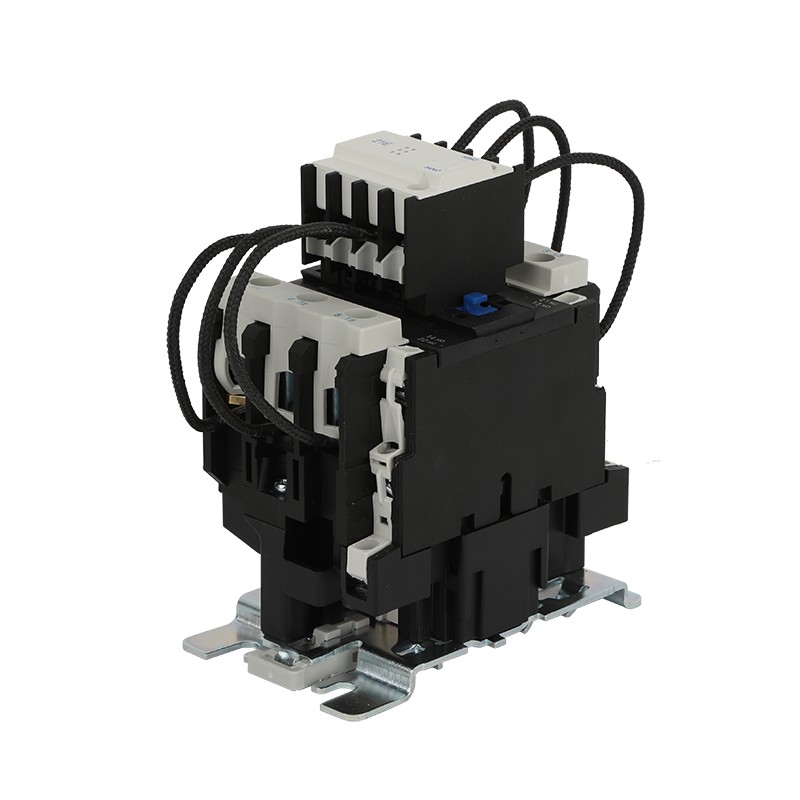
Why Choose a Factory-Direct AC Contactor Supplier?
Buying directly from a manufacturer can provide several advantages for distributors and OEM customers.
Better communication
Technical requirements can be discussed directly with the production and engineering teams.
More flexible customization
Product labeling, packaging, coil specifications and selected configurations may be discussed according to project requirements.
Better batch consistency
Direct manufacturing management makes it easier to control product specifications across repeated orders.
Faster technical response
Questions about product drawings, specifications or installation can be handled more efficiently.
More competitive total cost
Removing unnecessary intermediate distribution layers can make factory-direct purchasing attractive for larger quantities.
However, price should not be the only purchasing criterion. A lower unit price is of little value if inconsistent quality leads to installation problems, field returns or production delays.
How Should International Buyers Compare AC Contactors?
Instead of asking only:
"How much does this AC contactor cost?"
Professional buyers should compare several factors at the same time:
| Evaluation Point | What to Check |
|---|---|
| Electrical rating | Current, voltage and load type |
| Utilization category | AC-1, AC-3, AC-3e, etc. |
| Coil | Voltage and operating characteristics |
| Contacts | Main and auxiliary contact configuration |
| Durability | Mechanical and electrical endurance |
| Installation | Mounting method and dimensions |
| Quality control | Factory inspection and testing |
| Documentation | Datasheet, drawings and specifications |
| Customization | OEM labeling and packaging |
| Supply capability | Sample, MOQ and production capacity |
| After-sales support | Technical communication and response |
This approach gives buyers a more realistic picture of the long-term value of an AC contactor.
Related News
- Are Self-Healing Shunt Capacitors Suitable for Industrial Applications?
- Why Does a Factory Need an Automatic Power Factor Controller?
- Can a Power Capacitor Reduce Electricity Losses in a Factory?
- What Should Engineers Check Before Choosing a Low Voltage Power Capacitor?
- Why Are Self-Healing Shunt Capacitors Widely Used in Low-Voltage Power Systems?
- Why do your plant's shunt capacitors fail prematurely? Can they self-heal?
Leave me a message