"Flexible Power Mutual-Aid Device" Officially Included in Group Standard Project: Will It Become the Next Form of Low-Voltage Reactive Power Compensation Equipment?
While we are still hotly debating the pros and cons of Static Var Generators (SVG) and Active Power Filters (APF), the industry's forefront has already pointed to a more integrated and proactive concept—the “Flexible Power Mutual-Aid Device”. Recently, the news that this device has officially received group standard approval has resonated deeply in China's power quality and reactive power compensation field. This is far more than the birth of new terms; it is like a spotlight, clearly illuminating the ultimate development direction of low-voltage power distribution equipment under the new power system. Geyue Electric believes that the “Flexible Power Mutual-Aid Device” may not be a simple replacement for traditional reactive power compensation equipment, but rather marks a value leap for the industry from "single-function governance" to "system-level proactive support."

The Fusion Support beyond Compensation
Whether it's capacitor banks or SVG, the main task of traditional low-voltage reactive power compensation equipment is "management"—in other words, compensating and correcting after a problem occurs, with very clear functional boundaries. In contrast, the “Flexible Power Mutual-Aid Device” has a much broader scope. As the name suggests, "Flexible" refers to the device's ability to achieve smooth and precise power regulation within milliseconds, based on fully controlled power electronic devices; "Power Mutual-Aid" reveals the device's essence—it not only achieves flexible reactive power compensation but also plays a pivotal role in instantaneous active power regulation, three-phase imbalance management, and even collaborative interaction with energy storage systems. This “Flexible Power Mutual-Aid Device” integrates the traditionally independent functions of active power regulation, reactive power compensation, and power quality management into a unified hardware platform and control system. This means that in complex scenarios such as sudden drops in photovoltaic output within the park or sudden increases in charging station loads, the "Flexible Power Mutual-Aid Device" no longer merely provides reactive power support, but can instead carry out comprehensive "power package" regulation to achieve overall system stability. This is in perfect alignment with the "source-network-load-storage" collaborative interaction trend advocated by the Global Energy Interconnection Development and Cooperation Organization. This requires distribution-side equipment to shift from passive response to active participation in system balance.
The Guiding Standards for the Future
The establishment of a group standard for a new technology has far-reaching significance beyond the technology itself. The establishment of this group standard for the “Flexible Power Mutual-Aid Device” signifies a high degree of consensus among leading experts and enterprises in the industry regarding the necessity and technological path of this form, paving the way for product development, testing, and interoperability. Specifically, this standard will clarify the functional performance boundaries of the “Flexible Power Mutual-Aid Device”, its interaction protocols with the power grid and other distributed resources, and key indicators for "system-friendly" equipment. For example, this standard may require the device to not only meet traditional national power quality standards but also possess the potential for "grid-forming" or rapid dispatch response interfaces that conform to future electricity market rules. This effectively defines the "factory settings" of next-generation key low-voltage power distribution equipment in advance through standardization, guiding the entire industry away from fragmented functional stacking and towards integrated, intelligent system solutions. This is undoubtedly a key milestone in the evolution of low-voltage reactive power compensation equipment.
The Practice of Geyue Electric from the Foundation to the Ecosystem
Faced with this clearly defined high-level industry landscape, Geyue Electric's strategy is to "solidify the hardware foundation and embrace the intelligent ecosystem." We are keenly aware that no matter how the functions of the Flexible Power Mutual-Aid Device are integrated and expanded, its realization depends on the absolute reliability and accuracy of the underlying power unit under extreme operating conditions. The drastic current changes and thermal stress brought about by instantaneous power exchange place almost stringent requirements on the core magnetic components.
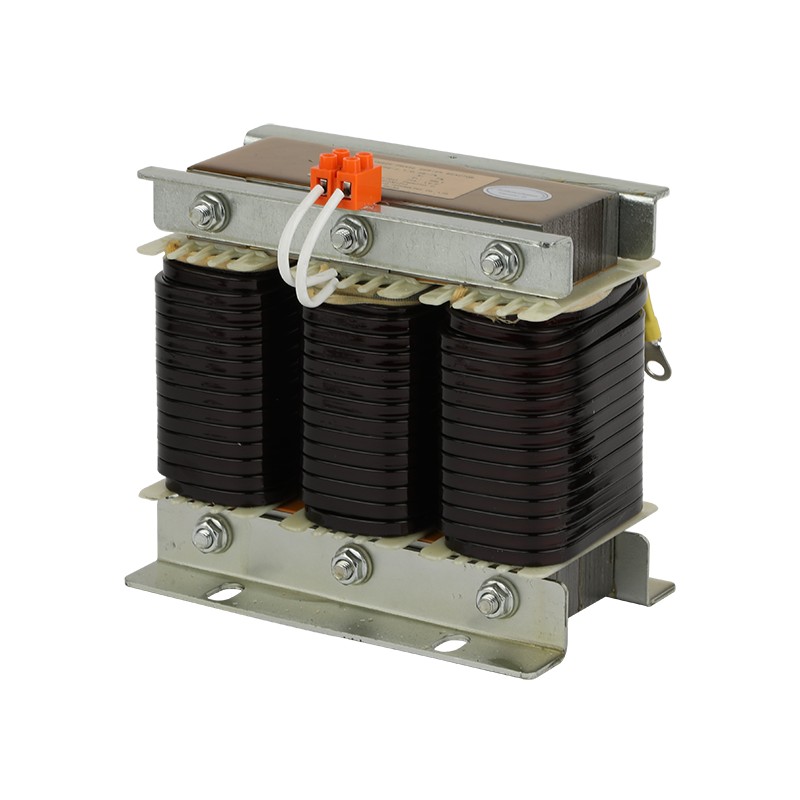
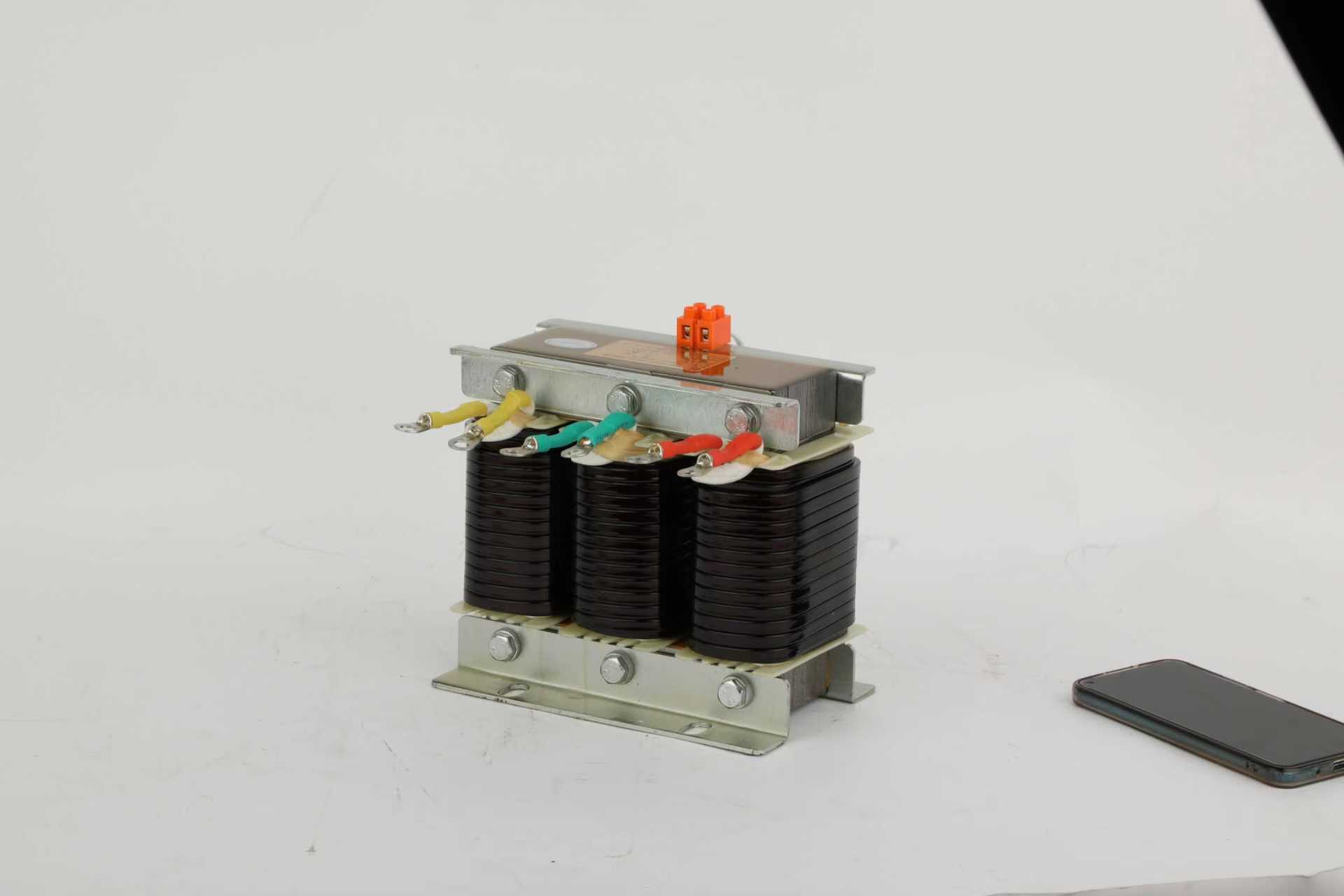
This is precisely where Geyue Electric's core competitiveness lies. Our new generation of high-performance reactors and integrated power modules are designed to address these challenges. We employ special low-loss ultra-thin silicon steel sheets and a multi-air-gap distributed magnetic circuit design to ensure that the inductance value maintains extremely high linearity and stability under wide-bandwidth, high-current surges, fundamentally avoiding control instability caused by magnetic saturation. Our fully automated vacuum epoxy casting production line ensures a high degree of consistency and long-term reliability in the internal structure of each product, providing a physical basis for the faithful execution of complex algorithms.
Meanwhile, our R&D has been actively expanding to the system layer. We are collaborating with leading domestic energy IoT platforms and universities to jointly develop collaborative control algorithms and standard communication interfaces that support " Flexible Power Mutual Aid." Our goal is to make Geyue's hardware not only an excellent independent unit, but also seamlessly integrated into the future smart energy ecosystem of industrial parks, becoming the most stable and reliable component in this new form of " Flexible Power Mutual-Aid Device."
The "Flexible Power Mutual-Aid Device" may not merely represent the "next stage" of low-voltage reactive power compensation equipment, but rather seems to be the ultimate endpoint of its development and an embodiment of its enhanced value. It heralds the arrival of a new era: low-voltage side equipment will transform from a "follower" and "troublemaker" of the power grid into an "active balancer" that supports energy transformation and achieves local system optimization. Geyue Electric is fully prepared for this journey. Any inquiry about low voltage reactive power compensation is welcome at info@gyele.com.cn.
Related News
- What Is the Difference Between a Power Capacitor and an Intelligent Capacitor?
- Are Self-Healing Shunt Capacitors Suitable for Industrial Applications?
- Why Does a Factory Need an Automatic Power Factor Controller?
- Can a Power Capacitor Reduce Electricity Losses in a Factory?
- What Should Engineers Check Before Choosing a Low Voltage Power Capacitor?
- Why Are Self-Healing Shunt Capacitors Widely Used in Low-Voltage Power Systems?
Leave me a message