Iron Core Segmentation and Air Gaps: Why Are the Cores of Three-Phase Low-Voltage Series Reactors Divided into Uniform Small Sections with Air Gaps? What Is the Function of the Air Gaps?
As a Chinese company specializing in the research and development and manufacturing of low-voltage reactive power compensation equipment, Geyue Electric deeply understands that the stability and efficiency of power systems depend on meticulous design of every detail. Today, we would like to discuss with you a key technical detail—why the iron cores of three-phase low-voltage series reactors are divided into uniform small segments by air gaps, and the true function of the air gaps.

The Technical Significance of Segmenting Iron Cores
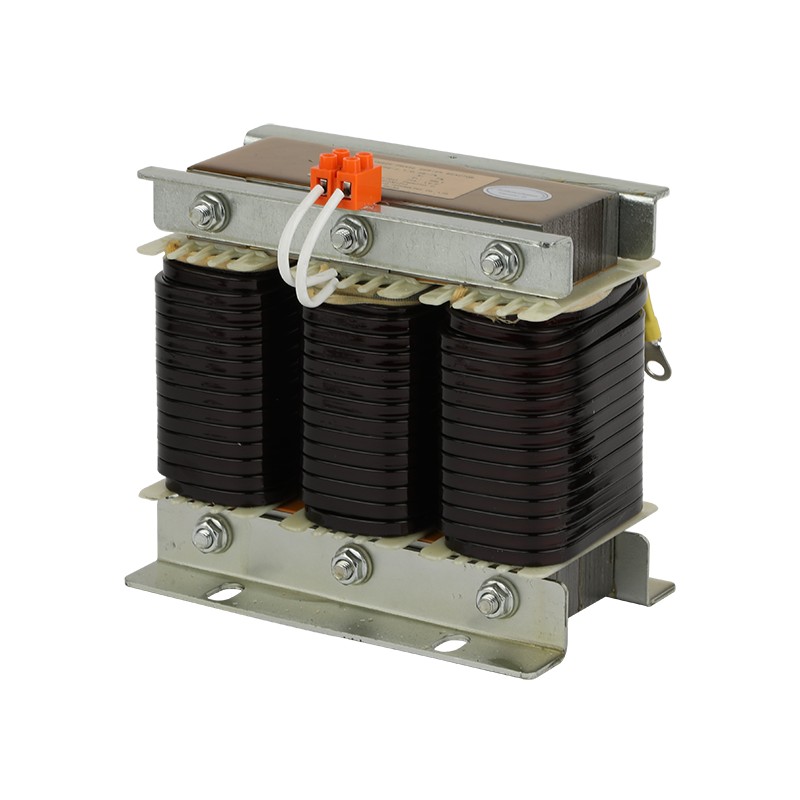
In low-voltage power grids, harmonic problems are becoming increasingly prominent. Harmonics generated by numerous rectifiers and converters not only affect power quality but may also endanger the safety of transformers and other electrical equipment. Series reactors, as a crucial component of reactive power compensation devices, play a primary role in suppressing harmonic amplification, a function closely related to the design of their iron cores. If the iron cores of series reactors are made as single, continuous units, their magnetic circuit characteristics will cause significant fluctuations in the series reactors' inductance with changes in the coil current (especially currents containing harmonics). Particularly in power systems containing harmonics, these fluctuations can lead to magnetic saturation, causing the series reactors to lose their filtering and current-limiting capabilities. Therefore, dividing the iron cores of series reactors into multiple uniform segments with air gaps between them is a design specifically devised to ensure the stable performance of the series reactors and their flexible adaptation to complex operating conditions.
The Advantages of Air Gaps
Although the air gaps are structurally small, they have a significant impact on the function of the series reactor iron cores. Firstly, the air gaps effectively increase the magnetic reluctance in the magnetic circuits, linearizing the magnetization curve of the iron cores and preventing magnetic saturation. In other words, even under large harmonic currents, the inductance of the series reactors can remain relatively stable thanks to these air gaps, reliably suppressing harmonic amplification and protecting the power capacitors connected in series with the serires reactors from damage. Secondly, the air gaps reduce eddy current losses and hysteresis losses in the iron cores, lowering the temperature rise during series reactor operation, thereby improving the energy efficiency and lifespan of the entire reactive power compensation systems. Furthermore, uniformly distributed air gaps can reduce vibration and noises of series reactors during operation, improving the smoothness and quietness. These advantages provided by the air gaps collectively make 100% sure that the series reactors can achieve optimal performance in low-voltage reactive power compensation systems.
Geyue Electric's Persistence and Innovation in Craftsmanship
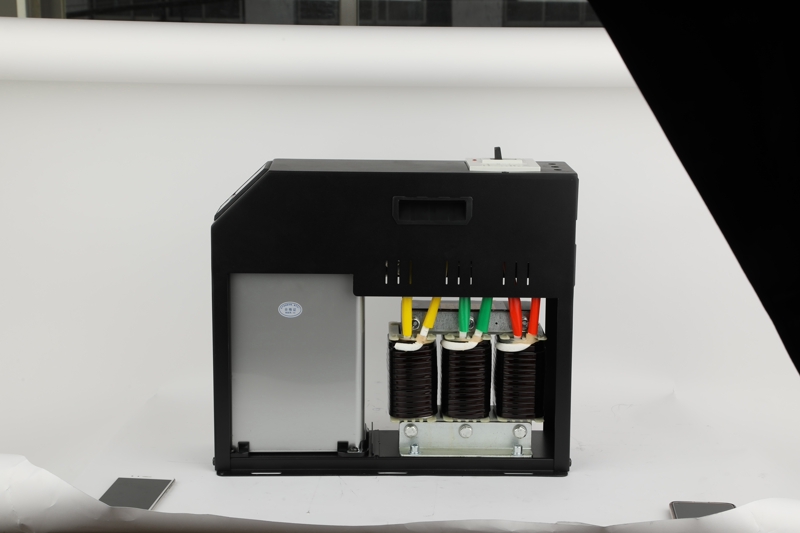
At Geyue Electric, we implement the technical concept of safeguarding stable inductance and avoiding magnetic saturation in every series reactor manufacturing process by dividing the iron core into multiple uniform segments and embedding stable air gaps. Taking our CKSG series three-phase low-voltage series reactors as an example, our iron cores are made of high-quality, low-loss imported cold-rolled grain-oriented silicon steel sheets. Each iron core is precisely divided into multiple uniform segments, and the air gaps between the segments use epoxy-laminated glass cloth as the spacer material. This design not only effectively maintains the air gap size constant during long-term operation, but also improves the mechanical stability of the entire series reactor core structure. Regarding the coils, we use F-grade enameled flat copper wire tightly wound, requiring no additional insulation wrapping, which is both aesthetically pleasing and facilitates heat dissipation. Through rigorous manufacturing processes such as pre-baking, vacuum impregnation, and heat curing, combined with the application of H-grade impregnation varnish, we make a certain that the coils and the iron cores are firmly and tightly bonded together in our series reactors, significantly reducing the operating noise of our series reactors and giving our series reactors an extremely high heat resistance rating.
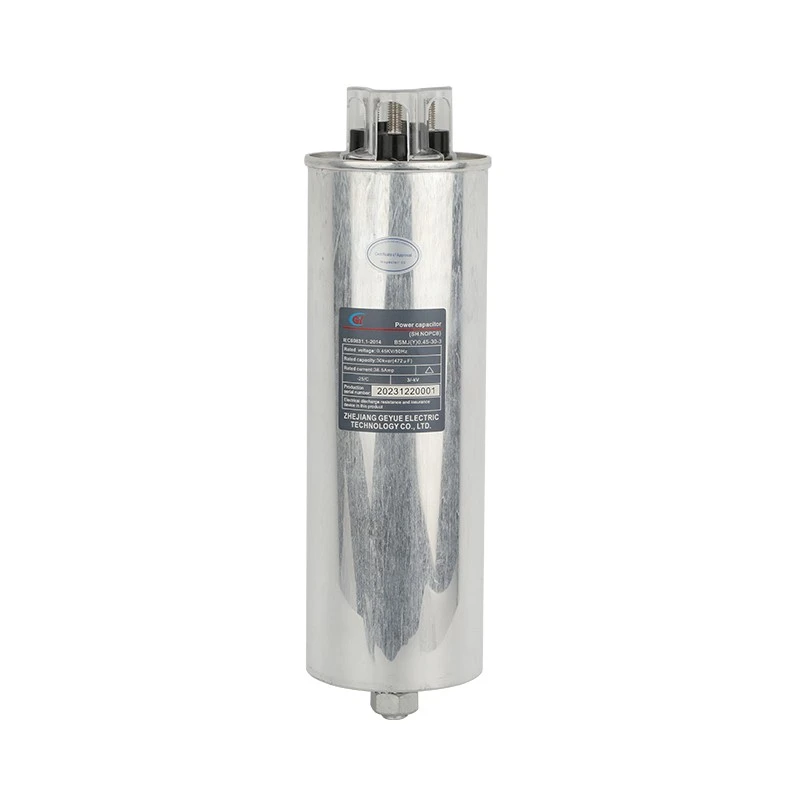
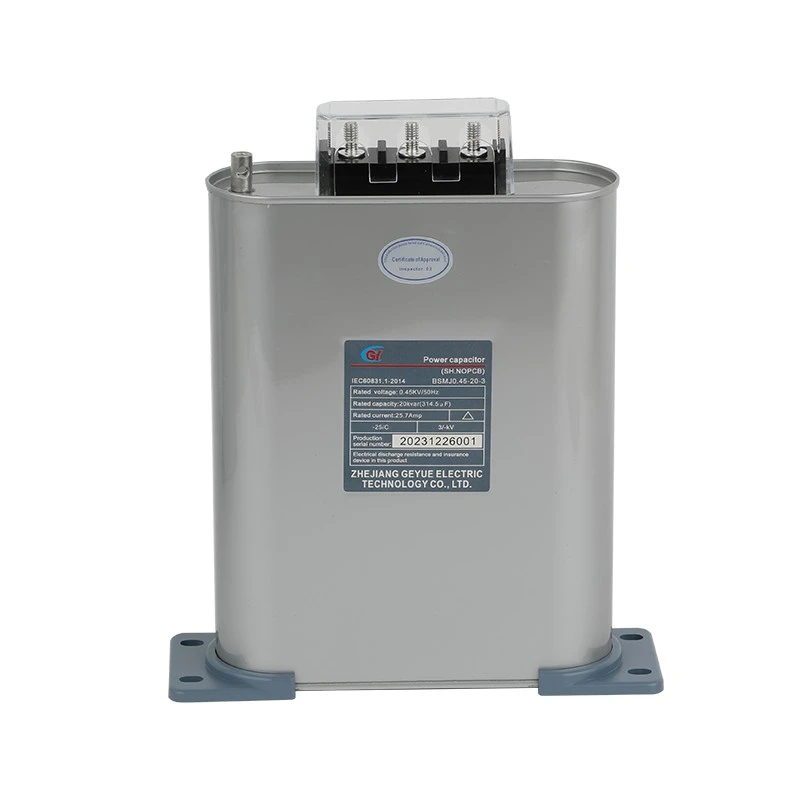
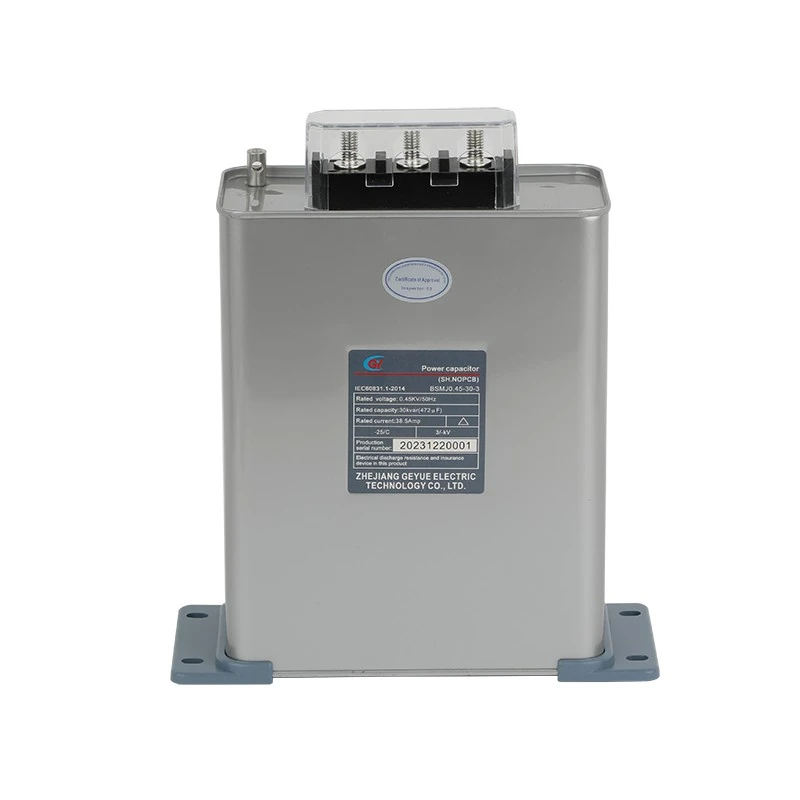
Geyue Electric promises that our CKSG series three-phase low-voltage series reactors have a higher quality factor and a lower temperature rise. All fasteners for our iron cores are made of non-magnetic materials, effectively reducing additional losses. Exposed parts undergo anti-corrosion treatment, and the leads use cold-pressed copper tube terminals, taking into account both conductivity and durability simultaneously. Compared to similar products on the international market, our CKSG series three-phase low-voltage series reactors are smaller, lighter, and more refined in appearance. Behind this is the strong R&D capability and rigorous quality control system of Geyue Electric Factory. Please send your inquiry to info@gyele.com.cn for free consultation. We are committed that Our CKSG series low-voltage series reactors can be perfectly matched with the BSMJ series self-healing parallel capacitors to effectively improve system voltage waveform, enhance power factor, and suppress inrush current and operational overvoltage, providing comprehensive protection for your electrical equipment.
Related News
- What Is the Difference Between a Power Capacitor and an Intelligent Capacitor?
- Are Self-Healing Shunt Capacitors Suitable for Industrial Applications?
- Why Does a Factory Need an Automatic Power Factor Controller?
- Can a Power Capacitor Reduce Electricity Losses in a Factory?
- What Should Engineers Check Before Choosing a Low Voltage Power Capacitor?
- Why Are Self-Healing Shunt Capacitors Widely Used in Low-Voltage Power Systems?
Leave me a message