Overload and Short-Circuit Protection in a Capacitor Circuit: How to Achieve Protection Coordination between the Upstream Circuit Breaker and the CJ19 Series Capacitor Switching Contactor?
In the low-voltage reactive power compensation system, protection coordination is the core research topic for ensuring the safe and reliable operation of the system. As a professional manufacturer of low-voltage reactive power compensation equipment in China, Geyue Electric is today going to discuss how the protection coordination between the upstream circuit breaker and the downstream CJ19 series capacitor switching contactor in the capacitor switching circuit directly affects the stability of the entire compensation system and even the entire power distribution system.
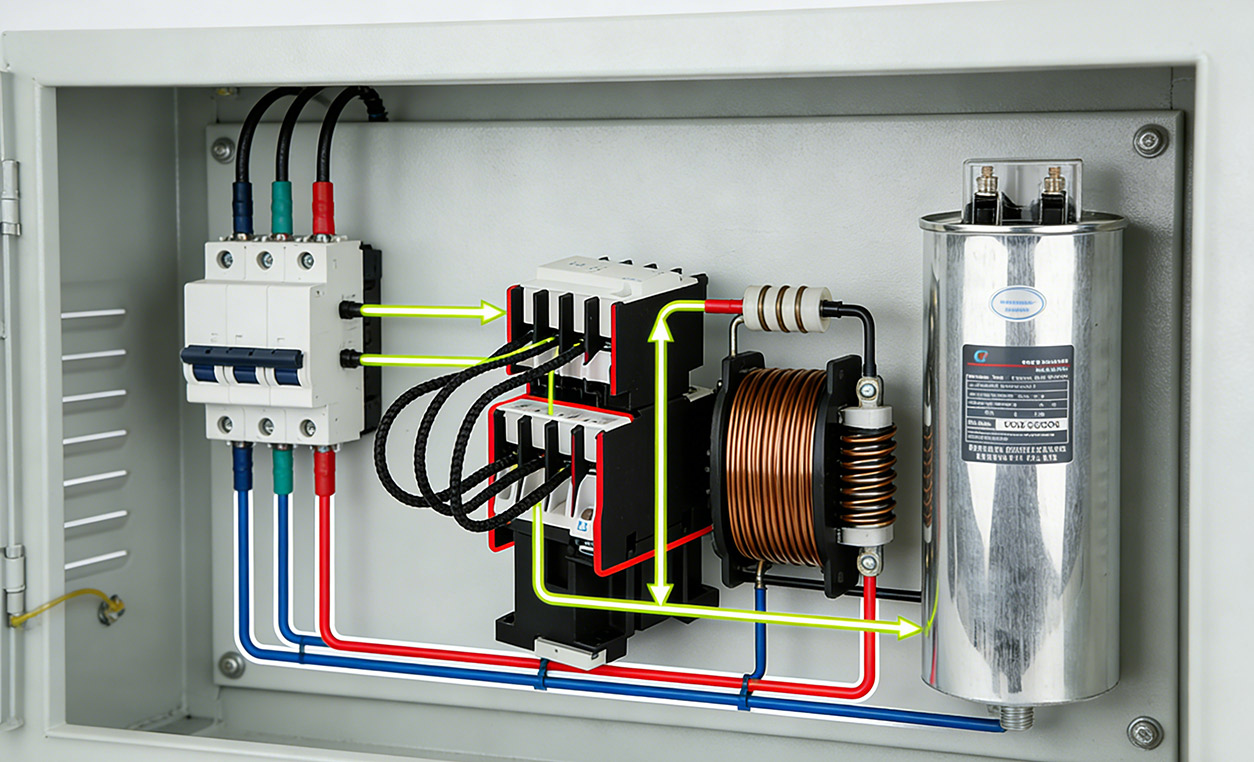
The Key Objective of Protection Coordination
The basic objective of protection coordination is to ensure that the protection device closest to the fault point takes action first, thereby limiting the fault area to the smallest possible unit. In a capacitor circuit, this means that when the capacitor or the switch circuit itself experiences overload or short circuit, the upstream circuit breaker specifically configured for the capacitor should immediately cut off the fault, and the CJ19 series contactors, as the executive components, should operate safely under the protection of the circuit breaker and should not be responsible for interrupting the fault current. This hierarchical action logic not only protects the key equipment of the faulty circuit but also safeguard the continuous power supply of all other non-faulty associated equipment in the system.
The Role and Selection of a Circuit Breaker
The upstream circuit breaker plays the role of the "ultimate protector" in this protection coordination relationship. Its selection must meet two basic requirements. The first requirement is that its rated current should be able to carry the rated current of the capacitor and take into account the possible overcurrent impact in a harmonic environment. Generally, a certain margin should be reserved. The second requirement is that its short-circuit breaking capacity must be greater than the expected short-circuit current at the installation point. More importantly, the tripping characteristic curve of the circuit breaker needs to match the characteristics of the capacitor circuit. When the capacitor is switched on or off, a surge current will be generated, whose value may be several times the rated current, but the duration is extremely short. Therefore, the circuit breaker should have the ability to tolerate this short-term surge current without malfunctioning. Usually, a model with appropriate delay characteristics should be selected to make a certain that it only reliably operates when there is a continuous overload or short-circuit fault. Positioning and Coordination of a CJ19 Series Contactor
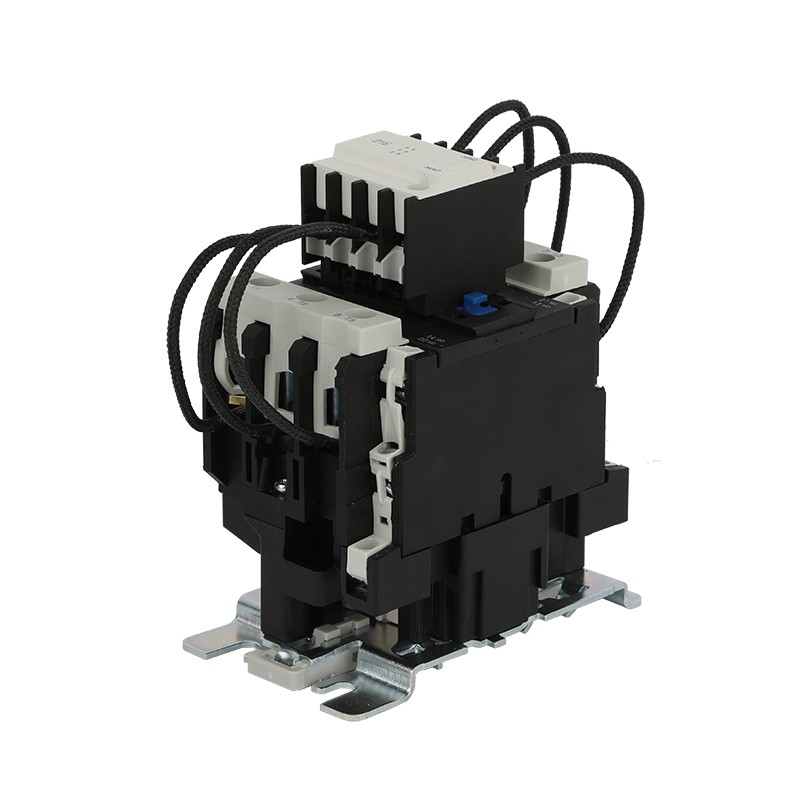
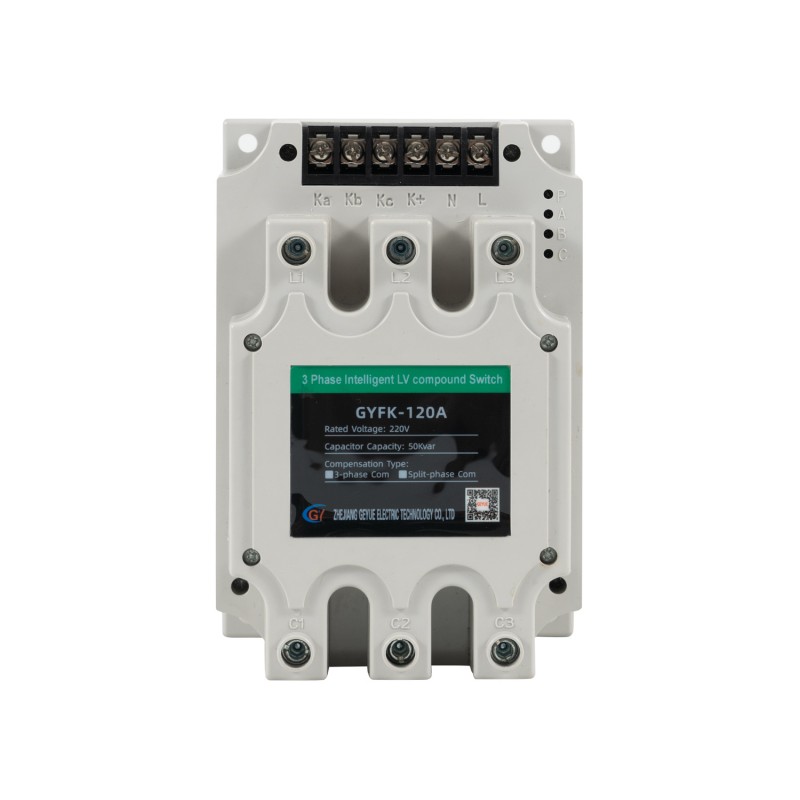
The CJ19 series capacitor switching contactor is designed as an "intelligent switching executor" rather than a "fault interrupting device". It cooperates with the protection of the circuit breaker, mainly through functional complementarity and timing coordination. The CJ19 series contactor usually incorporate a resistor or an inductor for suppressing inrush current within its internal structure. Its function is to complete the non-inrush current connection of the capacitor and normal disconnection under the condition that the circuit breaker is closed and protection is established. When there is a continuous overload or short circuit in the capacitor circuit, the upstream circuit breaker should perform the disconnection. In the design of the CJ19 series contactor, consideration has been given to its ability to withstand a certain degree of short-circuit current electrodynamic impact until the upstream circuit breaker fully clears the fault, which reflects the passive coordination of the protection characteristics between the CJ19 series contactor and the circuit breaker.
Systematic Considerations for Protection Coordination
Simple addition of components alone cannot achieve perfect protection coordination; instead, the design and verification process of a system is the only way to go. It involves accurate calculation of the short-circuit capacity of the power distribution system, analysis of the impedance characteristics of the capacitor circuits, and consideration of the entire fault clearance timing sequence. A well-designed compensation system can ensure that all connections from the contactor to the circuit breaker have sufficient dynamic and thermal stability, enabling the fault energy to be safely guided and cut off within an extremely short period after the protection action occurs.
The Solutions and Professional Commitment of Geyue Electric
Geyue Electric has precisely recognized the significance of protection coordination for the safe operation of low-voltage reactive power compensation systems. Therefore, we have produced the CJ19 series capacitor transfer contactors, which have been meticulously designed to achieve this protection system. Our CJ19 series contactors are made of high-quality materials and processed through special techniques to ensure the stability of their contacts and the electrical lifespan. The built-in surge current suppression mechanism can effectively reduce the impact on the upstream circuit breaker, creating favorable hardware conditions for protection coordination.
More importantly, the technical team of Geyue Electric has profound system analysis capabilities. We can assist customers in designing the overall solutions based on their specific power distribution parameters, including selecting circuit breakers and verifying protection setting values. Our automated production line and complete quality control system have made a commitment through actions. They ensure the consistency and high reliability of every CJ19 series capacitor switching contactor and other components from the source, enabling them to work in coordination with the upper-level protection devices during actual operation and forming a solid safety barrier in the low-voltage reactive power compensation system. If there are any requirements, please contact info@gyele.com.cn. We are looking forward to resolving any issues for your low-voltage reactive power compensation project.
Related News
- What Is the Difference Between a Power Capacitor and an Intelligent Capacitor?
- Are Self-Healing Shunt Capacitors Suitable for Industrial Applications?
- Why Does a Factory Need an Automatic Power Factor Controller?
- Can a Power Capacitor Reduce Electricity Losses in a Factory?
- What Should Engineers Check Before Choosing a Low Voltage Power Capacitor?
- Why Are Self-Healing Shunt Capacitors Widely Used in Low-Voltage Power Systems?
Leave me a message