Industry News
 08 2026-01
How to Choose between "Stand-Alone Mode" and "Master-Slave Mode"? How Can Smart Capacitors Adapt to Different Automation Needs?
The realization of reactive power compensation relies on an intelligent control system that follows a precise control logic. In practice, "Stand-Alone Mode" and "Master-Slave Mode" correspond to different application scenarios and different automation requirements.
 06 2026-01
Overload and Short-Circuit Protection in a Capacitor Circuit: How to Achieve Protection Coordination between the Upstream Circuit Breaker and the CJ19 Series Capacitor Switching Contactor?
In the low-voltage reactive power compensation system, protection coordination is the core research topic for ensuring the safe and reliable operation of the system. As a professional manufacturer of low-voltage reactive power compensation equipment in China, Geyue Electric is today going to discuss how the protection coordination between the upstream circuit breaker and the downstream CJ19 series capacitor switching contactor in the capacitor switching circuit directly affects the stability of the entire compensation system and even the entire power distribution system.
 03 2026-01
What does Millisecond-Level Response Mean? Why Must Dynamic Loads Pay Attention to the "Speed" of Compensation Devices?
herefore, the value of the millisecond-level response of the compensation device is turning more and more evident in this context - it is no longer just a set of numerical parameters, but a crucial defense line related to the stability of power quality, equipment safety, and production continuity.

 31 2025-12
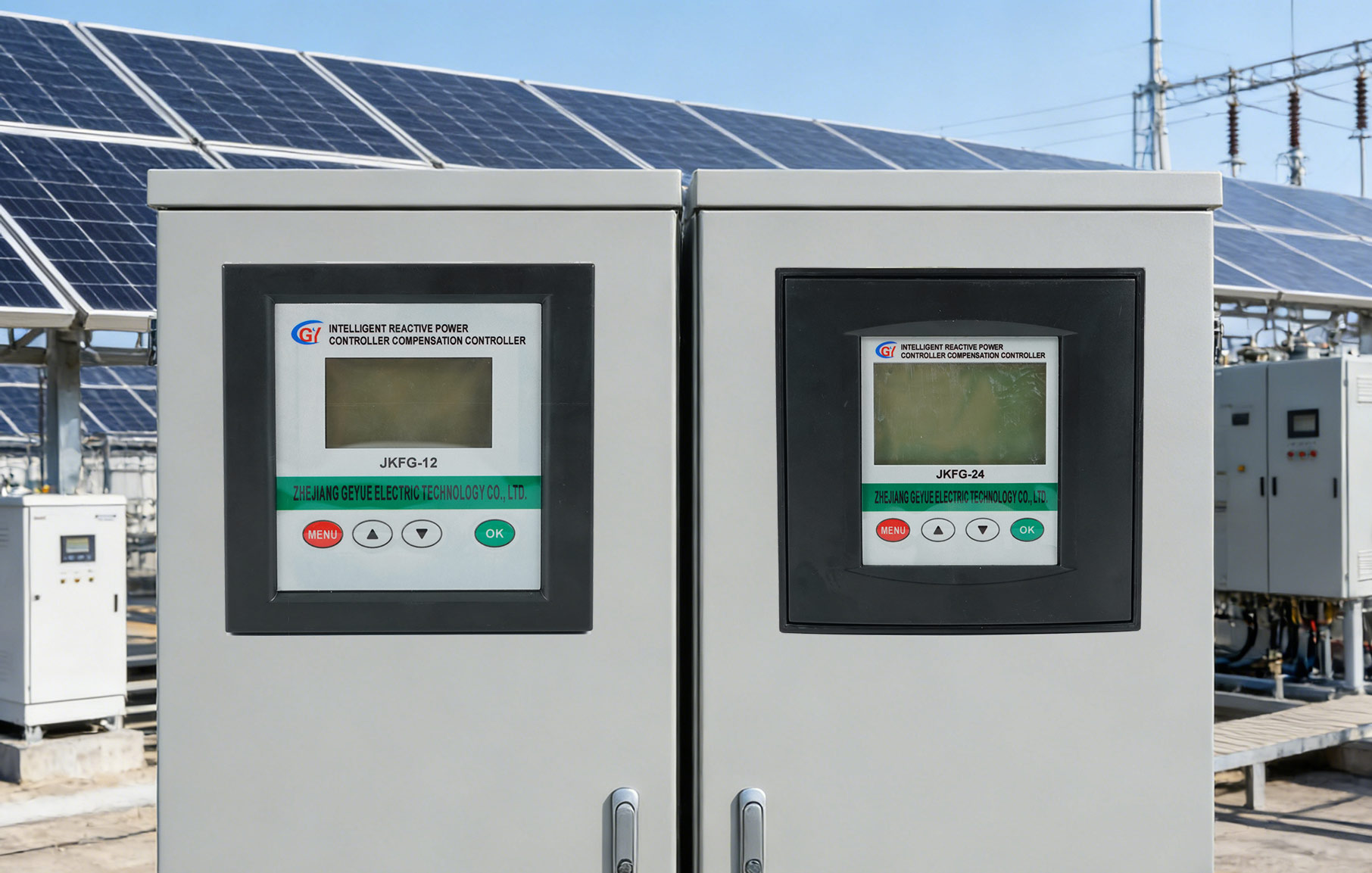
Why Must Low-Voltage Power Factor Controllers Used in Photovoltaic Scenarios Be Equipped with Four-Quadrant Operation Capability?
Geyue Electric, with years of on-site reactive power compensation experience, can clearly point out that the root cause of these problems lies in the fact that ordinary power factor controllers cannot adapt to the unique operation logic of photovoltaic power generation. The key to eliminating this root cause is to equip photovoltaic power stations with dedicated low-voltage power factor controllers with four-quadrant operation capabilities.
 29 2025-12
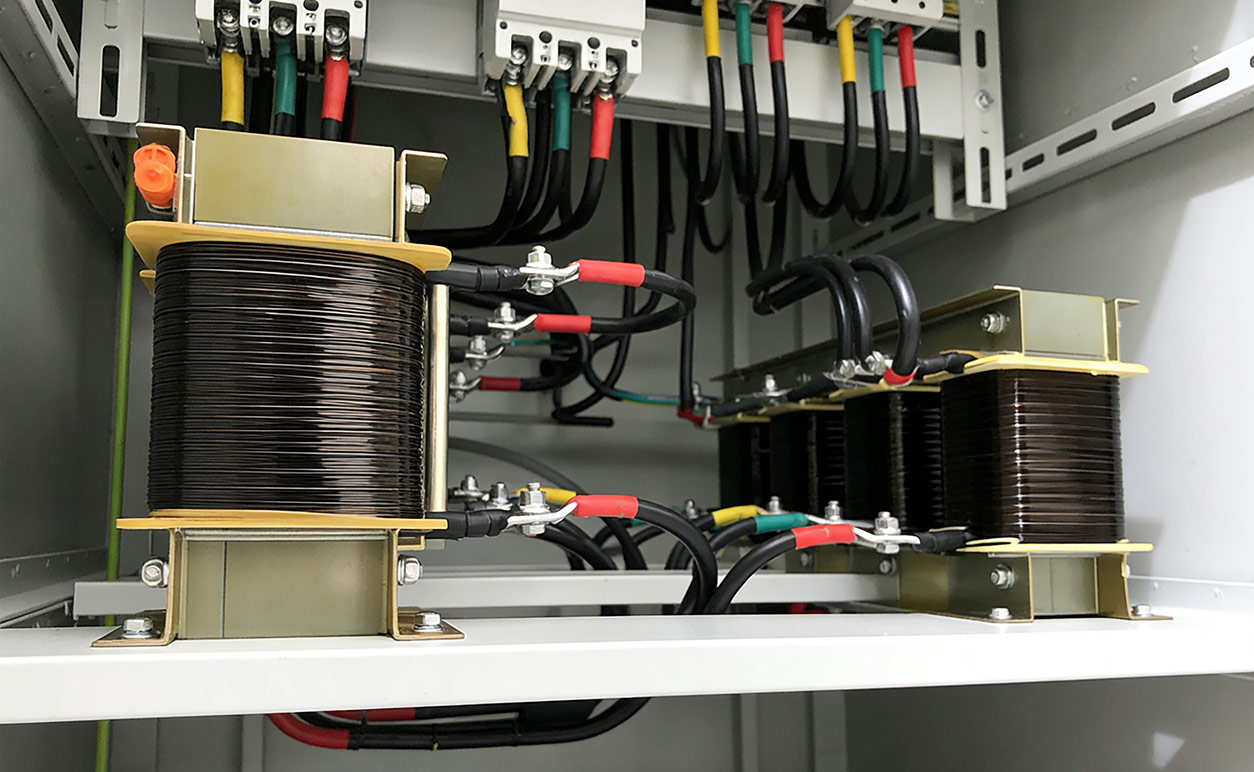
Why do the Mainstream Series Reactors Currently on the Market All Adopt the Dry-Type Iron-Core Structure?
Why does the dry-type iron-core structure becomes the mainstream choice in the market? Compared with the air-core type, oil-immersed iron-core type, and other structures, what exactly makes the dry-type iron-core structure superior?